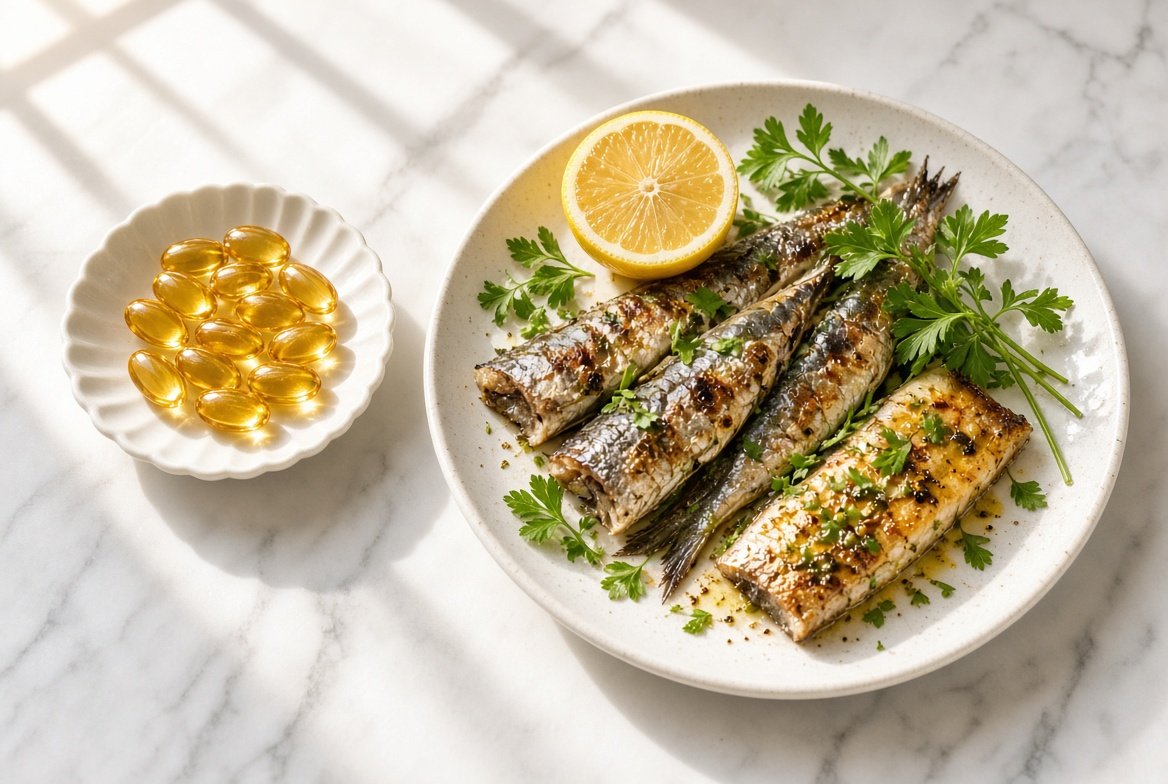
Introduction
Two vitamin deficiencies have become defining health problems of the modern era: vitamin D and vitamin B12. These are not minor nutritional gaps. They are systemic deficiencies with consequences for mood, immune function, cardiovascular health, fertility and hormonal balance — and their rise parallels the global increase in depression, autoimmune disease and metabolic dysfunction.
The argument of this review is straightforward, and it runs against the way these deficiencies are usually treated: they are not primarily caused by inadequate intake. They are caused by dysfunctional physiology — a toxic or fatty liver, an impaired kidney, a damaged stomach lining, and a gut ecosystem disrupted by the modern processed diet.
Swallowing supplements without addressing those causes is a patchwork solution. It raises a number on a blood test while leaving the machinery that produces, absorbs and activates these nutrients exactly as broken as it was.
As this article will show, the largest clinical trial ever run on vitamin D and depression makes that case better than any argument could.
Vitamin D: A Neurosteroid Hormone, Not a Vitamin
Vitamin D is misnamed. It behaves as a hormone, and it regulates the expression of a large number of genes involved in neurotransmitter synthesis, neuroprotection and immune regulation [1].
The brain carries vitamin D receptors in the regions that matter most for mood. Eyles and colleagues mapped both the receptor and the 1α-hydroxylase enzyme across human brain tissue, finding them in the prefrontal cortex, hippocampus and amygdala — the areas central to mood regulation and emotional processing [2]. The brain is not a passive recipient of vitamin D; it activates it locally.
Four mechanisms connect it to mood:
Serotonin synthesis. Patrick and Ames showed that vitamin D hormone regulates the expression of tryptophan hydroxylase-2, the enzyme that converts tryptophan into serotonin in the brain [3]. This is a direct transcriptional link between vitamin D status and the neurotransmitter most associated with mood.
Neuroinflammation. Vitamin D suppresses pro-inflammatory cytokine production by monocytes and macrophages, acting through MAPK phosphatase-1 [4]. Since inflammatory cytokines including IL-6 and TNF-α are elevated in depression, this is a plausible and well-characterised route.
Immune regulation. Vitamin D modulates both innate and adaptive immunity, including antibody production [5]. Deficiency is consistently more prevalent in autoimmune conditions — multiple sclerosis, rheumatoid arthritis, lupus and inflammatory bowel disease all show the pattern [6].
Neuroprotection. Vitamin D supports neuronal survival and plasticity, which is why deficiency shows up in cognitive as well as affective symptoms.
Vitamin B12: The Methylation Engine
Vitamin B12 drives the methylation cycle, the pathway that produces S-adenosylmethionine (SAMe) — the body’s principal methyl donor and a required cofactor for the synthesis of serotonin, dopamine and norepinephrine [7].
Without adequate B12, SAMe production falls and neurotransmitter synthesis falls with it. Coppen and Bolander-Gouaille argued on this basis that folate and B12 status should be treated as part of depression management rather than an afterthought [7].
Three further mechanisms:
Homocysteine. B12 deficiency causes homocysteine to accumulate. Bottiglieri documented the relationship between homocysteine, folate metabolism and depression, and elevated homocysteine damages both vascular endothelium and neurons [8].
Myelin. B12 is required to maintain the myelin sheath. Deficiency produces neurological dysfunction that can precede any change in blood count [9].
The gut connection. B12 is produced by bacteria, not by plants or animals — animals accumulate what microbes make. Degnan and colleagues showed B12 acts as a modulator of gut microbial ecology in its own right, meaning B12 status and gut ecosystem health are not two separate questions [10].
The Association Is Real — Here Are the Actual Numbers
The observational evidence is consistent, and it is worth quoting precisely rather than rounding upward.
Vitamin D. Anglin and colleagues pooled 14 studies covering 31,424 participants. People with depression had significantly lower vitamin D levels than controls, and the odds ratio of depression for the lowest versus highest vitamin D category was 1.31 (95% CI 1.00–1.71) in cross-sectional studies, with a significantly increased hazard ratio in the cohort studies [11].
Vitamin B12. Petridou and colleagues found a statistically significant association between low B12 and depression in older adults, OR 1.20 (95% CI 1.02–1.42). In the gender-specific analysis, the association held only among women — OR 1.33 (95% CI 1.02–1.74) [12].
Both findings are real. Both are also associations, drawn largely from cross-sectional data, with confidence intervals that reach close to 1.0. They tell you that low levels and low mood travel together. They do not tell you which causes which.
That distinction turns out to matter enormously.
The Trial That Proves the Point
If low vitamin D caused depression, then giving people vitamin D should prevent it. That hypothesis has been tested — properly, at scale.
VITAL-DEP randomised 18,353 adults to vitamin D3 or placebo and followed them for a median of 5.3 years, with 90.5% completing [13].
“`
Vitamin D3 609 depression events 12.9 per 1000 person-years
Placebo 625 depression events 13.3 per 1000 person-years
Hazard ratio 0.97 (95% CI 0.87–1.09) P = 0.62
“`
No difference in incidence. No difference in recurrence. No difference in mood scores. The authors concluded that the findings “do not support the use of vitamin D3 in adults to prevent depression.”
The same investigators ran the equivalent trial for marine omega-3 fatty acids. Also null [14].
Smaller trials in people who are already depressed have found benefit — Vellekkatt and Menon pooled four trials in 948 participants and reported a moderate effect size, while cautioning that their own findings were “tentative owing to the limited number of trials available and inherent methodological bias” [15].
So: 948 participants suggesting benefit in treatment; 18,353 showing nothing in prevention.
Why this confirms the argument rather than refuting it
The standard reading of VITAL is that vitamin D “doesn’t work for depression.” We think that reading misses what the trial actually demonstrates.
Eighteen thousand people raised their blood vitamin D level for five years and their mental health did not change. If the deficiency were simply a shortage of the molecule, the molecule would have fixed it. It didn’t.
What that leaves is the explanation this article started with: low vitamin D is a marker of broken physiology, not the cause of the illness. A fatty liver that cannot hydroxylate efficiently, a kidney that cannot complete activation, chronic inflammation, a sedentary indoor life — these produce both the low reading and the low mood. Correcting the reading with a capsule addresses neither.
This is the same pattern we traced through magnesium, selenium and zinc: the isolated nutrient underperforms because the deficiency was never really about the nutrient.
Why B12 Deficiency Is a Stomach Problem
Here the physiological argument is not merely plausible — it is textbook, and it is the clearest example of the thesis.
B12 absorption requires intrinsic factor, a glycoprotein secreted by the parietal cells of the stomach lining. Without it, B12 cannot cross the ileal wall no matter how much is eaten [16]. This is precisely why clinical B12 deficiency is so often treated by injection — the route exists to bypass a stomach that no longer works.
Read that again, because it is the whole argument in one clinical fact: medicine’s standard treatment for B12 deficiency is a needle that goes around the digestive system. Nobody would design that if the problem were diet.
Helicobacter pylori
The most common cause of that gastric damage is Helicobacter pylori — the most widespread chronic bacterial infection in humans, present in roughly half the global population [17]. It colonises the gastric mucosa, damages parietal cells, and reduces intrinsic factor output.
Kaptan and colleagues examined this directly and found H. pylori significantly associated with B12 deficiency, with eradication improving B12 status in deficient patients [18]. Their title asked whether H. pylori was “a novel causative agent in vitamin B12 deficiency.” The answer, two decades on, is yes.
And the diet feeds it
H. pylori thrives in the gastric environment created by the modern diet — refined flour, industrial yeast, fried food, sugar, processed snacks, daily meat, few vegetables. Diets built the other way, on vegetables, olive oil and antioxidant-rich plants, are associated with lower colonisation and less gastric inflammation.
The solution is dietary before it is pharmaceutical.
Why Vitamin D Deficiency Is a Liver and Kidney Problem
Vitamin D is not really obtained. It is manufactured, in three organs, in sequence:
“`
1 SKIN UVB converts 7-dehydrocholesterol in the epidermis
to cholecalciferol (D3)
2 LIVER hydroxylation → 25-hydroxyvitamin D (calcidiol)
the form measured in your blood test
3 KIDNEY hydroxylation → 1,25-dihydroxyvitamin D (calcitriol)
the active hormone
“`
Every step can fail. A fatty or inflamed liver hydroxylates poorly. Impaired kidneys cannot complete activation. And a capsule swallowed at step zero still has to pass through both.
This is why supplementation so often disappoints. You can raise the substrate all you like; if the factory is damaged, output does not follow. It is also, plausibly, part of why VITAL found nothing.
Heavy metals
Cadmium, lead, mercury and arsenic accumulate in the body over years, and cadmium in particular is a well-documented threat to renal function — the very organ that performs the final activation step [19]. Cadmium’s principal target is the proximal tubule, and kidney damage is its defining chronic toxicity.
Since step 3 happens in the kidney, anything that damages the kidney damages vitamin D activation. Supporting liver and kidney function — through diet, through weight, through reducing exposure — is upstream of the blood level, and the blood level is downstream of everything.
We covered the same principle in glutathione, the master antioxidant your body makes itself: the body already manufactures what it needs, provided the machinery works.
Restoring the Gut: What the Evidence Actually Supports
A protocol is only as good as the evidence grade attached to each part. Here they are, labelled honestly.
Propolis — now with human trial data. Boyanova and colleagues tested Bulgarian propolis against 94 clinical H. pylori strains and found activity against all of them — in vitro [20]. That remained laboratory evidence for two decades. It no longer is: a randomised clinical trial of a β-cyclodextrin–propolis complex reported improved H. pylori treatment outcomes in patients [21]. The bench result has finally been tested in people.
Probiotics — the strongest evidence here. Lü and colleagues meta-analysed randomised controlled trials and found probiotic supplementation improved H. pylori eradication rates and reduced the side effects of standard therapy [22]. This is human RCT evidence, not extrapolation.
Olive oil. Romero and colleagues demonstrated that olive oil polyphenols are active against H. pylori in vitro, including against resistant strains [23]. A reason to cook with it — not a treatment.
Thyme and marjoram. Their thymol and carvacrol show antibacterial activity in laboratory models [24]. We cover these herbs in more depth in wild greens, forgotten roots and herbal infusions.
Garlic. Its own antimicrobial chemistry and the evidence behind it are set out in garlic: cancer, infection and safe use.
Fasting. Mattson and colleagues documented broad effects of intermittent fasting on metabolic and cellular repair processes [25]. There is no trial of fasting against H. pylori, and we will not pretend otherwise.
One clinical note that matters: confirmed H. pylori infection is treated with antibiotic eradication therapy under medical supervision, and it is associated with gastric cancer. None of the above replaces that. They are supports, not substitutes — and if you have persistent gastric symptoms, get tested.
Fish, Storage, and the Question of Who Actually Runs Short
The richest dietary sources of B12 are not meat. They are shellfish — clams, mussels, oysters — followed by oily fish such as sardines, mackerel, salmon and tuna, then organ meats, then muscle meat, then eggs and dairy [26].
This matters for how people think about their diet. Reducing red meat does not put your B12 at risk if fish is on the plate. The full nutritional case for that swap is in why fish beats red meat.
The liver stores enough B12 for years, not weeks. Adult hepatic stores run to several milligrams, sufficient to cover normal function for a long period. Deficiency therefore develops slowly — which is exactly why it so rarely reflects a recent dietary change and so often reflects a years-long absorption failure.
One important exception, and we will not soften it. People eating no animal foods at all — no fish, no eggs, no dairy — have no meaningful dietary B12 source, because the vitamin is bacterial in origin and plant foods do not supply it reliably. Unsupplemented vegans do develop genuine deficiency, and recent dietary survey work continues to find elevated micronutrient deficiency risk in fully plant-based patterns despite otherwise favourable nutrient profiles [27].
For a vegan, B12 supplementation is not a patchwork. It is a necessity, and the argument of this article does not apply.
For everyone else — anyone eating fish, eggs or dairy — a low B12 result points at absorption, not intake. That is the person who should be asking about their stomach.
What to Actually Do
Test properly. If vitamin D is low, ask for B12 as well, and vice versa. They travel together because they share causes.
Ask why, not just how much. A low result is a question, not a diagnosis. Fatty liver, kidney function, gastric symptoms, coeliac disease, metformin use and long-term acid suppression all sit behind low B12.
Get H. pylori tested if you have persistent indigestion, reflux or gastric pain — breath test or stool antigen. It is treatable, and it is associated with gastric cancer.
Build the diet that doesn’t feed the problem. Home cooking, olive oil, abundant vegetables, fish as the main animal food, less refined flour and sugar. See essential staple foods.
Get outside. Vitamin D synthesis begins with UVB on skin. No capsule replaces the step that daylight performs for free.
Supplement where it is genuinely indicated — confirmed deficiency, vegan diets, malabsorption, pregnancy, older age, little sun exposure — under medical guidance, and without believing the capsule has fixed the reason you needed it.
Frequently Asked Questions
Does vitamin D deficiency cause depression?
Low vitamin D and depression are consistently associated — pooled odds ratio around 1.31 across 31,424 participants [11]. But the largest trial ever run, 18,353 adults over 5.3 years, found vitamin D3 did not prevent depression compared with placebo [13]. The most defensible reading is that low vitamin D is a marker of underlying dysfunction rather than a direct cause.
Will taking vitamin D improve my mood?
If you are already depressed and genuinely deficient, small trials suggest it may help modestly [15] — their authors called the evidence tentative. If your levels are adequate, or you are taking it to prevent depression, the large trial evidence says no [13]. Discuss it with your doctor rather than self-treating a mood disorder.
Why do doctors give B12 by injection instead of tablets?
Because oral B12 requires intrinsic factor from the stomach lining to be absorbed, and in many deficient patients that mechanism has failed [16]. Injection bypasses the digestive system entirely. That treatment route is itself the clearest evidence that B12 deficiency is usually an absorption problem, not a dietary one.
Can Helicobacter pylori cause B12 deficiency?
Yes. H. pylori damages the gastric mucosa and reduces intrinsic factor production, and it infects roughly half the world’s population [17]. Kaptan and colleagues found the infection significantly associated with B12 deficiency, with eradication improving B12 status [18].
Do vegetarians and vegans need B12 supplements?
Vegans: yes, without exception. B12 is bacterial in origin and no plant food supplies it reliably; unsupplemented vegans develop real deficiency [27]. Vegetarians eating eggs and dairy, and anyone eating fish, generally do not — for them a low result usually indicates an absorption problem worth investigating.
Which foods have the most vitamin B12?
Shellfish lead by a wide margin — clams, mussels and oysters. Then oily fish such as sardines, mackerel and salmon, then organ meats, then muscle meat, eggs and dairy [26]. Fish, not red meat, is the efficient source.
Should I take omega-3 with vitamin D?
There is a rationale — both are fat-soluble and both act on inflammation, and a comparison trial of EPA and fluoxetine found benefit for omega-3 in major depression [28]. But the same investigators behind the large vitamin D trial also tested marine omega-3 for depression prevention in the same cohort and found no effect [14]. Eating oily fish is well supported. Taking the capsules to prevent depression is not.
Conclusion
Vitamin D and B12 deficiency are not simple nutritional gaps. They are readings on a dial, and the dial reports on a system: a liver that hydroxylates, a kidney that activates, a stomach that secretes intrinsic factor, a gut ecosystem that has not been dismantled by refined food.
The mechanisms connecting both vitamins to mood are real and specific — vitamin D regulating tryptophan hydroxylase-2 and suppressing inflammatory cytokines, B12 driving the methylation cycle that produces serotonin and dopamine. The associations in the population data are real too.
And the largest trial ever conducted showed that giving people the missing molecule for five years changed nothing.
That is not a disappointment. It is the finding that tells you where to look. If the deficiency were the disease, the capsule would be the cure. It isn’t, so it isn’t.
Fix the stomach. Support the liver. Get outside. Eat the fish. Use supplementation where it is genuinely indicated — and stop expecting a capsule to repair a system it was never able to reach.
Nature provides. Physiology responds. Healing follows.
Scientific Sources and References
- Holick, M. F. (2007). “Vitamin D deficiency.” New England Journal of Medicine, 357(3), 266–281. PMID 17634462
- Eyles, D. W., Smith, S., Kinobe, R., et al. (2005). “Distribution of the vitamin D receptor and 1α-hydroxylase in human brain.” Journal of Chemical Neuroanatomy, 29(1), 21–30. PMID 15589699
- Patrick, R. P., & Ames, B. N. (2014). “Vitamin D hormone regulates serotonin synthesis. Part 1: relevance for autism.” FASEB Journal, 28(6), 2398–2413. PMID 24558199
- Zhang, Y., Leung, D. Y., Richers, B. N., et al. (2012). “Vitamin D inhibits monocyte/macrophage proinflammatory cytokine production by targeting MAPK phosphatase-1.” Journal of Immunology, 188(5), 2127–2135. PMID 22301548
- Aranow, C. (2011). “Vitamin D and the immune system.” Journal of Investigative Medicine, 59(6), 881–886. PMID 21527855
- Yang, C. Y., Leung, P. S., Adamopoulos, I. E., & Gershwin, M. E. (2013). “The implication of vitamin D and autoimmunity: a comprehensive review.” Clinical Reviews in Allergy and Immunology, 45(2), 217–226. PMID 23359064
- Coppen, A., & Bolander-Gouaille, C. (2005). “Treatment of depression: time to consider folic acid and vitamin B12.” Journal of Psychopharmacology, 19(1), 59–65. PMID 15671130
- Bottiglieri, T. (2005). “Homocysteine and folate metabolism in depression.” Progress in Neuro-Psychopharmacology and Biological Psychiatry, 29(7), 1103–1112. PMID 16109454
- Stabler, S. P. (2013). “Vitamin B12 deficiency.” New England Journal of Medicine, 368(2), 149–160. PMID 23301732
- Degnan, P. H., Taga, M. E., & Goodman, A. L. (2014). “Vitamin B12 as a modulator of gut microbial ecology.” Cell Metabolism, 20(5), 769–778. PMID 25440056
- Anglin, R. E., Samaan, Z., Walter, S. D., & McDonald, S. D. (2013). “Vitamin D deficiency and depression in adults: systematic review and meta-analysis.” British Journal of Psychiatry, 202, 100–107. PMID 23377209
- Petridou, E. T., Kousoulis, A. A., Michelakos, T., et al. (2016). “Folate and B12 serum levels in association with depression in the aged: a systematic review and meta-analysis.” Aging and Mental Health, 20(9), 965–973. PMID 26055921
- Okereke, O. I., Reynolds, C. F., Mischoulon, D., et al. (2020). “Effect of long-term vitamin D3 supplementation vs placebo on risk of depression or clinically relevant depressive symptoms and on change in mood scores: a randomized clinical trial.” JAMA, 324(5), 471–480. PMID 32749491
- Okereke, O. I., Vyas, C. M., Mischoulon, D., et al. (2021). “Effect of long-term supplementation with marine omega-3 fatty acids vs placebo on risk of depression or clinically relevant depressive symptoms and on change in mood scores: a randomized clinical trial.” JAMA, 326(23), 2385–2394. PMID 34932079
- Vellekkatt, F., & Menon, V. (2019). “Efficacy of vitamin D supplementation in major depression: a meta-analysis of randomized controlled trials.” Journal of Postgraduate Medicine, 65(2), 74–80. PMID 29943744
- Green, R., Allen, L. H., Bjørke-Monsen, A. L., et al. (2017). “Vitamin B12 deficiency.” Nature Reviews Disease Primers, 3, 17040. PMID 28660890
- Malfertheiner, P., Megraud, F., O’Morain, C. A., et al. (2017). “Management of Helicobacter pylori infection — the Maastricht V/Florence Consensus Report.” Gut, 66(1), 6–30. PMID 27707777
- Kaptan, K., Beyan, C., Ural, A. U., et al. (2000). “Helicobacter pylori — is it a novel causative agent in vitamin B12 deficiency?” Archives of Internal Medicine, 160(9), 1349–1353. PMID 10809040
- Järup, L., & Åkesson, A. (2009). “Current status of cadmium as an environmental health problem.” Toxicology and Applied Pharmacology, 238(3), 201–208. PMID 19409405
- Boyanova, L., Gergova, G., Nikolov, R., et al. (2005). “Activity of Bulgarian propolis against 94 Helicobacter pylori strains in vitro by agar-well diffusion, agar dilution and disc diffusion methods.” Journal of Medical Microbiology, 54(Pt 5), 481–483. PMID 15824428
- Mehri, A., Pourmoslemi, S., Khalilian, A., et al. (2026). “Enhanced H. pylori treatment using a β-cyclodextrin–propolis complex: a randomized clinical trial.” BioMed Research International, 2026, e6257147. PMID 42411957
- Lü, M., Yu, S., Deng, J., et al. (2016). “Efficacy of probiotic supplementation therapy for Helicobacter pylori eradication: a meta-analysis of randomized controlled trials.” PLoS One, 11(10), e0163743. PMID 27723762
- Romero, C., Medina, E., Vargas, J., et al. (2007). “In vitro activity of olive oil polyphenols against Helicobacter pylori.” Journal of Agricultural and Food Chemistry, 55(3), 680–686. PMID 17263460
- Soković, M., Glamočlija, J., Marin, P. D., et al. (2010). “Antibacterial effects of the essential oils of commonly consumed medicinal herbs using an in vitro model.” Molecules, 15(11), 7532–7546. PMID 21030907
- Mattson, M. P., Longo, V. D., & Harvie, M. (2017). “Impact of intermittent fasting on health and disease processes.” Ageing Research Reviews, 39, 46–58. PMID 27810402
- Watanabe, F. (2007). “Vitamin B12 sources and bioavailability.” Experimental Biology and Medicine, 232(10), 1266–1274. PMID 17959839
- Liu, X., Li, A., An, M., et al. (2026). “Healthier macronutrient profiles but higher risk of specific micronutrient deficiencies: a cross-sectional study of plant-based dietary patterns.” Nutrients, 18(13). PMID 42451114
- Jazayeri, S., Tehrani-Doost, M., Keshavarz, S. A., et al. (2008). “Comparison of therapeutic effects of omega-3 fatty acid eicosapentaenoic acid and fluoxetine, separately and in combination, in major depressive disorder.” Australian and New Zealand Journal of Psychiatry, 42(3), 192–198. PMID 18247193
Last reviewed: September 2026. Vivid Remedy publishes independently researched, evidence-based health content cross-referenced against current peer-reviewed scientific literature. This content does not constitute medical advice. Depression is a serious medical condition — if you are struggling, speak to a qualified healthcare professional. Never stop or change prescribed treatment without medical guidance.