Introduction
Walk through any large supermarket and count the vegetables. You will find perhaps thirty, and three of them — tomato, potato, onion — account for most of what actually leaves the building.
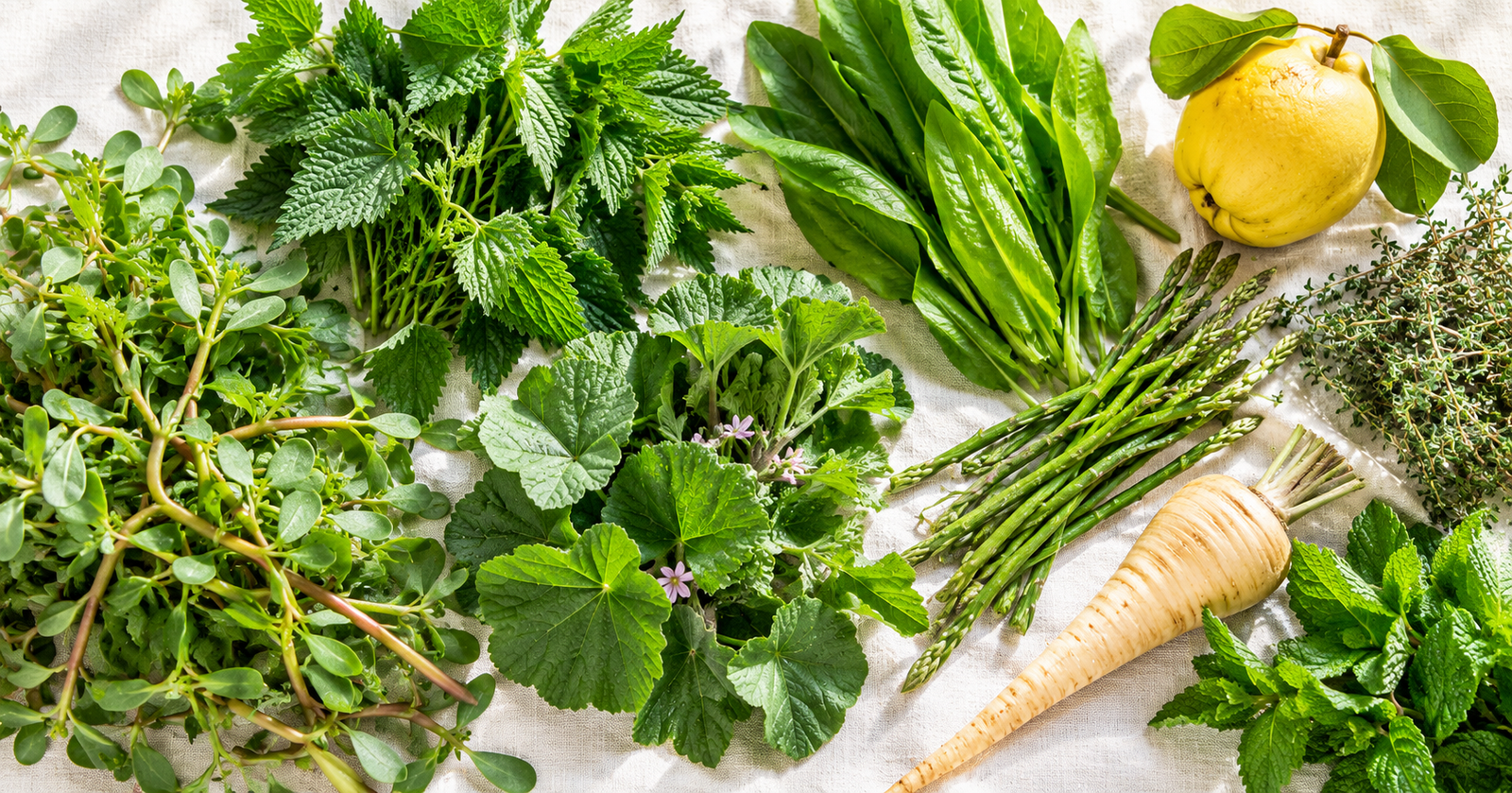
Now walk through a Mediterranean market in April, or the edge of a field in Morocco, Greece or Sicily, and the count changes completely. Purslane. Wild asparagus. Nettle. Mallow. Sorrel. Bottle gourd. Parsnip. Quince. Plants with names most shoppers no longer recognise, each carrying a chemistry the supermarket thirty do not.
This is not a nostalgia piece. Some of these plants hold compounds that are genuinely unusual — a leafy green that manufactures omega-3, a root whose polyacetylenes are studied as anticancer leads, a herb whose active molecule binds the same receptor that detects cold. Others are surrounded by claims that fall apart the moment you check them. And two on this list can put you in hospital if you handle them wrong.
This article is a field guide. Plant by plant: what is actually in it, how strong the evidence is, and — where it applies — what it can do to you. For how vegetables work as a class, and why fibre matters the way it does, see our companion piece on fibre, prebiotics and raw versus cooked. This one is about the individual plants.
Purslane: The Land Plant That Makes Omega-3
If one plant justifies this entire article, it is purslane (Portulaca oleracea) — rjla in Arabic, pourpier in French, and a weed almost everywhere.
Simopoulos and colleagues analysed it and found something genuinely unusual: purslane is among the richest terrestrial plant sources of alpha-linolenic acid, the plant-form omega-3, along with substantial glutathione, alpha-tocopherol and beta-carotene [1].
This deserves precision, because it is often overstated. Purslane’s omega-3 is ALA, not the long-chain EPA and DHA found in oily fish. Humans convert ALA to EPA at a low rate and to DHA at a very low one. Purslane does not replace fish.
What it does do is remarkable for a leaf you can pull out of a pavement crack. The succulent stems and small paddle leaves have a clean, faintly sour, salty taste. It is excellent raw in salad, wilted briefly into eggs, or stirred into yoghurt with garlic — which is precisely how it is eaten from Morocco to Turkey to Mexico, where it is verdolagas.
Purslane also carries oxalate, so anyone with a history of calcium-oxalate kidney stones should treat it the way they treat spinach: enjoy it, do not live on it.
The Wild Greens You Can Actually Gather
Three wild leaves have been gathered around the Mediterranean for as long as there are records, and all three still grow freely across Europe and North America.
Nettle (Urtica dioica)
Nettle is the one with real human trial data behind it, which is rare for a wild green.
In a randomised, double-blind, placebo-controlled trial, patients with advanced type 2 diabetes taking nettle leaf extract alongside their conventional treatment showed improved glycaemic control compared with placebo [2]. That is a genuine finding, and it should be read for exactly what it is: an adjunct in people already under medical treatment, not a replacement for it.
Nettle also delivers meaningful iron, calcium and vitamin K. The sting — formic acid and histamine in hollow hairs — is destroyed instantly by heat or by thorough crushing, which is why every nettle tradition on earth involves a pot of boiling water and a pair of gloves.
Mallow (Malva sylvestris)
Mallow — bakoula or khobiza across North Africa, mauve in French — is built around mucilage: long-chain polysaccharides that swell into a gel in water. That gel is why mallow has been used for millennia as a demulcent for irritated throats and guts, and it is the same physical property that makes the cooked leaf silky [3].
The traditional Moroccan bakoula, slow-cooked with olive oil, preserved lemon and olives, is one of the great uses of a wild plant anywhere.
Sorrel (Rumex species)
Sorrel brings something no other green does: a sharp lemon acidity that comes from oxalic acid. That flavour is the compound, which is the whole caution [4].
Sorrel is superb in small amounts — a handful shredded into soup, a few leaves in a salad, the classic French sorrel sauce for fish. It is not a spinach substitute by volume. Large quantities of high-oxalate greens are a genuine risk for anyone prone to kidney stones, and safety assessments of wild plants entering modern diets flag oxalate as the principal concern in this genus [5].
Eat sorrel like a seasoning, not a side dish.
Wild Asparagus
Wild asparagus (Asparagus acutifolius) — azouillé in Amazigh, sanouber in parts of the Maghreb — is thinner, darker and far more bitter than the cultivated spears, and it grows through scrubland across the entire Mediterranean basin.
Work on asparagus constituents identified compounds with inhibitory activity against cyclooxygenase-2, the enzyme targeted by anti-inflammatory drugs [6]. That is laboratory-level evidence about isolated constituents — interesting, mechanistically coherent, and a long way from a clinical claim. Nobody has shown that eating wild asparagus reduces inflammation in a person.
It also carries folate and saponins, and it makes an exceptional omelette. That is reason enough.
The Mucilage Vegetables — and One Serious Warning
Okra (Abelmoschus esculentus)
Okra — bamia, gombo — divides people entirely on texture. The slipperiness is mucilage: soluble polysaccharides released when the pods are cut.
The evidence needs labelling honestly. Okra’s antidiabetic and lipid-lowering findings come from streptozotocin-induced diabetic rats [7]. It is a reasonable, mechanistically sensible result. There is no human randomised trial establishing that eating okra lowers blood glucose in people, and we could not find one.
Okra is a good vegetable with a real fibre content. It is not a diabetes treatment, and the internet’s confidence about “okra water” runs far ahead of anything published.
If the texture bothers you: high dry heat, acid, or leaving the pods whole all reduce it. Slow-simmering sliced okra maximises it — which is the point in a Louisiana gumbo and the problem everywhere else.
Bottle gourd (Lagenaria siceraria) — read this part
Bottle gourd, calabash, calibas, dubba — a pale, mild squash grown across warm semi-arid regions.
Rat studies show antihyperlipidaemic effects from fruit extracts [8], which is the basis for its reputation as a health food and, in parts of South Asia, for the popular practice of drinking raw bottle gourd juice.
That practice has killed people.
Bottle gourd can accumulate cucurbitacins — intensely bitter triterpenoid toxins that the plant produces under stress, drought or cross-pollination with ornamental gourds. Cucurbitacin poisoning causes violent vomiting, gastrointestinal bleeding, haematemesis, shock and, in reported cases, death. Case reports and reviews of bottle gourd juice toxicity are published in the emergency medicine literature [9][10].
The rule is simple and it is absolute: taste before you swallow. Bottle gourd should be bland. If a piece of raw gourd, or a mouthful of the juice, is bitter — even slightly — spit it out and discard the entire fruit. Cooking does not destroy cucurbitacins. Bitterness is the only warning you get, and it is reliable.
Cooked, non-bitter bottle gourd is a perfectly good vegetable. Raw juice from an untasted gourd is a genuine gamble, and one worth refusing.
We cover this in full — the case literature, the French poison centre data, and why cooking does not help — in bitter bottle gourd and squash: why you must taste first.
Artichoke: What the Trials Actually Show
Globe artichoke (Cynara scolymus) is a Mediterranean thistle and one of the few plants in this article with real clinical trial data.
Its characteristic compounds are cynarin and chlorogenic acid — which is also why a cut artichoke browns so quickly. That discolouration is polyphenol oxidase acting on exactly the phenolics that make the plant interesting.
On cholesterol, the Cochrane review is the honest place to look. It found three randomised trials involving 262 participants. The results favoured artichoke leaf extract — one trial recording a 4.2% fall in total cholesterol against a rise on placebo, another an 18.5% fall against 8.6% — but the reviewers noted methodological shortcomings, and one of the three was available only as a conference abstract [11].
That is encouraging, not established. It is also total cholesterol, not LDL specifically.
On the liver, there is newer and more interesting evidence: a randomised trial in patients awaiting bariatric surgery found artichoke leaf extract reduced hepatic steatosis and decreased liver size [12]. That is a meaningful result in a real clinical population.
Both findings used concentrated leaf extract, not the artichoke hearts you eat. Eating artichokes is good; it is not the intervention that was tested.
The Forgotten Roots
Yellow turnip and swede: an unusual copper source
Copper is not abundant in the plant kingdom. It concentrates in shellfish, liver, nuts and seeds — which means diets low in all four can run short.
Copper matters more than its profile suggests. It is the cofactor for cytochrome c oxidase in the mitochondrial electron transport chain, for lysyl oxidase in collagen cross-linking, for copper-zinc superoxide dismutase in antioxidant defence, and it is required for iron mobilisation — which is why copper deficiency produces an anaemia that does not respond to iron [13].
Yellow turnip and swede (Brassica rapa, Brassica napobrassica) supply useful amounts, and they are among the cheapest vegetables sold anywhere. A diet built on the supermarket three loses this quietly. The same silent-deficiency logic runs through our coverage of magnesium, selenium and zinc.
Parsnip: interesting compounds, and a reason for gloves
Parsnip (Pastinaca sativa) looks like a pale carrot and tastes nothing like one — sweeter, earthier, faintly aniseed.
It belongs to the Apiaceae, and like carrot and celery it contains polyacetylenes — principally falcarinol and falcarindiol. Christensen’s review documents their occurrence and bioactivity across the family, including cytotoxic activity against cancer cell lines [14]. Recent work catalogues parsnip’s broader nutritional and phytochemical profile [15].
Two honest qualifications. This is cell-line and animal work, not human outcome data. And falcarinol is a contact allergen at high concentration — the same class of compound doing the interesting things is also the one that irritates.
Which leads to the practical warning.
Parsnip causes phytophotodermatitis. The plant contains furanocoumarins — psoralens — which react with ultraviolet light. Sap on skin plus sunshine produces a delayed, sharply demarcated burn, often with blistering, that leaves brown staining for months. It is documented in the dermatology literature and it catches gardeners and cooks every summer [16].
Handling parsnips indoors is fine. Harvesting or cutting them outdoors, on a sunny day, with bare forearms is how people acquire a chemical burn shaped like a leaf. Wear gloves, wash your hands and arms before going out in the sun. Eating parsnips is entirely safe.
The Green Herb Triad: Celery, Coriander, Parsley
Three soft green herbs anchor Mediterranean and North African cooking, and they carry more chemistry than their supporting role suggests.
Celery (Apium graveolens) is the significant one. Its principal flavonoid is apigenin, one of the more thoroughly investigated plant compounds in cancer prevention research, with documented anti-inflammatory activity and weak binding at oestrogen receptors [17]. “Weak” is the operative word — apigenin is a phytoestrogen in the same sense soy isoflavones are, thousands of times less potent than endogenous oestradiol.
Celery is also one of the fourteen allergens requiring mandatory declaration in EU food labelling, and celery allergy can be severe. Worth knowing if you cook for other people.
Parsley (Petroselinum crispum) contains apiol and myristicin, alongside genuinely high vitamin K, vitamin C and folate [18]. Culinary quantities are excellent. Concentrated parsley oil or seed extract is a different matter — apiol is a uterine stimulant with a long and unhappy history as an abortifacient, and parsley essential oil should not be taken by anyone pregnant.
Coriander (Coriandrum sativum) — cilantro — is the seasonal one, at its best in cool months and bolting the moment heat arrives. Its aroma is dominated by linalool and aldehydes, and whether you experience those as citrus or soap is partly genetic, tied to variation in olfactory receptor genes.
The traditional pairing of these herbs with pulses — the handful of coriander and parsley stirred into Moroccan harira, the celery in a Provençal bean pot, the coriander in an Indian dal — is not decoration. It adds vitamin C, vitamin K and folate to a dish built on legumes, which is a real nutritional complement.
Quince: Correcting the Record
Quince (Cydonia oblonga) — sfargel, coing — is a golden, intensely aromatic autumn fruit, rock-hard and astringent raw.
It is worth correcting a claim that circulates widely. Quince is frequently described as exceptionally high in ellagic acid, richer than apples. The analytical work does not show that. Silva and colleagues profiled the phenolics of quince pulp, peel, seed and jam, and found the fraction dominated by caffeoylquinic acids — chlorogenic acid and its relatives — with the peel carrying the highest antioxidant capacity of any part [19]. Ellagic acid is characteristic of pomegranate, walnuts and berries, not quince.
Nor does that study support the common advice that quince must be eaten raw. It included jam — a long-cooked product — and measured real antioxidant activity in it.
Which is fortunate, because raw quince is barely edible. Its whole culinary tradition — the membrillo of Spain, the sfargel stewed with lamb across the Maghreb, quince paste, quince jelly — is a cooked tradition, built over centuries by people who discovered that heat converts an inedible fruit into something extraordinary.
Eat the peel where you can. That is where the phenolics concentrate.
The Infusion Herbs
A distinct category: plants neither cooked as vegetables nor eaten raw, but steeped and drunk.
Thyme, oregano and marjoram (Thymus, Origanum) share a chemistry built on thymol and carvacrol — phenolic monoterpenes with well-characterised antimicrobial and antioxidant activity, and increasingly mapped molecular pathways [20]. The antimicrobial data is largely from culture; a thyme infusion is a pleasant, mildly antiseptic drink, not an antibiotic. Thyme has a long traditional use for coughs, and it remains a reasonable comfort measure.
Anise (Pimpinella anisum) is built on anethole, and its reputation as a carminative for bloating and cramp is supported by a body of pharmacological work [21]. It belongs to the same Apiaceae carminative family as caraway, which has the stronger human trial record of the two.
Myrtle (Myrtus communis) — rayhan, a Mediterranean evergreen — yields extracts and essential oils with documented antimicrobial and antioxidant activity [22], and a long tradition in respiratory complaints.
Saffron (Crocus sativus) is the outlier, because it has genuine clinical evidence. A meta-analysis of randomised controlled trials found saffron significantly more effective than placebo for major depressive disorder, with efficacy comparable to standard antidepressants in the trials examined [23]. Those trials used standardised extracts at defined doses, not culinary pinches — but among everything in this article, saffron has the strongest human data. We cover it in more depth in our saffron entry.
Wormwood (Artemisia absinthium) needs care rather than enthusiasm. Its bitter principles do stimulate digestive secretion, which is the basis of its traditional use as an aperitif bitter. But it also contains thujone, a neurotoxic monoterpene, and the risk assessment literature treats sage and wormwood preparations as requiring genuine limits rather than free use [24]. Brief, occasional, weak infusions. Not a daily habit, not in pregnancy. Our full treatment is in wormwood: what the evidence shows.
Mint (Mentha) closes the list, and it opens the next section.
Warming and Cooling: Where Folk Categories Turn Out to Be Pharmacology
Almost every traditional medical system sorts plants into warming and cooling. It is easy to dismiss as pre-scientific.
On at least one plant, it is exactly right — and the mechanism is now known in molecular detail.
Menthol is a TRPM8 agonist. TRPM8 is the ion channel in sensory neurons that detects environmental cold, and Bautista and colleagues established in Nature that it is the principal cold detector [25]. Menthol binds it directly. When mint makes your mouth feel cold, that is not suggestion or evaporation — the same receptor that fires at low temperature is being opened by a molecule.
The traditional category was correct, described the right plant, and predicted the right sensation, centuries before anyone could name a channel.
That deserves neither dismissal nor over-reading. Menthol produces genuine cold sensation; it does not lower core body temperature. And the warming side of the dichotomy has no comparable single mechanism — bitter compounds do stimulate digestive secretion, and capsaicin has its own well-mapped receptor in TRPV1, but “warming herb” as a category is not one pharmacological phenomenon.
The useful conclusion is a methodological one. Traditional classifications are observational data collected over a very long time by people paying close attention. Some of it maps precisely onto molecular pharmacology. Some of it does not. The way to tell the difference is to check — which is what this site exists to do.
Where to Find These
Most of these plants are more available than people assume.
Purslane grows wild across Europe and North America and is sold in Turkish, Greek, Middle Eastern and Mexican shops. Nettle grows everywhere temperate; gather young spring tops away from roadsides, with gloves. Mallow and sorrel are common wild plants and sorrel is stocked by good greengrocers. Okra and bottle gourd are stocked by South Asian, Caribbean and African grocers. Parsnip, swede and quince are ordinary European market vegetables in autumn and winter. Wild asparagus requires knowing someone who knows a hillside.
Two standing rules for anything foraged: identify with certainty before eating, and never gather from roadsides, industrial land or sprayed field margins.
Frequently Asked Questions
Is purslane really a good source of omega-3?
Yes, unusually so for a land plant — it is among the richest terrestrial sources of alpha-linolenic acid, along with glutathione and beta-carotene [1]. But its omega-3 is ALA, not the EPA and DHA in oily fish, and human conversion of ALA to those is inefficient. Purslane is an excellent green. It is not a fish substitute.
Is it safe to drink bottle gourd juice?
Only if you taste it first and it is not bitter. Bottle gourd can accumulate cucurbitacins, and bitter gourd juice has caused severe poisoning — vomiting, gastrointestinal bleeding, shock and deaths are documented in the medical literature [9][10]. Cooking does not destroy the toxin. Any bitterness means discard the whole fruit. Cooked, bland bottle gourd is fine.
Why do parsnips give some people a burn?
Parsnip sap contains furanocoumarins, which react with ultraviolet light. Sap on skin plus sunlight causes phytophotodermatitis — a delayed blistering burn that leaves brown marks for months [16]. Wear gloves when harvesting or peeling large quantities and wash your arms before going into the sun. Eating parsnips is completely safe.
Does artichoke lower cholesterol?
Possibly, modestly. Cochrane found three randomised trials in 262 people showing reductions in total cholesterol, but with methodological shortcomings and one trial available only as an abstract [11]. There is stronger recent evidence for the liver: a randomised trial found artichoke leaf extract reduced hepatic steatosis [12]. Both used concentrated leaf extract rather than the vegetable.
Can I eat sorrel every day?
In small amounts, yes. Sorrel’s lemon flavour comes from oxalic acid, and large quantities are a genuine concern for anyone with a history of calcium-oxalate kidney stones [4][5]. Use it as a seasoning — a few shredded leaves in soup or sauce — rather than as a bulk green.
Does saffron actually work for depression?
It has the strongest human evidence of anything in this article. A meta-analysis of randomised controlled trials found saffron significantly better than placebo for major depressive disorder, with efficacy comparable to standard antidepressants in the trials reviewed [23]. Those used standardised extracts at defined doses. Nobody should stop prescribed treatment on the basis of it — discuss it with the doctor managing your care.
Is wormwood tea safe to drink regularly?
Not as a daily habit. Wormwood contains thujone, a neurotoxic compound, and risk assessments treat wormwood and sage preparations as needing real limits [24]. Occasional weak infusions as a digestive bitter are the traditional use and a reasonable one. Avoid it in pregnancy.
Conclusion
The narrowing of the vegetable basket is a real loss, and it is worth being specific about what was lost rather than romantic.
A green that manufactures omega-3. A wild leaf with a randomised trial behind it in type 2 diabetes. A cheap winter root supplying a mineral that is scarce in plants. A thistle with clinical evidence for hepatic steatosis. A spice with meta-analysed antidepressant data. These are not folklore. They are specific plants with specific compounds and, in a few cases, real human trials.
And the same specificity cuts the other way. Okra’s diabetes evidence is entirely from rats. Wild asparagus’s anti-inflammatory data is from a laboratory bench. Quince is not rich in ellagic acid, and it was never meant to be eaten raw. Bottle gourd juice has killed people, and parsnip sap will burn you in sunlight.
That mixture — genuine value, overstated claims, and real hazards sitting side by side — is what a traditional food culture actually looks like when you examine it honestly. The plants are worth rediscovering. The claims attached to them are worth checking first.
Go and find some purslane.
Scientific Sources and References
- Simopoulos, A. P., Norman, H. A., Gillaspy, J. E., & Duke, J. A. (1992). “Common purslane: a source of omega-3 fatty acids and antioxidants.” Journal of the American College of Nutrition, 11(4), 374–382. PMID 1354675
- Kianbakht, S., Khalighi-Sigaroodi, F., & Dabaghian, F. H. (2013). “Improved glycemic control in patients with advanced type 2 diabetes mellitus taking Urtica dioica leaf extract: a randomized double-blind placebo-controlled clinical trial.” Clinical Laboratory, 59(9–10), 1071–1076. PMID 24273930
- Gasparetto, J. C., Martins, C. A., Hayashi, S. S., et al. (2012). “Ethnobotanical and scientific aspects of Malva sylvestris L.: a millennial herbal medicine.” Journal of Pharmacy and Pharmacology, 64(2), 172–189. PMID 22221093
- Vasas, A., Orbán-Gyapai, O., & Hohmann, J. (2015). “The genus Rumex: review of traditional uses, phytochemistry and pharmacology.” Journal of Ethnopharmacology, 175, 198–228. PMID 26384001
- Mithril, C., & Dragsted, L. O. (2012). “Safety evaluation of some wild plants in the New Nordic Diet.” Food and Chemical Toxicology, 50(12), 4461–4467. PMID 23009884
- Jang, D. S., Cuendet, M., Fong, H. H., et al. (2004). “Constituents of Asparagus officinalis evaluated for inhibitory activity against cyclooxygenase-2.” Journal of Agricultural and Food Chemistry, 52(8), 2218–2222. PMID 15080623
- Sabitha, V., Ramachandran, S., Naveen, K. R., & Panneerselvam, K. (2011). “Antidiabetic and antihyperlipidemic potential of Abelmoschus esculentus (L.) Moench. in streptozotocin-induced diabetic rats.” Journal of Pharmacy and Bioallied Sciences, 3(3), 397–402. PMID 21966160
- Ghule, B. V., Ghante, M. H., Saoji, A. N., & Yeole, P. G. (2009). “Antihyperlipidemic effect of the methanolic extract from Lagenaria siceraria Stand. fruit in hyperlipidemic rats.” Journal of Ethnopharmacology, 124(2), 333–337. PMID 19397976
- Hussain, S., Saini, V., Varshney, V. K., et al. (2023). “Bottle gourd juice: poison or panacea.” Cureus, 15(6), e40886. PMID 37492831
- Varun, H. S., Pandya, K., & Muniraju, M. (2024). “Health drink poisoning — an unusual case of bottle gourd toxicity.” Journal of Emergencies, Trauma, and Shock, 17(1), 40–42. PMID 38681874
- Wider, B., Pittler, M. H., Thompson-Coon, J., & Ernst, E. (2013). “Artichoke leaf extract for treating hypercholesterolaemia.” Cochrane Database of Systematic Reviews, (3), CD003335. PMID 23543518
- Holländer, S., Marth, E., Scherber, P. R., et al. (2026). “Artichoke leaf extract reduces steatosis and decreases liver size in prebariatric patients: a randomized controlled trial.” Journal of Clinical Lipidology, 20(1), 167–178. PMID 41274796
- Bost, M., Houdart, S., Oberli, M., et al. (2016). “Dietary copper and human health: current evidence and unresolved issues.” Journal of Trace Elements in Medicine and Biology, 35, 107–115. PMID 27049134
- Christensen, L. P., & Brandt, K. (2006). “Bioactive polyacetylenes in food plants of the Apiaceae family: occurrence, bioactivity and analysis.” Journal of Pharmaceutical and Biomedical Analysis, 41(3), 683–693. PMID 16520011
- Khatua, S., Nag, A., Sen, S., et al. (2026). “Pastinaca sativa L.: nutritional composition, phytochemistry, and pharmacological properties.” Food Science & Nutrition, 14(5), e71860. PMID 42110206
- Holt, A., Gabel, C., Flanagan, K., et al. (2025). “Parsnip phytophotodermatitis.” Dermatitis, 36(1), 12–13. PMID 39453618
- Shukla, S., & Gupta, S. (2010). “Apigenin: a promising molecule for cancer prevention.” Pharmaceutical Research, 27(6), 962–978. PMID 20306120
- Farzaei, M. H., Abbasabadi, Z., Ardekani, M. R., et al. (2013). “Parsley: a review of ethnopharmacology, phytochemistry and biological activities.” Journal of Traditional Chinese Medicine, 33(6), 815–826. PMID 24660617
- Silva, B. M., Andrade, P. B., Valentão, P., et al. (2004). “Quince (Cydonia oblonga Miller) fruit (pulp, peel, and seed) and jam: antioxidant activity.” Journal of Agricultural and Food Chemistry, 52(15), 4705–4712. PMID 15264903
- Noman, A. M., Sultan, M. T., Awlqadr, F. H., et al. (2026). “Phytochemistry and bioactivities of thymol and carvacrol: molecular pathways, metabolism, and therapeutic potential.” Food Science & Nutrition, 14(4), e71671. PMID 42005330
- Shojaii, A., & Abdollahi Fard, M. (2012). “Review of pharmacological properties and chemical constituents of Pimpinella anisum.” ISRN Pharmaceutics, 2012, 510795. PMID 22848853
- Aleksic, V., & Knezevic, P. (2014). “Antimicrobial and antioxidative activity of extracts and essential oils of Myrtus communis L.” Microbiological Research, 169(4), 240–254. PMID 24291016
- Hausenblas, H. A., Saha, D., Dubyak, P. J., & Anton, S. D. (2013). “Saffron (Crocus sativus L.) and major depressive disorder: a meta-analysis of randomized clinical trials.” Journal of Integrative Medicine, 11(6), 377–383. PMID 24299602
- Lachenmeier, D. W. (2010). “Wormwood (Artemisia absinthium L.) — a curious plant with both neurotoxic and neuroprotective properties?” Journal of Ethnopharmacology, 131(1), 224–227. PMID 20542104
- Bautista, D. M., Siemens, J., Glazer, J. M., et al. (2007). “The menthol receptor TRPM8 is the principal detector of environmental cold.” Nature, 448(7150), 204–208. PMID 17538622
Last reviewed: September 2026. Vivid Remedy publishes independently researched, evidence-based health content cross-referenced against current peer-reviewed scientific literature. This content does not constitute medical advice. Always consult a licensed physician or qualified healthcare provider regarding your specific health conditions.