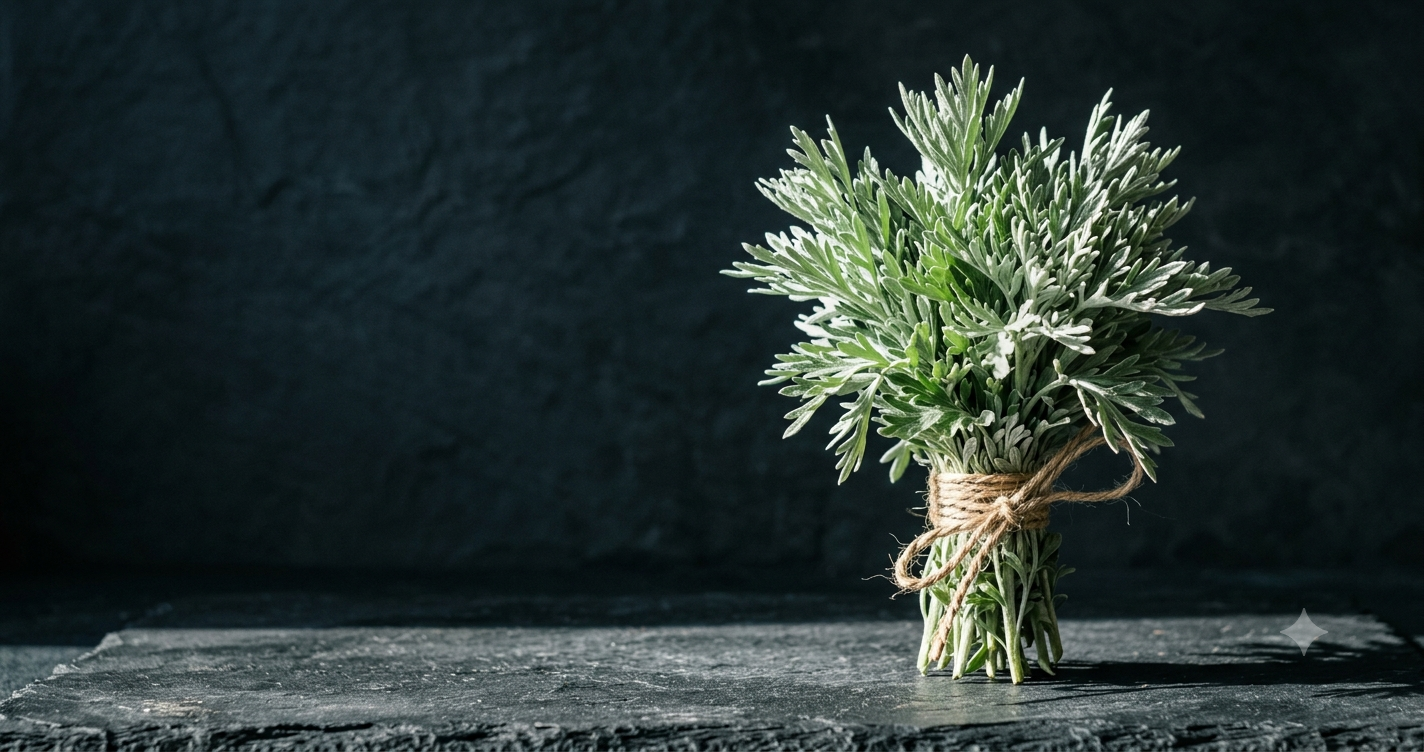
This article reviews the published evidence on Artemisia. It is not medical advice. Most of the research described below is laboratory or animal work, which is noted where it applies. Speak to a doctor or pharmacist before using Artemisia therapeutically, particularly alongside prescription medication.
Introduction
Few plants bridge ancient wisdom and modern medicine as powerfully as wormwood (Artemisia spp.). Mentioned in biblical texts, inscribed in Egyptian medical papyri, and documented in traditional Chinese pharmacopoeia for over two millennia, this unassuming herb has now earned its place in contemporary scientific literature — including the highest honour in medicine.
In 2015, Chinese scientist Tu Youyou was awarded the Nobel Prize in Physiology or Medicine for isolating artemisinin from Artemisia annua — a discovery that transformed malaria treatment and saved millions of lives [1]. Yet the therapeutic interest in Artemisia extends well beyond malaria. Modern research now documents anti-inflammatory, antiviral, anticancer, neuroprotective and immune-modulating activity — much of it validating what traditional practitioners understood empirically.
This article examines what the evidence actually establishes, how the mechanisms work, and the safety considerations that responsible use requires.
The Whole Plant Advantage: Beyond a Single Compound
The Nobel Prize focused on artemisinin — but the plant is far more complex than one molecule.
In a striking experiment, dried whole-plant Artemisia annua overcame artemisinin resistance in a rodent malaria model and slowed the evolution of resistance, outperforming the purified drug [2]. Whole-plant material achieved what the isolated compound could not.
This is the strongest evidence in the whole Artemisia literature for a principle the article rests on: the plant contains hundreds of bioactive compounds — flavonoids, polyphenols, sesquiterpene lactones, essential oils — and they do not behave like artemisinin alone [3]. A comprehensive pharmacological review of A. annua catalogues that chemistry in detail [4].
The whole really is more than the sum of its parts. That is a measured result, not a slogan.
Cardiovascular and Liver Protection
Artemisia species have a long record in liver medicine, and modern work supports it. Artemisia capillaris — used in East Asian practice specifically for jaundice and liver disease — has been reviewed across a substantial body of research on hepatoprotection and bile flow [5]. A broader 2025 review examines the Artemisia genus in cancer, diabetes and cardiovascular disease together [6].
There is also a human trial: Artemisia dracunculus (tarragon) improved insulin sensitivity and insulin secretion in patients with type 2 diabetes [7].
A note on the cholesterol claim. Artemisia is often said to lower LDL by inhibiting its synthesis in the liver. The genus review reports lipid-lowering activity [3], but this rests largely on animal work — there is no human trial establishing an LDL-lowering effect in people. Treat it as plausible and unproven rather than established.
Mental Health: The Inflammation Connection
The link between chronic inflammation and mental illness is now well established in psychiatry. Depression is increasingly understood as having a neuroinflammatory component, driven in part by elevated inflammatory signalling.
Artemisinin and its derivatives have documented anti-inflammatory and immunoregulatory activity [8], and demonstrably reduce neuroinflammation in animal models [9]. That is a real mechanism, and it is the honest basis for interest in Artemisia and mood.
Where the claim outruns the evidence. Artemisia is sometimes described as restoring serotonin and dopamine balance “without the side effects of conventional psychotropic medication.” No human trial supports this. There is no clinical study of Artemisia in depression or anxiety. The inflammation mechanism is real; the leap from there to a substitute for psychiatric medication is not evidence, and nobody should stop an antidepressant on the strength of it.
The Immune Paradox: Calming, Not Stimulating
This is the section where the traditional understanding was wrong and the modern evidence is genuinely surprising.
For years, Artemisia was assumed to stimulate immunity — and therefore to be risky in autoimmune disease, in the way echinacea is. The literature now says the opposite.
A major 2021 review in Medicinal Research Reviews is titled, plainly, “The immunosuppressive activity of artemisinin-type drugs towards inflammatory and autoimmune diseases” [10]. Artemisinin-type compounds dampen the immune response rather than amplifying it, and a 2024 review reaches the same conclusion across autoimmune conditions [11].
The mechanism is cytokine suppression — the pro-inflammatory signalling molecules that drive autoimmune flares [8][10].
And there is human evidence in one condition. In a controlled clinical trial in patients with Crohn’s disease, wormwood (Artemisia absinthium) suppressed tumour necrosis factor alpha and improved healing [12]. An artemisinin analogue produced the same effect in an ulcerative colitis model [13].
How far this extends. Crohn’s disease has a human trial. Multiple sclerosis, lupus and rheumatoid arthritis have laboratory and animal work reviewed in [10] and [11] — real research, genuinely promising, but not yet human trials. The reversal in understanding is well supported. The specific promise to any individual patient is not, and anyone with an autoimmune condition should be having this conversation with their specialist, not with an article.
And the answer differs from herb to herb. “Immune-active plant” is not one category with one verdict. The single randomised trial of Reishi in an autoimmune population found lymphocyte counts and inflammatory markers unchanged over six months — neither stimulated nor suppressed. We examined that evidence, and where the popular claims outrun it, separately. Two immune-active herbs, two different answers.
Anticancer Potential: Laboratory Evidence and Clinical Promise
Artemisia has demonstrated anticancer activity across multiple cancer cell lines, and the mechanism is elegant.
Cancer cells accumulate far more iron than healthy cells. Artemisinin’s peroxide bridge reacts with that iron to generate free radicals — which is why iron-carrying compounds have been used deliberately to target artemisinin to tumours [14]. More recent work in Cell Death & Differentiation shows artemisinin compounds sensitise cancer cells to ferroptosis, an iron-dependent form of cell death, by regulating iron homeostasis [15]. A comprehensive review covers the field [16].
The essential caveat, stated plainly. This is laboratory and animal research. Artemisia is not a cancer treatment and is not a substitute for one. Anyone in cancer treatment should discuss any supplement with their oncologist first — several antioxidants interact with chemotherapy and radiotherapy.
Broad-Spectrum Antiviral Activity
Artemisinin and artesunate have documented antiviral activity against several virus families — including human cytomegalovirus, hepatitis B and C, and herpes viruses [17]. Artemisia vulgaris extract shows activity against herpes simplex specifically [18], and a 2021 review covers antiviral and immunomodulatory effects across the genus [19].
Read this carefully: these are cell-culture results. They describe what happens to virus-infected cells in a dish. They are not clinical trials, and Artemisia is not a treatment for influenza, hepatitis or any other viral illness in people.
For hepatitis that distinction is not academic. Hepatitis C is curable in more than 95% of patients with direct-acting antivirals, and hepatitis B is controllable with long-term treatment. A laboratory result should never delay either.
Respiratory Support and Fever Reduction
Artemisia has served as a fever remedy and respiratory herb since antiquity — in Egyptian, Chinese and classical Arab practice. Willcox’s review traces that history from traditional preparations into modern antimalarial medicine and back [20], and the pharmacological review of A. annua catalogues the traditional respiratory applications alongside the modern chemistry [4].
The plausible mechanism is the same one running through this article: lowering the inflammatory signalling that produces fever and mucus. The traditional record here is long and the modern clinical evidence is thin — no controlled trial has tested Artemisia for the common cold.
Neuroprotection: The Alzheimer’s Connection
Alzheimer’s disease is marked by beta-amyloid accumulation, which triggers neuroinflammation and neuronal death.
Artemisinin attenuated amyloid-induced brain inflammation and memory impairment in an animal model, acting through TLR4/NF-κB signalling [9]. It is an early but real result, and it aligns with the inflammatory hypothesis of neurodegeneration.
Animal work. No human trials. One published paper on A. absinthium and amyloid has since been withdrawn by its journal, which is a reminder to check this literature carefully rather than count papers.
Antifungal, Analgesic and Metabolic Effects
Antifungal. Antifungal coumarins and lignans have been isolated from A. annua [21], and essential oils from other species show activity against fungal infections [4].
Metabolic. The tarragon trial in type 2 diabetes is the strongest human metabolic result [7]. Claims about specific weight-loss doses come from rodent studies — mouse doses are not human doses, and no weight-loss trial in people exists.
Analgesic. Artemisia is sometimes credited with pain relief through 1,8-cineole (eucalyptol). That compound does have documented anti-inflammatory activity, but it is a minor and variable constituent across Artemisia species, and the analgesic claim for arthritis or headache has not been tested in people.
Kidney protection is reported in animal models within the genus review [3]; there is no human evidence.
The Global Species Question — With an Important Correction
The article’s instinct here is right, and its specifics need fixing.
Right: local and under-studied Artemisia species are genuinely worth attention, and research funding does follow wealthy institutions. The evidence bears this out — A. capillaris for liver disease [5], A. dracunculus in a human diabetes trial [7], A. vulgaris against herpes [18], A. herba-alba in colitis models. These are not lesser plants.
Wrong: the species are not interchangeable. Artemisinin content varies enormously across the genus — gene-expression studies comparing five Artemisia species found large differences in the biosynthetic pathway [22], and analysis of three wild Algerian species found similarly wide variation [23]. A. annua dominates the research because it produces artemisinin in usable quantity, not merely because of where it grows.
And one species needs naming separately. Artemisia absinthium contains thujone, which acts on GABA-A receptors [24] and is a documented convulsant. Regulators cap thujone in food and medicinal products for exactly this reason [25]. A. absinthium is a legitimate medicinal plant — it is the species in the Crohn’s trial [12] — but it is not a substitute for A. annua, and it carries a risk A. annua does not.
Different species. Different chemistry. Different cautions.
Safe Usage: Dosage, Cycling and Precautions
Dosage
Preparations and species differ enormously, so a single number across the genus is misleading. For a traditional infusion, one teaspoon of dried herb steeped in just-boiled water for 10–15 minutes — steeped, never boiled — is the customary preparation.
Do not apply a high dose across species. Because of thujone, sustained high intake of A. absinthium specifically is not advisable [24][25], and thujone-containing products are regulated on that basis. Any therapeutic dose should be set with a qualified practitioner who knows which species you have.
Cycling
Long-term safety data beyond a few months do not exist for most preparations. A cycled approach — periods on, periods off — is a sensible hedge against unknown cumulative effects. It is prudence, not a validated protocol.
Contraindications
| Population | Reason |
|---|---|
| Pregnancy | Uterine stimulant activity — avoid |
| Breastfeeding | Safety not established |
| Epilepsy or seizure history | Thujone acts on GABA-A receptors [24] |
| Liver disease | May burden a compromised liver at high doses |
| Children | Safety not established |
| Asteraceae allergy | Cross-reactivity with daisy-family plants |
Drug Interactions
Artemisia may interact with diabetes medication — the tarragon trial demonstrates a real glucose-lowering effect [7], so combining it with metformin, a sulfonylurea or insulin risks hypoglycaemia. Caution also with anticonvulsants, sedatives, anticoagulants and immunosuppressants, given the documented immunosuppressive activity [10]. Tell the doctor who manages your prescriptions before starting.
Conclusion
Artemisia is where ancient practice and modern pharmacology genuinely meet. A Nobel Prize confirmed its antimalarial power. Whole-plant preparations overcame drug resistance that the isolated compound could not [2]. The old assumption that it stimulates immunity has been overturned — it suppresses inflammatory signalling [10][11], and in Crohn’s disease that translated into a measurable human result [12].
Most of the rest — cancer, antiviral, neuroprotection — is laboratory and animal work. Real, promising, and not yet medicine.
The philosophy holds: nature provides complete systems rather than isolated compounds, and the whole-plant malaria result is the hard evidence for it. But power demands respect, and respect here means knowing which Artemisia you are holding. They are not the same plant.
And the corollary is worth stating: an exotic reputation is not evidence. Caraway — an ordinary kitchen spice — carries five randomised trials behind its main indication, which is more clinical evidence than most celebrated botanicals can show.
This article is part of our complete guide to Herbal Remedies — the herbs with genuine clinical evidence behind them, separated from the ones that only have marketing.
Scientific Sources and References
Every source below was checked against PubMed and the CrossRef DOI registry. Each link resolves to the paper cited.
- Tu, Y. (2016). “Artemisinin — a gift from traditional Chinese medicine to the world (Nobel Lecture).” Angewandte Chemie International Edition, 55(35), 10210–10226. PubMed 27488942
- Elfawal, M. A., Towler, M. J., Reich, N. G., Weathers, P. J., & Rich, S. M. (2015). “Dried whole-plant Artemisia annua slows evolution of malaria drug resistance and overcomes resistance to artemisinin.” PNAS, 112(3), 821–826. PubMed 25561559
- Bora, K. S., & Sharma, A. (2011). “The genus Artemisia: a comprehensive review.” Pharmaceutical Biology, 49(1), 101–109. doi:10.3109/13880209.2010.497815
- Feng, X., Cao, S., Qiu, F., & Zhang, B. (2020). “Traditional application and modern pharmacological research of Artemisia annua L.” Pharmacology & Therapeutics, 216, 107650. doi:10.1016/j.pharmthera.2020.107650
- Hong, S. H., et al. (2015). “A survey of therapeutic effects of Artemisia capillaris in liver diseases.” Evidence-Based Complementary and Alternative Medicine, 2015, 728137. PubMed 26366183
- Bora, L., et al. (2025). “Exploring the therapeutic potential of Artemisia and Salvia genera in cancer, diabetes, and cardiovascular diseases.” Journal of Clinical Medicine, 14(3). PubMed 39941696
- Méndez-Del Villar, M., et al. (2016). “Effect of Artemisia dracunculus administration on glycemic control, insulin sensitivity, and insulin secretion in patients with impaired glucose tolerance.” Journal of Medicinal Food, 19(5), 481–485. doi:10.1089/jmf.2016.0005
- Shi, C., Li, H., Yang, Y., & Hou, L. (2015). “Anti-inflammatory and immunoregulatory functions of artemisinin and its derivatives.” Mediators of Inflammation, 2015, 435713. doi:10.1155/2015/435713
- Zhao, X., et al. (2022). “Artemisinin attenuates amyloid-induced brain inflammation and memory impairments by modulating TLR4/NF-κB signaling.” International Journal of Molecular Sciences, 23(11), 6354. doi:10.3390/ijms23116354
- Efferth, T., & Oesch, F. (2021). “The immunosuppressive activity of artemisinin-type drugs towards inflammatory and autoimmune diseases.” Medicinal Research Reviews, 41(6), 3023–3061. doi:10.1002/med.21842
- Zhang, X., et al. (2024). “Artemisinin and its derivatives as promising therapies for autoimmune diseases.” Heliyon, 10(7), e27972. doi:10.1016/j.heliyon.2024.e27972
- Krebs, S., Omer, T. N., & Omer, B. (2010). “Wormwood (Artemisia absinthium) suppresses tumour necrosis factor alpha and accelerates healing in patients with Crohn’s disease — a controlled clinical trial.” Phytomedicine, 17(5), 305–309. doi:10.1016/j.phymed.2009.10.013
- Lin, Z. M., et al. (2018). “Artemisinin analogue SM934 ameliorates DSS-induced mouse ulcerative colitis via suppressing neutrophils and macrophages.” Acta Pharmacologica Sinica, 39(10), 1633–1644. doi:10.1038/aps.2017.185
- Lai, H., Sasaki, T., & Singh, N. P. (2005). “Targeted treatment of cancer with artemisinin and artemisinin-tagged iron-carrying compounds.” Expert Opinion on Therapeutic Targets, 9(5), 995–1007. PubMed 16185154
- Wang, K., et al. (2020). “Artemisinin compounds sensitize cancer cells to ferroptosis by regulating iron homeostasis.” Cell Death & Differentiation, 27(1), 242–254. doi:10.1038/s41418-019-0352-3
- Efferth, T. (2017). “From ancient herb to modern drug: Artemisia annua and artemisinin for cancer therapy.” Seminars in Cancer Biology, 46, 65–83. doi:10.1016/j.semcancer.2017.02.009
- Efferth, T., Romero, M. R., Wolf, D. G., et al. (2008). “The antiviral activities of artemisinin and artesunate.” Clinical Infectious Diseases, 47(6), 804–811. doi:10.1086/591195
- Chen, X., et al. (2023). “Antiviral activities of Artemisia vulgaris L. extract against herpes simplex virus.” Chinese Medicine, 18(1), 21. doi:10.1186/s13020-023-00711-1
- Nigam, M., et al. (2021). “Antiviral and immunomodulation effects of Artemisia.” Medicina, 57(3), 217. doi:10.3390/medicina57030217
- Willcox, M. (2009). “Artemisia species: from traditional medicines to modern antimalarials — and back again.” Journal of Alternative and Complementary Medicine, 15(2), 101–109. doi:10.1089/acm.2008.0327
- Zhang, L. B., & Lv, J. L. (2019). “Antifungal coumarins and lignans from Artemisia annua.” Fitoterapia, 134, 323–328. doi:10.1016/j.fitote.2019.02.022
- Ahmad, S., et al. (2018). “Expression of key genes affecting artemisinin content in five Artemisia species.” Scientific Reports, 8(1), 12659. doi:10.1038/s41598-018-31079-0
- Benmansour, N., et al. (2022). “Assessment of artemisinin and antioxidant activities of three wild Artemisia species of Algeria.” Natural Product Research, 36(24), 6344–6352. doi:10.1080/14786419.2022.2025803
- Szczot, M., et al. (2012). “Modulation of GABAergic synaptic currents and current responses by α-thujone and dihydroumbellulone.” Journal of Natural Products, 75(4), 622–629. doi:10.1021/np200863q
- Lachenmeier, D. W., & Uebelacker, M. (2013). “Thujone and thujone-containing herbal medicinal and botanical products: toxicological assessment.” Regulatory Toxicology and Pharmacology, 65(1), 100–107. PubMed 23201408