This article reviews what is established about glutathione, diet and supplementation. It is not medical advice. Speak to a doctor or registered dietitian before starting a supplement, particularly if you are being treated for a serious illness.
Introduction
Glutathione is the body’s master antioxidant — and unlike vitamin C or vitamin E, which must arrive through food, your cells manufacture it themselves.
It sits at the centre of your antioxidant defences, doing work no vitamin can:
- Neutralising oxidative stress
- Supporting liver detoxification
- Supporting immune function
- Protecting cellular DNA
- Slowing oxidative damage associated with ageing
Yet glutathione falls with age, poor diet, toxic exposure and chronic disease [1]. Knowing how to support its production through food — and when a supplement is genuinely warranted — is worth understanding properly.
Key Takeaways
- Glutathione is made inside your cells and is the most abundant antioxidant in them
- It is called the master antioxidant because it regenerates vitamins C and E and powers the body’s antioxidant enzymes
- Fresh fruits and vegetables carry glutathione; cooking and processing reduce it sharply
- Sulfur amino acids (cysteine, methionine) from legumes, eggs and fish are the essential raw material
- Vitamin C, folate and polyphenols support glutathione status
- Fermentation preserves what heat destroys, and fermentation bacteria make glutathione themselves
- Oral supplementation does raise body stores — proven in randomised trials — but food comes first
1. What Is Glutathione?
Glutathione is a tripeptide — three amino acids joined together:
- Glutamate
- Cysteine (the sulfur-containing one, and the rate-limiting ingredient)
- Glycine
Every cell makes it, with the liver as the primary production site [2]. It works as an antioxidant, a detoxifier that binds toxins for excretion, an immune modulator, and a protector of DNA [1][2].
Why “Master” Antioxidant Is the Right Word
One correction worth making, because the usual version of this claim is wrong and the truth is more impressive.
Glutathione is not the only antioxidant your body produces. Your cells also build superoxide dismutase, catalase and glutathione peroxidase, and they synthesise coenzyme Q10, uric acid, melatonin and bilirubin — all part of the antioxidant defence system [3].
What makes glutathione the master is its position in that system. It is the most abundant antioxidant inside cells, it is the substrate that glutathione peroxidase requires to neutralise peroxides, and it regenerates oxidised vitamin C and vitamin E back into their active forms [2][3].
So the vitamins you swallow depend on the antioxidant you make. That is a stronger claim than “the only one,” and it happens to be true.
2. The Glutathione–Disease Connection
Glutathione depletion and disturbed glutathione redox balance are associated with a long list of conditions — neurodegenerative disease, liver disease, cardiovascular disease, diabetes, immune dysfunction, and ageing itself [4].
The relationship runs in both directions, and that matters for how you read it. Illness depletes glutathione, and depleted glutathione worsens the ability to withstand illness. Association is not the same as cause — but the pattern is consistent enough that glutathione status is used as a marker of oxidative stress in clinical research [5].
3. Natural Sources: Fresh Food Carries It, Heat Removes It
A. Glutathione in Fresh Foods
This is the best-documented part of the whole subject. When researchers measured glutathione across the foods in a national dietary questionnaire, the pattern was unambiguous [6]:
- Fresh fruits and vegetables were consistently the richest dietary sources
- Cooked, processed and preserved foods contained substantially less
- Some fresh produce items were rich enough to be meaningful contributors to daily intake
| Food form | Glutathione |
|---|---|
| Fresh raw vegetables | Highest |
| Fresh fruit | Highest |
| Fresh leafy greens | High |
| Fermented vegetables | Preserved — see Section 4 |
| Cooked vegetables | Substantially reduced |
| Processed and preserved foods | Negligible |
B. The Foods Worth Prioritising
| Food | Why |
|---|---|
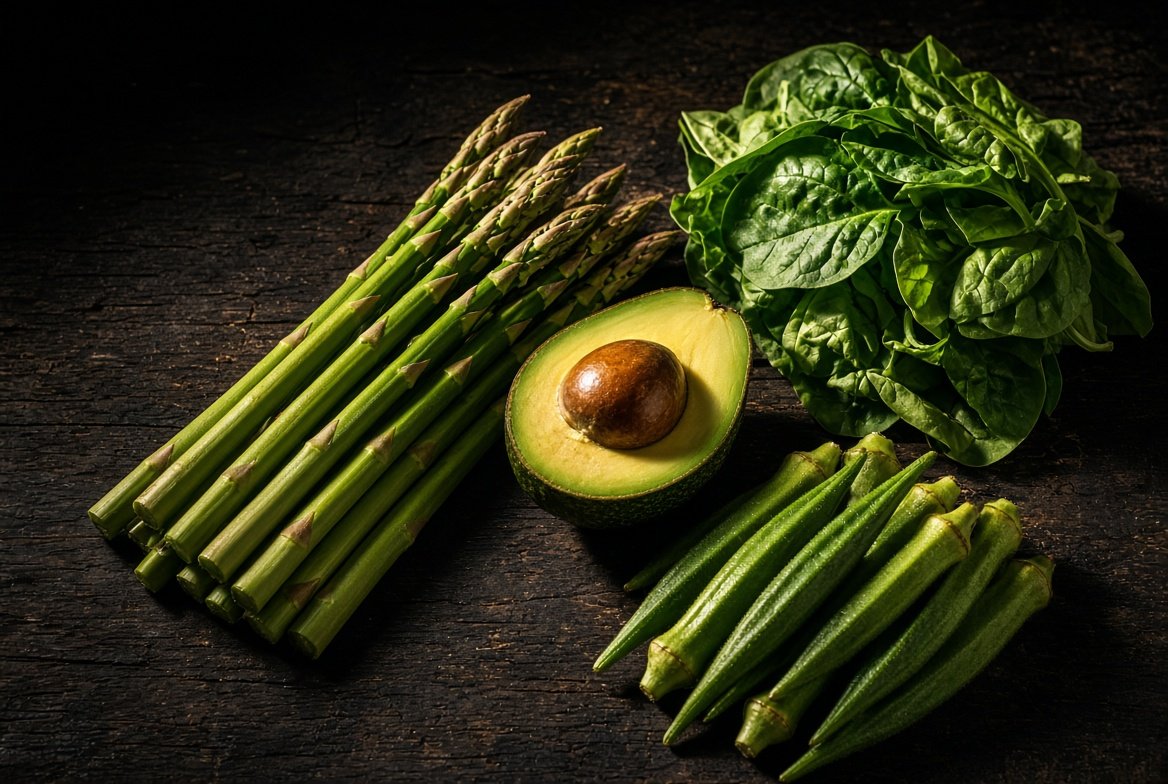
| Asparagus | Among the richest measured dietary sources of glutathione [6] |
| Avocado, spinach, okra | Consistently high in the food analyses [6] |
| Artichoke (fresh) | Cynarin and luteolin — liver-supportive polyphenols |
| Cruciferous vegetables — turnip, cabbage, radish | Sulfur compounds that support glutathione enzymes [7] |
| Legumes — chickpeas, lentils, fava beans | Plant cysteine and methionine |
| Eggs | Among the best dietary sources of cysteine |
| Fish | Sulfur amino acids plus selenium, required by glutathione peroxidase |
One small correction to a common claim: artichoke contains cynarin, not silymarin. Silymarin comes from milk thistle — a relative, but a different plant.
C. The Sulfur Connection
Glutathione synthesis is limited by the supply of cysteine. Methionine converts to cysteine in the body, so both matter [2][7].
Get them from legumes, eggs, fish, and cruciferous vegetables. Without sulfur amino acids, no amount of vitamin C will build glutathione — you cannot assemble the molecule without its parts.
4. Fermentation: The Old Technology That Preserves What Heat Destroys
Fermented vegetables are a genuinely better choice than boiled ones here, and the reason is better than “it preserves enzymes.”
The bacteria make glutathione themselves. The lactic acid bacteria used in food fermentation carry glutathione systems, accumulating and metabolising it as part of their own defence against oxidative stress [8]. Fermentation adds no heat, so what was in the vegetable survives — and the culture contributes as well.
Traditional practice arrived at this centuries before anyone could measure it:
- Fermented turnips, carrots and radishes
- Olives
- Sauerkraut and fermented cabbage
- Salt-brined cucumbers
Modern preservation replaced fermentation with pasteurisation and sterilisation. Both work for shelf life. Only one keeps the heat-sensitive compounds.
5. What Suppresses Glutathione
A. The Processed Diet
Processed foods supply almost no glutathione and few of its precursors, while adding an oxidative load the system has to absorb:
- ❌ White bread and refined flour products
- ❌ Deep-fried foods and repeatedly heated oils
- ❌ Refined sugar and sugary drinks
- ❌ Industrial seed oils
- ❌ Long-shelf-life packaged snacks
B. Toxic Exposure
Pesticides, heavy metals and industrial pollutants consume glutathione. Detoxification is one of its primary jobs — every molecule spent binding a toxin for excretion is one not available for antioxidant defence [1][4].
This is the honest mechanism behind “toxins deplete you.” It isn’t vague. Glutathione is literally used up.
C. Alcohol and Paracetamol
Both deplete hepatic glutathione directly. Paracetamol overdose kills by exhausting the liver’s glutathione supply — which is why the antidote, N-acetylcysteine, works by restoring cysteine for glutathione synthesis [1].
6. The Rural–Urban Pattern
Populations eating fresh, local, seasonal food have historically shown lower rates of chronic disease than those eating an industrialised diet. The proposed explanation fits everything above: more fresh produce, more glutathione and its precursors, more polyphenols, fewer processed inputs.
Stated carefully: this is epidemiological association, and diet is only one of many differences between rural and urban life — physical activity, air quality, stress and healthcare access all differ too. It is a strong reason to eat like that. It is not a controlled experiment.
7. What Supports Glutathione Production
Vitamin C — spares glutathione by taking on oxidative work itself, and glutathione in turn regenerates vitamin C once it is oxidised. They work as a pair [2][7]. In a controlled trial, 500 mg of vitamin C a day raised red-cell glutathione by roughly half in healthy adults [11]. Fresh fruit, peppers, leafy greens.
Folate (B9) — required for the methylation cycle that feeds cysteine production [7]. Leafy greens, legumes.
Selenium — glutathione peroxidase is a selenoenzyme. Without selenium, glutathione cannot do its main job [7]. Fish, eggs, brazil nuts — but only one or two, because the selenium in brazil nuts varies four-fold.
Polyphenols — a broad range of plant compounds upregulate the body’s own antioxidant defences [7]. All fresh vegetables and fruit.
Sulfur amino acids — the raw material. Legumes, eggs, fish, crucifers.
One claim to retire: raw foods are often said to supply “living enzymes” that drive glutathione synthesis. They do not. Dietary enzymes are proteins, and stomach acid denatures them and digests them like any other protein. Raw produce is still better here — but because it retains its glutathione and vitamin C, not because its enzymes survive to work inside you [6].
8. Supplementation: When It Actually Makes Sense
A. Does Oral Glutathione Work?
For years the answer was assumed to be no, on the grounds that the gut breaks the tripeptide apart. That assumption did not survive testing.
In a randomised controlled trial, 250 mg and 1,000 mg of oral glutathione daily for six months raised body stores — in blood, erythrocytes, plasma and buccal cells — with the higher dose producing the larger effect [9]. A later trial of liposomal glutathione also raised body stores and markers of immune function [10].
So oral supplementation does work. That is a real finding, and it is more than can be said for many supplements on the shelf.
B. Who It Is Actually For
A supplement completes what a diet is missing. It is not a treatment, not a replacement for food, and not a magic pill.
It makes sense for:
- People without reliable access to fresh produce
- People eating predominantly processed food, whatever the reason
- Older adults with reduced absorption
- People with digestive disorders affecting nutrient uptake
If you cook at home with fresh ingredients, you almost certainly do not need it. The food route delivers glutathione alongside fibre, vitamin C, folate, selenium and polyphenols — every cofactor the system requires. A capsule delivers one molecule.
C. And Not For
Glutathione is not a cancer treatment. It supports normal antioxidant and detoxification function. It does not treat, cure or replace treatment for any disease, and anyone with cancer should discuss any supplement with their oncologist first — some antioxidants interact with chemotherapy and radiotherapy.
9. The Gut Comes First
None of this works without absorption. Cysteine, methionine, vitamin C, folate and selenium all have to cross the gut wall before a single molecule of glutathione is built from them.
A compromised digestive system undermines the entire chain no matter how good the shopping list. Fermented foods earn their place twice over here — for what they preserve, and for what they do for the gut that has to absorb it.
10. Diet Patterns and Disease Patterns
| Dietary pattern | Observed association |
|---|---|
| Mediterranean — vegetables, olive oil, fish, legumes | Lower rates of cardiovascular disease and several cancers |
| Traditional Asian — rice, vegetables, fish, fermented foods | Historically low chronic disease rates |
| Western — processed food, refined oil, sugar, fast food | Higher rates of obesity, type 2 diabetes and cardiovascular disease |
The glutathione story fits inside this larger one. Diets rich in fresh plants supply both the molecule and everything needed to make it. Diets built on processed food supply neither, while increasing the oxidative load those defences must handle.
Frequently Asked Questions
What is glutathione?
Glutathione is a tripeptide of glutamate, cysteine and glycine, made inside every cell of your body. It is the most abundant antioxidant inside cells and is called the master antioxidant because it regenerates vitamins C and E and supplies the antioxidant enzyme glutathione peroxidase [1][2].
Is glutathione the only antioxidant the body makes?
No — a common myth. Your body also produces superoxide dismutase, catalase, glutathione peroxidase, coenzyme Q10, uric acid and melatonin [3]. Glutathione is the master because the rest of the system depends on it, not because it stands alone.
What foods are highest in glutathione?
Fresh, uncooked produce. When glutathione was measured across dietary foods, asparagus, avocado, spinach and okra ranked among the richest, and fresh fruits and vegetables far outranked cooked or processed items [6].
Does cooking destroy glutathione?
It substantially reduces it. Glutathione is heat-sensitive, and cooked and processed foods measure much lower than fresh [6]. Fermented vegetables avoid the problem — no heat is applied, and the fermenting bacteria carry glutathione systems of their own [8].
Do oral glutathione supplements actually work?
Yes. A randomised controlled trial found 250 mg and 1,000 mg daily for six months raised glutathione stores in blood, red cells, plasma and buccal cells [9], and a liposomal form also raised stores and immune markers [10]. Food remains the better route, because it brings the cofactors with it.
Do raw foods provide “living enzymes” that boost glutathione?
No. Dietary enzymes are proteins, and stomach acid denatures and digests them. Raw produce is still the better choice — because it retains its glutathione and vitamin C, not because its enzymes survive digestion.
Is glutathione a cancer treatment?
No. It is a supportive nutrient, not a therapy. Anyone undergoing cancer treatment should ask their oncologist before taking antioxidant supplements, as some interact with chemotherapy and radiotherapy.
What depletes glutathione fastest?
Alcohol, paracetamol, environmental toxins and chronic illness. Detoxification consumes glutathione directly — it is spent binding toxins for excretion [1][4].
The Verdict
Glutathione is the body’s master antioxidant, and the way to support it is unglamorous:
- Eat fresh produce — raw or fermented, not boiled to death
- Prioritise asparagus, avocado, spinach and okra — the measured leaders
- Supply the sulfur — legumes, eggs, fish, cruciferous vegetables
- Supply the cofactors — vitamin C, folate, selenium, polyphenols
- Cut the processed food — it gives you nothing and costs you something
- Supplement only if food genuinely cannot reach you — and know that it does work if so [9][10]
Your body makes the antioxidant that keeps every other antioxidant working. Give it the parts.
This article is part of our complete guide to Dietary Supplements — which supplements work, which are overhyped, and how to fill nutritional gaps intelligently.
Scientific Sources and References
Every source below was checked against PubMed and the CrossRef DOI registry. Each link resolves to the paper cited.
- Pizzorno, J. (2014). “Glutathione!” Integrative Medicine (Encinitas), 13(1), 8–12. PubMed 26770075
- Wu, G., Fang, Y. Z., Yang, S., Lupton, J. R., & Turner, N. D. (2004). “Glutathione metabolism and its implications for health.” Journal of Nutrition, 134(3), 489–492. doi:10.1093/jn/134.3.489
- Demirci-Çekiç, S., Özkan, G., Avan, A. N., et al. (2022). “Biomarkers of oxidative stress and antioxidant defense.” Journal of Pharmaceutical and Biomedical Analysis, 209, 114477. doi:10.1016/j.jpba.2021.114477
- Ballatori, N., Krance, S. M., Notenboom, S., et al. (2009). “Glutathione dysregulation and the etiology and progression of human diseases.” Biological Chemistry, 390(3), 191–214. doi:10.1515/BC.2009.033
- Jones, D. P. (2002). “Redox potential of GSH/GSSG couple: assay and biological significance.” Methods in Enzymology, 348, 93–112. doi:10.1016/S0076-6879(02)48630-2
- Jones, D. P., Coates, R. J., Flagg, E. W., et al. (1992). “Glutathione in foods listed in the National Cancer Institute’s Health Habits and History Food Frequency Questionnaire.” Nutrition and Cancer, 17(1), 57–75. doi:10.1080/01635589209514173
- Minich, D. M., & Brown, B. I. (2019). “A review of dietary (phyto)nutrients for glutathione support.” Nutrients, 11(9), 2073. doi:10.3390/nu11092073
- Pophaly, S. D., Singh, R., Pophaly, S. D., Kaushik, J. K., & Tomar, S. K. (2012). “Current status and emerging role of glutathione in food grade lactic acid bacteria.” Microbial Cell Factories, 11, 114. doi:10.1186/1475-2859-11-114
- Richie, J. P. Jr., Nichenametla, S., Neidig, W., et al. (2015). “Randomized controlled trial of oral glutathione supplementation on body stores of glutathione.” European Journal of Nutrition, 54(2), 251–263. doi:10.1007/s00394-014-0706-z
- Sinha, R., Sinha, I., Calcagnotto, A., et al. (2018). “Oral supplementation with liposomal glutathione elevates body stores of glutathione and markers of immune function.” European Journal of Clinical Nutrition, 72(1), 105–111. doi:10.1038/ejcn.2017.132
- Johnston, C. S., Meyer, C. G., & Srilakshmi, J. C. (1993). “Vitamin C elevates red blood cell glutathione in healthy adults.” American Journal of Clinical Nutrition, 58(1), 103–105. PubMed 8317379