Introduction
Vegetables occupy a position in human nutrition that no other food group shares. They supply almost no energy, almost no fat, and very little protein — and yet remove them from a diet and the consequences appear quickly, in the gut, in blood lipids, in blood pressure, and in the bacterial ecosystem that lives in the colon.
That is the argument of this article, and it is worth stating plainly at the start: vegetables earn their place not by feeding you, but by regulating you. They fill the stomach without loading the metabolism. They move waste through the intestine. They feed a bacterial population that produces compounds your own cells depend on. They pull cholesterol out of circulation through a mechanism that has nothing to do with calories.
This review covers what vegetables actually contain, how inulin and other fermentable fibres feed the gut microbiome, what heat does and does not destroy, how fibre lowers cholesterol through bile acid binding, and where the popular account of vegetables has drifted well past its evidence — including two claims about raw vegetables that we think are wrong, and one that is unsafe for a specific group of patients.
What Vegetables Are: Classification by Composition
Grouping foods by chemical composition rather than culinary habit is the more useful approach, and it is how nutritional science actually organises them.
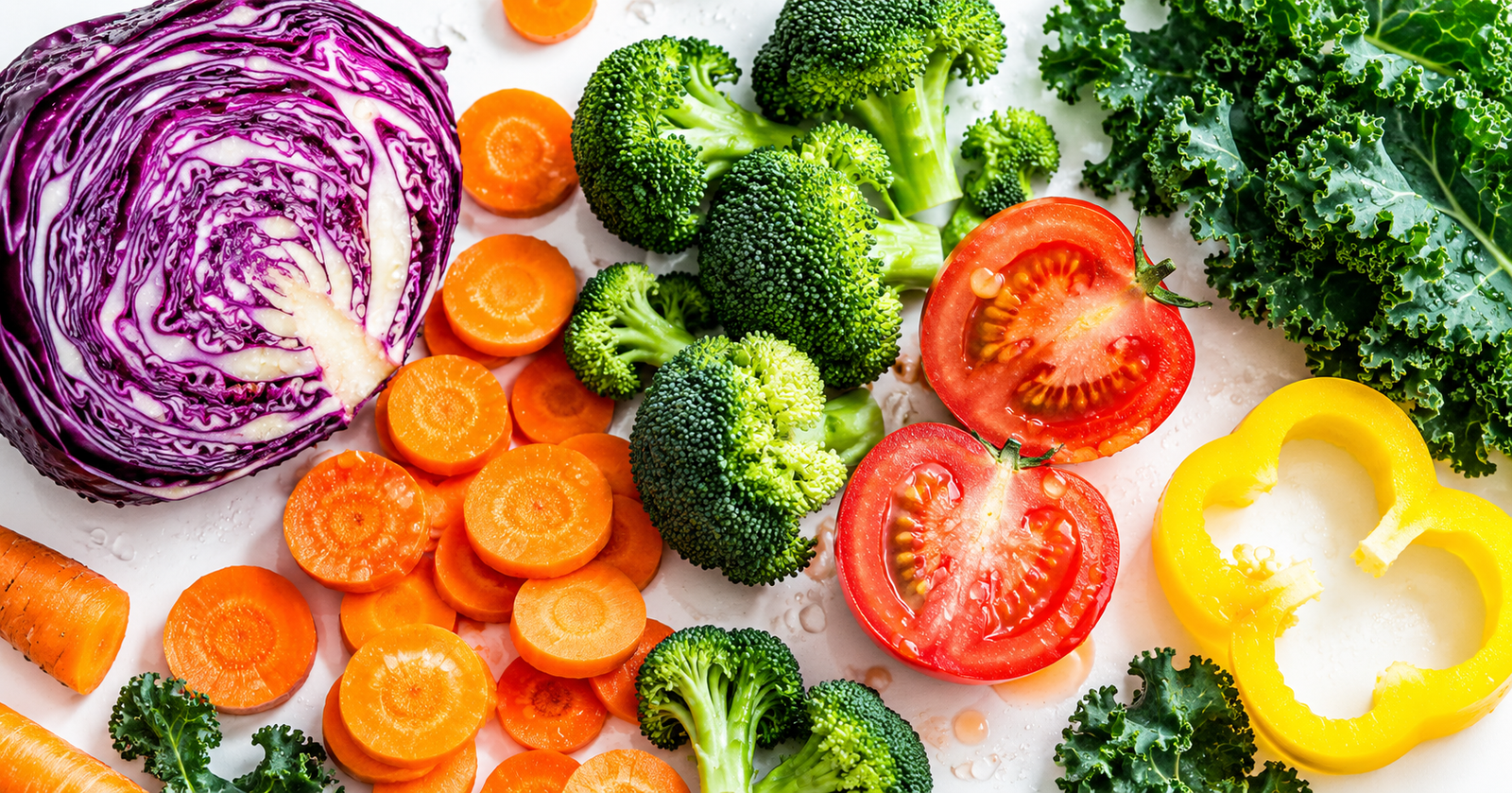
Under that lens, “vegetables” covers an extraordinary range of plant parts. Tubers and roots: carrots, turnips, swede, potatoes, Jerusalem artichokes. Botanical fruits eaten as vegetables: tomatoes, peppers, aubergines, beans, peas. Leaves: spinach, lettuce, chard, kale. Stems: asparagus, celery. Flowers: artichoke, cauliflower, broccoli. Aromatic herbs: coriander, parsley, mint, sorrel, nettle.
What unites them is a compositional profile. Vegetables are low in energy, low in fat, and modest in protein — though “none” overstates it: 100 g of cooked spinach carries about 3 g of protein, and green peas around 5 g. Simple sugars are low in most, with carrots, beetroot and tomatoes carrying more than leafy greens.
What they do carry is the point:
- Minerals — potassium, calcium, magnesium, manganese, iron
- Vitamins — A (as carotenoids), C, K, and folate
- Antioxidants — chlorophyll, carotenoids, polyphenols, flavonoids, glucosinolates
- Fibre — soluble and insoluble, in different ratios by species
- Fermentable prebiotics — inulin and fructo-oligosaccharides
This composition defines vegetables as the regulatory component of a diet rather than an energy source. The same logic that places grains and legumes as the caloric foundation — set out in our guide to essential staple foods — places vegetables alongside them as the part that keeps the system running clean.
Inulin: The Fibre That Feeds Your Bacteria
Inulin is a chain of fructose units linked in a way human digestive enzymes cannot break [1]. Unlike starch, which salivary and pancreatic amylase dismantle in the small intestine, inulin passes through intact and arrives in the colon still whole.
There it becomes food — not for you, but for the bacteria living there. This is the definition of a prebiotic, a term Gibson and Roberfroid introduced in 1995 precisely to describe substrates that selectively nourish beneficial gut bacteria, particularly Bifidobacteria and Lactobacilli [2].
What the bacteria make from it
Fermenting inulin, those bacteria produce short-chain fatty acids — mainly acetate, propionate and butyrate [3].
Butyrate is the one to know. It is the primary energy source for colonocytes, the cells lining your colon, which take most of their fuel directly from the gut lumen rather than from blood glucose. Butyrate also acts on gene expression through histone deacetylase inhibition, and carries documented anti-inflammatory activity [3].
One point of frequent confusion is worth settling. Butyrate and beta-hydroxybutyrate are both four-carbon compounds, but they are not the same molecule and do not come from the same place. Butyrate is made by bacteria in your colon from fermentable fibre. Beta-hydroxybutyrate is a ketone body made by your liver from fatty acids during fasting or carbohydrate restriction. Different origin, different pathway, different physiology.
Where inulin actually comes from
The richest sources, by concentration:
Chicory root is the highest — it is the commercial source for essentially all inulin sold as a supplement or food ingredient. Jerusalem artichoke is the richest whole vegetable most people can buy and cook. Then garlic, onion, leek, asparagus, salsify and globe artichoke, in descending order.
Sweet potato does not belong on that list. It is a good food — fibre, carotenoids, potassium — but it is not a meaningful inulin source, and it is often listed as one in error.
The part usually left out
Inulin is frequently sold as a cure for bloating. The evidence points the other way.
Inulin is a fermentable oligosaccharide — a FODMAP. Fermentation produces gas, and in people with irritable bowel syndrome or an unaccustomed gut, inulin causes bloating and flatulence rather than relieving it. Tolerance builds with gradual exposure, and the dose matters enormously.
The honest guidance: introduce inulin-rich vegetables slowly. If Jerusalem artichokes leave you uncomfortable, that is a normal physiological response to a large fermentable load, not evidence that your microbiome is broken.
Dysbiosis and Candida
Where the gut’s bacterial population is depleted, opportunistic organisms have more room. Candida albicans colonisation of the gastrointestinal tract interacts with inflammation in both directions — inflammation favours colonisation, and colonisation can aggravate inflammation [4].
We would flag one caution about how this is usually presented. The clinical picture of gut Candida overgrowth is far narrower than the popular “candida diet” literature suggests, and it matters most in people who are immunocompromised or have had significant antibiotic exposure. Eating fermentable fibre is good for the gut microbiome on its own merits. It does not need a yeast to fight.
Nightshades and Solanine: What Is Real, What Is Not
Four common vegetables belong to the Solanaceae family — potato, tomato, aubergine and pepper. All contain glycoalkaloids, of which solanine is the best known.
What is well established is that glycoalkaloids are genuine plant defence toxins, that they concentrate in potato sprouts and in the green tissue produced by light exposure, and that at high enough intake they cause gastrointestinal and neurological symptoms [5].
The practical rule follows directly, and it is a real one: do not eat green or sprouted potatoes. Cut away green areas generously, discard sprouts, and store potatoes dark and cool. Ordinary potatoes have glycoalkaloid levels far below the threshold of concern.
What is not established is the wider nightshade claim.
The idea that nightshade vegetables cause or worsen arthritis originates largely with Norman Childers, who proposed it in the 1980s and published it in a journal that is not indexed in MEDLINE. It has never been tested in a controlled clinical trial. Figures such as “over fifty percent of women are sensitive to solanine” have no epidemiological basis at all — the number does not come from a study.
We are not going to publish it. Some individuals do report symptoms that improve when they remove nightshades, and if that describes you, a two-to-four week elimination followed by deliberate reintroduction is a reasonable personal experiment — that is how food sensitivities are actually identified. But an individual trial is not a population claim, and the difference matters when the advice reaches people with rheumatoid arthritis who need actual treatment.
Likewise, the claim that out-of-season greenhouse vegetables become chemically dangerous is repeated widely without a source anyone can check. Seasonal produce has real advantages — flavour, cost, freshness, food miles. Toxicity is not among the documented ones.
Raw or Cooked: What Heat Actually Changes
Here we differ from the version of this argument usually made, because the usual version rests on something that is not true.
The enzyme claim does not hold. The idea that raw vegetables supply digestive enzymes that assist human digestion is a persistent naturopathic belief, and it fails on basic physiology: those enzymes are proteins, and gastric acid and pepsin denature them in the stomach exactly as they denature any other dietary protein. They do not survive to act in your intestine.
That is worth saying clearly, because there is a real case for eating vegetables raw — and it does not need the enzyme myth propping it up.
What heat genuinely destroys:
- Vitamin C degrades with heat and leaches into cooking water. Boiling is the worst offender; steaming and stir-frying retain far more [12].
- Folate is heat-labile and water-soluble, and losses in prolonged boiling are substantial.
- Myrosinase, the enzyme in broccoli, cabbage and other brassicas that converts glucosinolates into sulforaphane. This one matters — and unlike the general enzyme claim, it is specific and well characterised. Myrosinase acts in the vegetable when the cells are damaged by chopping or chewing, before the food reaches your stomach. Heavily boiled broccoli yields far less sulforaphane than raw or lightly steamed. Chopping and letting it stand before brief cooking preserves more.
What heat improves:
- Carotenoid availability. Lycopene from tomatoes and beta-carotene from carrots become substantially more absorbable after cooking breaks down cell walls — and better still with a little fat.
- Digestibility and tolerance, particularly for people with sensitive guts.
- Reduced antinutrients — oxalates and lectins fall with cooking.
The conclusion is not “raw is better.” It is “eat both.” Some raw for vitamin C, folate and sulforaphane. Some cooked for carotenoids and comfort. A diet built entirely on either loses something real.
Onion: a correction worth making
Raw onion is genuinely valuable — sulfur compounds, quercetin, fructans, folate [6].
But one detail is worth correcting because it appears everywhere: raw onion does not contain allicin. Allicin is a garlic compound, formed from alliin by the enzyme alliinase. Onion contains isoalliin instead, which yields a different set of thiosulfinates plus the lachrymatory factor that makes you cry. The compounds are related; they are not the same, and the research on one does not transfer to the other. We set out the garlic chemistry in detail in our garlic safety article.
The traditional pairing of raw onion and cumin with grilled meat is a good one — for flavour, for the polyphenols, and plausibly for reducing the oxidation products that form on charred meat. It is not “enzymes digesting your protein.”
And one real caution: raw onion on an empty stomach is a gastric irritant. Eat it with a meal.
Fibre and Bile Acids: How Vegetables Lower Cholesterol
This is one of the best-established mechanisms in nutritional physiology, and it deserves to be described accurately.
Your liver makes bile acids from cholesterol. They are stored in the gallbladder and released into the small intestine to emulsify dietary fat. Most are then reabsorbed in the terminal ileum and returned to the liver — the enterohepatic circulation, which recycles the same bile acid pool many times a day.
Soluble fibre interrupts that loop. It binds bile acids in the intestinal lumen and carries them out in the stool. The liver, short of bile acids, must synthesise more — and it makes them from cholesterol. Serum cholesterol falls as a direct consequence [7].
This is a mechanical effect, not a metabolic one. It is also why the type of fibre matters more than the food category: the bile-acid effect belongs to soluble, viscous fibres. We measured the same mechanism outside the vegetable family in our work on carob, where insoluble carob fibre lowered LDL in two randomised trials, and in whole grains.
Gallstones: the accurate version
The claim that “vegetarians do not get gallstones” is repeated often. It is not true.
A cross-sectional study of Taiwanese vegetarians found a gallstone prevalence of 8.2% — roughly one in twelve [8]. Vegetarians get gallstones.
What the evidence does support is a reduced risk. A prospective cohort followed 4,839 people over 29,295 person-years and found vegetarian diet associated with lower risk of symptomatic gallstone disease, with cholesterol concentration appearing to mediate part of that association [9].
Lower risk, not immunity. That is a meaningful finding and it does not need exaggerating.
Three Kinds of Fibre Classification
Fibre is sorted three ways, and the categories overlap.
By solubility. Soluble fibres — pectins, beta-glucans, inulin, gums — dissolve in water, form viscous gels, slow gastric emptying, and bind bile acids. Insoluble fibres — cellulose, hemicellulose, lignin — do not dissolve and add bulk.
By fermentability. Fermentable fibres — inulin, pectin, resistant starch — are broken down by colonic bacteria into short-chain fatty acids. Poorly fermentable fibres — cellulose, lignin — pass through largely unchanged.
By function. Viscous fibres act on lipids and glycaemia. Bulking fibres act on transit.
Most vegetables supply both kinds, in different ratios. Which is exactly why eating a range of vegetables works better than optimising for any single one.
Transit, Waste, and What “Detox” Actually Means
Insoluble fibre increases stool bulk and water retention, which speeds transit. That is real, measurable, and one of the most reliable effects of eating vegetables.
Around it, though, a set of claims has grown that we will not repeat.
On frequency: the idea that a complete bowel movement every 24 hours is the standard of health is not supported. Normal bowel frequency in healthy adults ranges from about three times a day to three times a week. Consistency and comfort matter more than hitting a daily number.
On toxins: slower transit does increase the time available for bile acid reabsorption, and constipation is genuinely uncomfortable and worth fixing. But the notion that stool sitting in the colon causes absorption of heavy metals, “plastic compounds” and free radicals is not physiology. Free radicals are not absorbed from the colon; they are generated in tissue. Your liver and kidneys are your detoxification system, and the useful thing vegetables do for them is supply the substrates and cofactors those organs run on — including the sulfur compounds and glucosinolates that support phase II conjugation, which we cover in glutathione, the antioxidant your body makes itself.
Vegetables help your bowel work well. That is a large enough claim to stand on its own.
Where Vegetables Genuinely Help — and One Place They Need Care
Cardiovascular health. The case is strong and multi-mechanism: soluble fibre lowers LDL through bile acid binding [7], low energy density supports weight control, and potassium supports blood pressure regulation — a relationship with substantial supporting evidence [10]. Vegetables are foundational here, not adjunctive.
Gut health. Fermentable fibre feeds the bacteria that produce butyrate [3], and butyrate feeds the colon lining. This is as close to a virtuous circle as nutrition offers.
Blood pressure specifically. Potassium-rich vegetables — leafy greens, tomatoes, beans, squash — support the sodium-potassium balance that underlies blood pressure regulation [10].
Inflammatory bowel disease — and here we correct the usual advice. It is often said that people with Crohn’s disease or colitis should prioritise raw vegetables and juices. During an active flare, and particularly where strictures are present, that advice can cause harm. High insoluble fibre from raw vegetables increases the risk of bowel obstruction in a narrowed intestine, and clinical practice during flares is to reduce residue, not increase it. In remission, a varied high-fibre diet is generally beneficial and encouraged. The distinction between flare and remission is the whole point, and it belongs to the treating gastroenterologist, not to a website.
Kidney disease. Vegetables are potassium-rich, and in advanced chronic kidney disease impaired potassium excretion makes that a genuine risk. Anyone with reduced kidney function should take potassium guidance from their nephrologist. For everyone else, dietary potassium is beneficial [10].
Hormonal health — where the evidence is genuinely mixed. Fibre does bind conjugated oestrogens in the intestine and reduce their reabsorption, which is the basis for the usual claim that fibre “balances hormones.”
But the best data on this deserves reporting in full, including the part that does not fit the story. In the BioCycle study, higher dietary fibre intake was associated with lower concentrations of oestradiol, progesterone, LH and FSH — and with an increased probability of anovulatory cycles. Each additional 5 g/day of fibre carried a 1.78-fold increase in the odds of anovulation [11].
That is not a reason to eat fewer vegetables. It is a reason to be honest that the fibre-and-hormones story is more complicated than it is usually told, and that for women actively trying to conceive, a very high fibre intake is not automatically better. The authors themselves called for further study rather than a recommendation.
Preparation: Getting the Most From Them
Raw preserves vitamin C, folate and myrosinase-dependent sulforaphane. Best for leafy salads, brassicas chopped and rested before eating, and herbs.
Lightly steamed or stir-fried is the pragmatic middle. Far less vitamin C loss than boiling, better carotenoid release than raw, easier on the gut.
Boiled is the most lossy for water-soluble vitamins — unless you keep the liquid. Soups and broths recover what leaches out, which is precisely why traditional cuisines built them.
With fat. Carotenoids, vitamin K and vitamin E are fat-soluble. A little olive oil on the salad is not a compromise; it is a requirement for absorbing what is in it.
Juices concentrate micronutrients and are easy to consume in quantity, but they remove most of the insoluble fibre — which is much of why vegetables work. Treat juice as a supplement to whole vegetables, not a replacement. Vitamin C from citrus fares the same way.
Frequently Asked Questions
Are raw vegetables better than cooked?
Neither is better across the board. Raw preserves vitamin C, folate and the sulforaphane pathway in brassicas. Cooking substantially improves carotenoid absorption from carrots and tomatoes and makes vegetables easier to tolerate. Eat both. The claim that raw vegetables supply digestive enzymes your body uses is not correct — those enzymes are denatured by stomach acid.
Which foods are highest in inulin?
Chicory root is the richest source and supplies almost all commercial inulin. Among vegetables you would cook, Jerusalem artichoke leads, followed by garlic, onion, leek, asparagus and globe artichoke. Sweet potato is often listed and does not belong there — it is not a significant inulin source.
Does inulin cause bloating?
Frequently, yes — especially at first or in larger amounts. Inulin is a FODMAP, and gas is the direct product of the fermentation that makes it beneficial. Introduce inulin-rich vegetables gradually. If you have IBS, high-inulin foods may be a trigger and are worth testing individually.
Do nightshade vegetables cause arthritis?
There is no clinical trial evidence that they do. The hypothesis dates to the 1980s and has never been tested in a controlled study, and figures like “50% of women are sensitive” have no research behind them. Individual sensitivity is possible — a two-to-four week elimination with deliberate reintroduction will tell you about yourself. It will not tell you about anyone else.
Is it safe to eat green potatoes if I cut the green part off?
Cut away green areas and sprouts generously and the rest is generally fine, but discard any potato that is extensively green or bitter — bitterness is the warning sign, and glycoalkaloids are not destroyed by cooking [5]. Store potatoes dark and cool to stop greening in the first place.
How many vegetables should I eat?
Rather than a percentage of the plate, aim for variety and volume: several servings daily across different colours and plant parts — leaves, roots, brassicas, alliums. Colour diversity is a reasonable proxy for phytochemical diversity. Claims that vegetables must occupy a fixed 60 to 70 percent of every meal are not derived from any trial.
Can vegetables help lower cholesterol?
Yes, through a well-established mechanism: soluble fibre binds bile acids in the intestine, preventing their reabsorption, so the liver must make new ones from cholesterol [7]. This is why fibre intake and serum cholesterol move in opposite directions. The effect belongs to viscous soluble fibre, so the variety of vegetables matters.
Conclusion
Vegetables are the part of the diet that regulates rather than fuels. Their fibre binds bile acids and pulls cholesterol out of circulation. Their fermentable fractions feed the bacteria that produce the butyrate your colon runs on. Their potassium supports blood pressure. Their carotenoids, glucosinolates and polyphenols supply the substrates that liver detoxification pathways depend on.
That is a substantial case, and it is fully supported. It does not require the additions usually bolted onto it — the enzymes that do not survive your stomach, the nightshade sensitivity that no trial has found, the daily evacuation target that does not exist, the toxins that colons do not absorb.
The single caution worth repeating: raw vegetables are not universally the right answer. During an inflammatory bowel disease flare they can be the wrong one, and that decision belongs to a gastroenterologist.
Eat a wide range. Eat some of it raw and some of it cooked. Keep the cooking liquid. Add a little olive oil. Introduce the fermentable ones slowly.
Nature provides complete foods. Vegetables are the part that keeps the rest of the system working — and the evidence for that is strong enough that it never needed embellishing.
Scientific Sources and References
- Roberfroid, M. B. (2007). “Inulin-type fructans: functional food ingredients.” Journal of Nutrition, 137(11 Suppl), 2493S–2502S. PMID 17951492
- Gibson, G. R., & Roberfroid, M. B. (1995). “Dietary modulation of the human colonic microbiota: introducing the concept of prebiotics.” Journal of Nutrition, 125(6), 1401–1412. PMID 7782892
- Koh, A., De Vadder, F., Kovatcheva-Datchary, P., & Bäckhed, F. (2016). “From dietary fiber to host physiology: short-chain fatty acids as key bacterial metabolites.” Cell, 165(6), 1332–1345. PMID 27259147
- Kumamoto, C. A. (2011). “Inflammation and gastrointestinal Candida colonization.” Current Opinion in Microbiology, 14(4), 386–391. PMID 21802979
- Friedman, M. (2006). “Potato glycoalkaloids and metabolites: roles in the plant and in the diet.” Journal of Agricultural and Food Chemistry, 54(23), 8655–8681. PMID 17090106
- Suleria, H. A. R., Butt, M. S., Anjum, F. M., et al. (2015). “Onion: nature protection against physiological threats.” Critical Reviews in Food Science and Nutrition, 55(1), 50–66. PMID 24915405
- Zeng, H., Umar, S., Rust, B., et al. (2019). “Secondary bile acids and short chain fatty acids in the colon: a focus on colonic microbiome, cell proliferation, inflammation, and cancer.” International Journal of Molecular Sciences, 20(5), 1214. PMID 30862015
- Chen, Y. C., Chiou, C., Lin, M. N., & Lin, C. L. (2014). “The prevalence and risk factors for gallstone disease in Taiwanese vegetarians.” PLoS One, 9(12), e115145. PMID 25521621
- Chang, C. M., Chiu, T. H. T., Chang, C. C., Lin, M. N., & Lin, C. L. (2019). “Plant-based diet, cholesterol, and risk of gallstone disease: a prospective study.” Nutrients, 11(2), 335. PMID 30720747
- Aaron, K. J., & Sanders, P. W. (2013). “Role of dietary salt and potassium intake in cardiovascular health and disease: a review of the evidence.” Mayo Clinic Proceedings, 88(9), 987–995. PMID 24001491
- Gaskins, A. J., Mumford, S. L., Zhang, C., et al. (2009). “Effect of daily fiber intake on reproductive function: the BioCycle Study.” American Journal of Clinical Nutrition, 90(4), 1061–1069. PMID 19692496
- Gupta, S., Gowri, B. S., Lakshmi, A. J., & Prakash, J. (2013). “Retention of nutrients in green leafy vegetables on dehydration.” Journal of Food Science and Technology, 50(5), 918–925. PMID 24425998
Last reviewed: September 2026. Vivid Remedy publishes independently researched, evidence-based health content cross-referenced against current peer-reviewed scientific literature. This content does not constitute medical advice. Always consult a licensed physician or qualified healthcare provider regarding your specific health conditions.