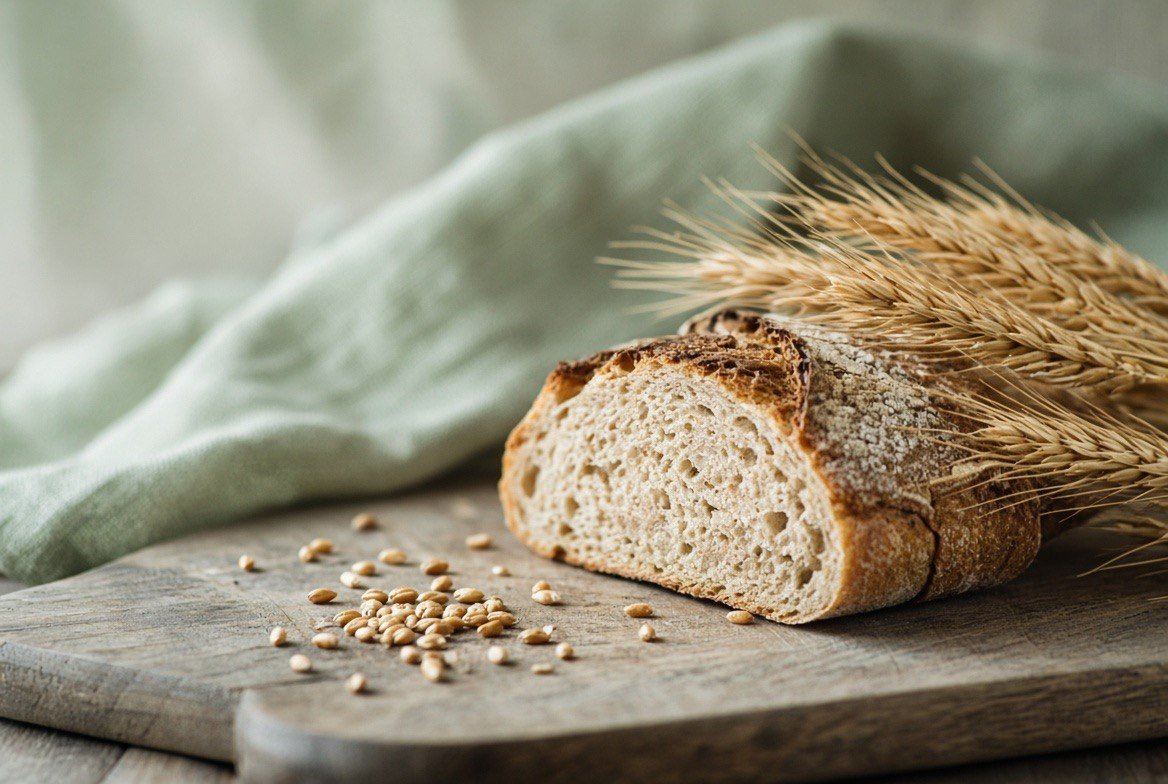
For centuries, whole grains have formed the backbone of human diets across continents. Long before modern food systems, traditional cultures relied on grain-based meals to nourish civilizations, sustain labor, and support daily life.
But modern diet debates have produced two opposite extremes. One side dismisses grains as empty carbohydrates. The other treats them as perfect, complete foods. Both are wrong.
This article examines what traditional preparation understood, what modern processing changed, and what real research actually supports.
1. What Industrial Processing Did to Whole Grains
Whole grains are not empty calories. In their natural state, they provide complex carbohydrates, dietary fiber, B vitamins, minerals, and plant compounds. Protein content varies, but whole grains generally contribute meaningful protein to the diet.
Some ancient wheat species such as einkorn, emmer, and spelt have different gluten protein compositions compared to modern wheat varieties [10]. This is a real compositional difference. But it does not automatically make ancient grains nutritionally superior.
What changed most with industrial food production was not the grain itself. It was the milling process. Modern refining strips away the bran and germ, leaving mostly starchy endosperm. This removes much of the fiber, several B vitamins, and important minerals [1]. A comprehensive review of primary cereal processing reached the same conclusion, documenting measurable losses of B vitamins, iron, zinc and dietary fiber relative to the whole grain [2]. In other words, the grain was not the problem. The processing removed many of the nutrients.
There is a contradiction worth noting: the same grains that are dismissed as nutritionally empty for humans are often used as feed for livestock. If grains can support animal growth, they clearly carry nutritional value. The difference is in the form they are eaten.
2. The Vital Role of Bran: Nature’s Internal Cleansing System
In traditional whole grains, the outer bran layer is not waste. It contains:
- Insoluble fiber, which adds bulk and supports regular bowel movements
- Phytosterols, plant compounds structurally similar to cholesterol
- Compounds that can interact with bile acids in the digestive tract
Early research in Lipids reported that dietary fiber influences bile acid metabolism [3]. A later study in Gastroenterology examined how dietary fiber affects colonic bacterial enzymes and bile acids in relation to colon cancer [4]. A modern molecular review has since mapped how bile acid transformation and short-chain fatty acid production shape colonic cell proliferation and inflammation [5]. Together these establish that fiber is not just roughage. It plays a meaningful role in gut health.
This does not mean bran is a miracle detoxifier. It means that whole grain fiber can support normal digestive function. Isolated fiber supplements may not fully reproduce the complete matrix found in whole grains.
The bacteria doing that fermenting are worth protecting on their own account. Antibiotics, emulsifiers, additives and a long list of ordinary medications damage the population that turns fiber into short-chain fatty acids in the first place — we set out what does the harm, and in what order, in what damages gut bacteria.
3. Phytic Acid and Traditional Sourdough Fermentation
One common criticism of grains is that they contain phytic acid. This compound can bind minerals like iron, zinc, calcium, and magnesium, reducing their absorption.
This is true in raw, unfermented grains.
Traditional food cultures developed a solution long before modern science explained it: long, slow sourdough fermentation.
When grains ferment with lactic acid bacteria, natural phytase enzymes become active. These enzymes break down phytic acid, which can make minerals more available.
The phytate-degrading effect itself is well documented. Prolonged sourdough fermentation of whole wheat has been shown to substantially reduce phytate content while increasing soluble magnesium [7], and the modest drop in pH produced by sourdough is by itself sufficient to activate the wheat’s own phytase [8]. A review of cereal fermentation summarises these effects alongside improvements in protein digestibility and glycemic response [9].
What remains less settled is how far that translates into measurably better mineral absorption in people. A 2003 study in Nutrition found that making bread with sourdough improved mineral bioavailability from reconstituted whole wheat flour in rats [6]. That is an animal study, not a human trial. The mechanism is solid; the human absorption evidence is still thinner than the mechanism suggests.
This is the same problem seen from the grain’s side: minerals present in food are not the same as minerals the body can absorb, and the gap between the two is where most deficiency actually lives. We follow it through iron, copper and zinc in why you are deficient: the food groups we forgot.
Fermentation Method Comparison
| Fermentation Type | Phytase Activity | Phytate Reduction | Digestibility |
|---|---|---|---|
| Traditional Sourdough | High | Substantial [7][8] | Improved protein digestibility [9] |
| Commercial Baker’s Yeast | Negligible | Phytic acid largely intact | Faster rise, less fermentation time |
The key difference is time. Traditional sourdough often ferments for 8 to 24 hours. Industrial bread often rises in 90 minutes. That time changes the final food.
4. Ancestral Crop Diversity vs. Industrial Monoculture
Traditional societies did not depend on a single grain. They grew and used many types:
- Barley and Wheat — valued for fiber and B vitamins
- Oats — rich in beta-glucans, a soluble fiber studied for heart health
- Maize — traditionally processed through nixtamalization, which improves niacin availability
- Rice — naturally gluten-free and widely tolerated
This diversity reflected practical wisdom. Different grains provide different nutrients. Traditional processing methods such as soaking, fermentation, and nixtamalization were not accidental. They changed the grain in useful ways.
Modern agriculture often favors a few high-yield varieties. This may improve efficiency, but it narrows genetic diversity. Some researchers are concerned about that narrowing, though claims of nutritional degradation across all modern crops remain debated.
5. Clinical Individualization: Celiac Disease, Gluten Sensitivity, and Neurodevelopmental Contexts
Whole grains are not appropriate for everyone without modification.
For people with celiac disease, gluten-containing grains must be avoided completely. This is a medical necessity, not a lifestyle choice. This includes ancient wheats: when einkorn, emmer and spelt strains were tested against intestinal T cells from celiac patients, they still provoked toxic immune responses [12]. Ancient does not mean safe.
Coeliac disease is also not the only way wheat causes trouble. Inhaled flour dust produces a documented occupational allergy — baker’s asthma — which is common in anyone who bakes regularly and is routinely mistaken for a persistent cold. We cover it, alongside the other exposures that affect women disproportionately, in the allergies that affect women most.
For autistic children and adolescents, some families explore gluten-free and casein-free diets. The evidence is mixed. A 2024 scoping review in Children examined the impact of a gluten-free and casein-free diet on behavioural outcomes and quality of life in autistic children and adolescents, and found the evidence inconsistent, with universal recommendations not supported [13]. A Cochrane systematic review reached a similar conclusion, finding no definitive evidence of benefit and a high risk of bias in the available trials [14], and a later meta-analysis found no significant improvement in core symptoms across pooled data [15].
Any restrictive diet should be supervised by a qualified health professional. Children especially need careful monitoring to avoid nutrient deficiencies.
6. The Evolutionary Synergy: How Ancestral Cultures Combined Grains with Other Foods
Traditional food cultures rarely ate grains alone. They often paired grains with legumes, vegetables, and sometimes small amounts of animal foods.
This made nutritional sense. Grains are relatively low in lysine; legumes are rich in it. Foundational work on plant protein nutrition established that properly combined plant proteins can meet human amino acid requirements [16], and a later computational analysis systematically confirmed that grain-and-legume pairings produce complete amino acid profiles [17].
Some traditional cuisines also paired fermented grains with small amounts of animal fat. This may have provided fat-soluble vitamins, though that particular combination is not tested by the studies cited here.
The broader point is that ancestral eating was not ideological. It was practical. It combined foods to meet nutritional needs.
Barley and corn carry something else that has largely left the modern plate: phytoestrogens, the plant compounds that white bread displaced when it replaced whole grains in daily eating. We set out what goes missing with them in why you are deficient: the food groups we forgot.
The modern problem is not whole grains. It is not clean, traditionally prepared foods. The problem is ultra-processing, refinement, and the loss of traditional preparation methods.
Conclusion: Reclaiming Traditional Preparation Over Industrial Convenience
Whole grains are not empty carbs. They are traditional foods with real nutritional value, especially when prepared using fermentation, soaking, or other ancestral techniques.
But we should be honest about the evidence. Some traditional claims are well supported — nutrient loss through refining [1][2], phytate reduction through sourdough [7][8], and the protein complementarity of grains and legumes [16][17]. Others, such as the human absorption benefit of sourdough, rest on mechanism more than on direct human trials.
The grain was never the only problem. Processing, portion, and context matter.
Frequently Asked Questions
Is sourdough bread healthier than regular bread?
Traditional long-fermented sourdough measurably reduces phytic acid, which is the compound that binds minerals [7][8]. Whether that translates into better mineral absorption in people is less firmly established — the clearest bioavailability evidence comes from a rat study [6]. The mechanism is well supported; the human outcome data is still limited.
Are ancient grains genuinely more nutritious than modern wheat?
Ancient wheat species differ in gluten composition [10] and metabolic profile [11]. These are real differences, but they do not automatically make ancient grains nutritionally superior. They are also not safe for people with celiac disease [12]. More comparative research is needed.
Does eating grains cause blood sugar spikes?
Refined grains tend to digest faster than whole grains because they lack the bran and germ. Whole grains generally have more fiber, which can slow digestion. However, the studies cited here do not directly measure glycemic responses.
Can flour cause an allergy even if I do not have coeliac disease?
Yes, and it is a separate condition. Inhaling flour dust while kneading, sifting or baking can cause baker’s asthma — an occupational allergy producing rhinitis, red eyes, wheezing and breathlessness. It has nothing to do with eating gluten, and it is frequently mistaken for a recurring cold in people who bake often. See the allergies that affect women most.
Is the GFCF diet recommended for all children with autism?
No. The evidence is mixed. A 2024 scoping review found no universal support [13], a Cochrane review found no definitive evidence of benefit [14], and a pooled meta-analysis found no significant improvement in core symptoms [15]. Families considering this diet should work with a qualified health professional.
What is the healthiest way to prepare grains daily?
Traditional methods include long sourdough fermentation, soaking, and nixtamalization for maize. Sourdough fermentation in particular is well documented to reduce phytic acid [7][8][9]. These methods are not a cure, but they represent a more traditional and better-supported way to prepare grains.
Cereals are one of eight core food groups covered in our guide to Essential Staple Foods.
Scientific Sources & References
- Slavin JL, Jacobs D, Marquart L — Grain Processing and Nutrition. Critical Reviews in Food Science and Nutrition, 2000; 40(4):309–326.
- Oghbaei M, Prakash J — Effect of Primary Processing of Cereals and Legumes on Its Nutritional Quality: A Comprehensive Review. Cogent Food & Agriculture, 2016; 2(1):1136015.
- Kritchevsky D — Influence of Dietary Fiber on Bile Acid Metabolism. Lipids, 1978; 13(12):982–985.
- Reddy BS, Engle A, Simi B, Goldman M — Effect of Dietary Fiber on Colonic Bacterial Enzymes and Bile Acids in Relation to Colon Cancer. Gastroenterology, 1992; 102(5):1475–1482.
- Zeng H, Umar S, Rust B, Lazarova D, Bordonaro M — Secondary Bile Acids and Short Chain Fatty Acids in the Colon: A Focus on Colonic Microbiome, Cell Proliferation, Inflammation, and Cancer. International Journal of Molecular Sciences, 2019; 20(5):1214.
- Lopez HW, Duclos V, Coudray C, Krespine V et al. — Making Bread with Sourdough Improves Mineral Bioavailability from Reconstituted Whole Wheat Flour in Rats. Nutrition, 2003; 19(6):524–530.
- Lopez HW, Krespine V, Guy C, Messager A, Demigne C, Remesy C — Prolonged Fermentation of Whole Wheat Sourdough Reduces Phytate Level and Increases Soluble Magnesium. Journal of Agricultural and Food Chemistry, 2001; 49(5):2657–2662.
- Leenhardt F, Levrat-Verny MA, Chanliaud E, Rémésy C — Moderate Decrease of pH by Sourdough Fermentation Is Sufficient to Reduce Phytate Content of Whole Wheat Flour Through Endogenous Phytase Activity. Journal of Agricultural and Food Chemistry, 2005; 53(1):98–102.
- Poutanen K, Flander L, Katina K — Sourdough and Cereal Fermentation in a Nutritional Perspective. Food Microbiology, 2009; 26(7):693–699.
- Geisslitz S, Longin CFH, Scherf KA, Koehler P — Comparative Study on Gluten Protein Composition of Ancient (Einkorn, Emmer and Spelt) and Modern Wheat Species (Durum and Common Wheat). Foods, 2019; 8(9):409.
- Șerban LR, Păucean A, Chiș MS, Pop CR et al. — Metabolic Profile of Einkorn, Spelt, Emmer Ancient Wheat Species Sourdough Fermented with Strain of Lactiplantibacillus plantarum ATCC 8014. Foods, 2023; 12(5):1096.
- Šuligoj T, Gregorini A, Colomba M, Ellis HJ, Ciclitira PJ — Evaluation of the Safety of Ancient Strains of Wheat in Coeliac Disease Reveals Heterogeneous Small Intestinal T Cell Responses Suggestive of Coeliac Toxicity. Clinical Nutrition, 2013; 32(6):1043–1049.
- Zafirovski K, Aleksoska MT, Thomas J, Hanna F — Impact of Gluten-Free and Casein-Free Diet on Behavioural Outcomes and Quality of Life of Autistic Children and Adolescents: A Scoping Review. Children (Basel), 2024; 11(7):862.
- Millward C, Ferriter M, Calver SJ, Connell-Jones GG — Gluten- and Casein-Free Diets for Autistic Spectrum Disorder. Cochrane Database of Systematic Reviews, 2008; (2):CD003498.
- Keller A, Rimestad ML, Friis Rohde J et al. — The Effect of a Combined Gluten- and Casein-Free Diet on Children and Adolescents with Autism Spectrum Disorders: A Systematic Review and Meta-Analysis. Nutrients, 2021; 13(2):470.
- Young VR, Pellett PL — Plant Proteins in Relation to Human Protein and Amino Acid Nutrition. American Journal of Clinical Nutrition, 1994; 59(5 Suppl):1203S–1212S.
- Woolf PJ, Fu LL, Basu A — vProtein: Identifying Optimal Amino Acid Complements from Plant-Based Foods. PLoS ONE, 2011; 6(4):e18836.
- Baur X, Posch A — Characterized Allergens Causing Bakers’ Asthma. Allergy, 1998; 53(6):562–566.