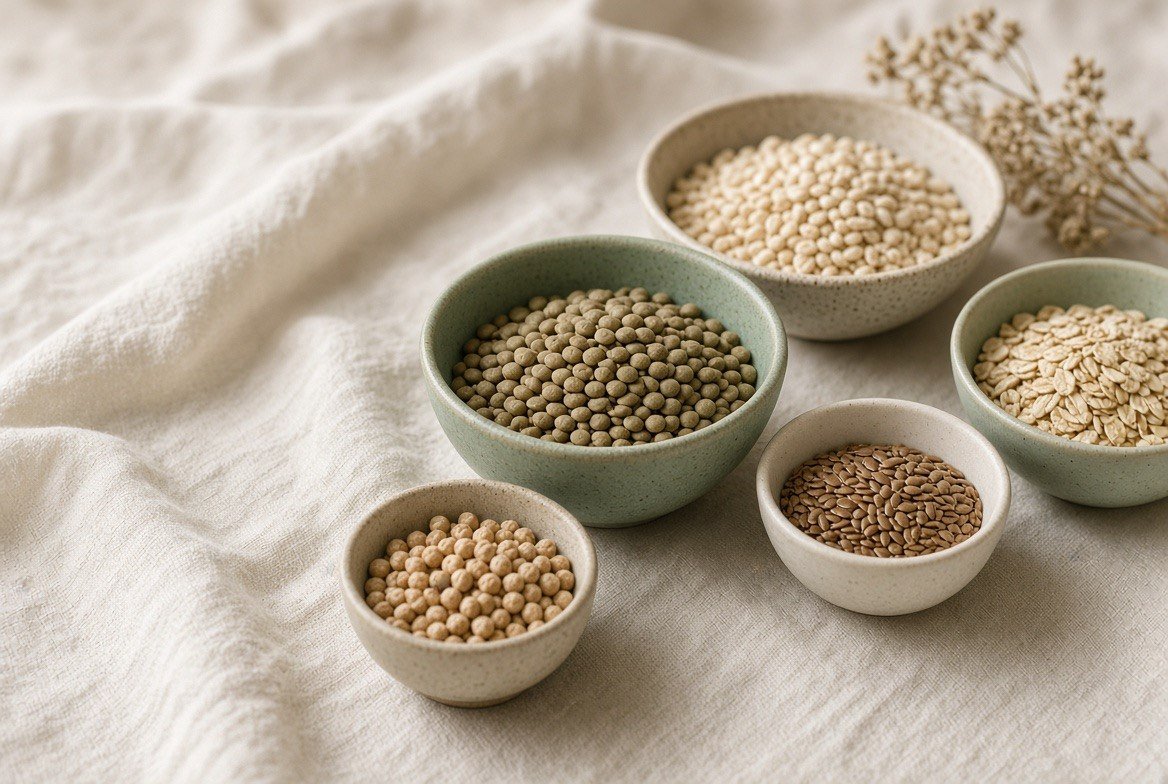
Modern nutrition science has moved decisively beyond the era of calorie counting and simple macronutrient ratios. The emerging consensus in nutritional biochemistry is clear: the chemical matrix of what you eat — the specific fibers, phytochemicals, fatty acid profiles, amino acid sequences, and mineral cofactors present in whole foods — determines its biological effect on your cellular systems far more precisely than any single macronutrient figure ever could.
This guide evaluates eight essential staple foods through a biochemical lens: Cereals, Legumes, Olive Oil, Fruits, Vegetables, Seeds, Spices, and Animal Products. Each group is examined not merely for its nutritional content, but for its documented biological mechanisms — the specific molecular pathways through which these foods interact with your gut microbiome, endocrine system, hepatic detoxification enzymes, and neurotransmitter synthesis machinery. Where the evidence is strong we say so; where it rests on mechanism, small trials, or observation, we say that too.
The framework bridges the rich nutritional heritage of the Maghrebi and Mediterranean food traditions with the standards of global evidence-based medicine — demonstrating that the foods historically consumed across North Africa and the Mediterranean basin are among the most biochemically sophisticated dietary systems on earth.
1. Cereals: Resistant Starches, Butyrate, and the Gut Microbiome
The nutritional case for whole, unrefined cereals rests not on their carbohydrate content — which is frequently misunderstood — but on their resistant starch and bran composition, which exert specific and well-documented effects on gut ecology and systemic inflammation.
We examine the grain question at length separately — what refining actually strips out, and what sourdough fermentation restores. What follows here is the biochemistry.
Resistant Starch and Colonic Fermentation
Unlike rapidly digested starches, resistant starches bypass small intestinal enzymatic breakdown and arrive intact at the large intestine — where they serve as primary fermentation substrates for the gut microbiome. The key metabolic output of this fermentation is a family of compounds called Short-Chain Fatty Acids (SCFAs), predominantly butyrate, propionate, and acetate.
Butyrate is the principal energy source for colonocytes (colon lining cells) and acts as an epigenetic regulator — inhibiting histone deacetylase activity in ways that, in cell and animal models, favour normal cell-cycle control and dampen inflammatory signalling [2]. The human trial evidence is narrower but real. The CAPP2 trial randomised people with Lynch syndrome — an inherited cancer-predisposition condition — to 30 g of resistant starch daily or placebo. Over up to 20 years of follow-up, resistant starch did not reduce colorectal cancer (HR 0.92), but it roughly halved the incidence of other Lynch-syndrome cancers (HR 0.54; 95% CI 0.33–0.86), with the effect most pronounced for cancers of the upper gastrointestinal tract: 5 diagnoses on resistant starch versus 21 on placebo [1]. That is a striking result in a high-risk population; whether it generalises to people without Lynch syndrome has not been tested.
Bran, Lignans, and Hormonal Modulation
Cereal bran is a concentrated source of B-complex vitamins (B₁, B₃), essential trace minerals, and a class of plant polyphenols called lignans [4]. The biological significance of dietary lignans lies in their microbiome-dependent transformation: gut bacteria convert plant lignans into the bioactive enterolignans enterolactone and enterodiol.
These compounds exert weak, localized estrogenic and anti-estrogenic effects — binding estrogen receptors with lower affinity than endogenous estrogen, effectively competing with and partially blocking more potent estrogen stimulation. A meta-analysis of 21 studies found that high lignan intake was associated with a modest reduction in postmenopausal breast cancer risk (about 14% lower odds), with no clear association before menopause [3]. This is observational evidence — it shows association, not proof of cause — and the proposed mechanism is hormone-modulating rather than cytotoxic.
Chromium and Glycemic Control: A Nuanced Position
Whole cereals contain chromium — a trace mineral associated with the Glucose Tolerance Factor (GTF) complex that supports insulin receptor sensitivity. However, scientific honesty demands precision here: systematic reviews and the National Institutes of Health (NIH) report that routine chromium supplementation shows limited and inconsistent efficacy in clinically lowering HbA1c levels in diabetic patients [5]. Chromium functions as a minor supporting cofactor in glucose metabolism — not as a standalone therapeutic agent. Its value in whole cereal consumption is as part of a complex nutritional matrix, not in isolation.
2. Legumes: Protein, Detoxification, and the Tryptophan-Serotonin Axis
Legumes — lentils, chickpeas, fava beans, black beans, soybeans, and their relatives — represent one of the most biochemically sophisticated food groups available in the human diet. They deliver high protein content (roughly 20–25% by dry weight), are entirely cholesterol-free, and contain a complex matrix of soluble fibers, trace minerals, and bioactive amino acids that interact with multiple physiological systems simultaneously.
Soluble Fiber and LDL Cholesterol Reduction
The soluble fiber profile of legumes — primarily pectins, gums, and resistant starch — is consistently supported by clinical evidence as a reliable LDL cholesterol-lowering mechanism. A meta-analysis of 26 randomised controlled trials found that about one serving of pulses a day lowered LDL cholesterol by a mean of 0.17 mmol/L — roughly a 5% reduction — over a median of six weeks [6]. The mechanism is mechanical and direct: soluble fiber binds bile acids in the intestinal lumen during digestion, physically preventing their reabsorption. The liver compensates by converting additional circulating LDL cholesterol into new bile acids — progressively reducing serum LDL concentrations with regular consumption.
The same bile-acid mechanism has been measured well outside the legume family. In two independent randomised placebo-controlled trials, carob fibre lowered LDL cholesterol by 10.5% and 22.5% in people with raised cholesterol — a reminder that the fibre fraction, not the food category, is doing the work.
Molybdenum: The Forgotten Detoxification Mineral
Among the most sophisticated nutritional contributions of legumes is their role as the principal dietary source of molybdenum — a trace mineral whose importance is almost universally overlooked in mainstream nutritional education [7]. Molybdenum serves as the essential cofactor for the enzyme sulfite oxidase, which catalyzes the conversion of toxic sulfites (generated from sulfur-containing amino acid metabolism and from sulfite food preservatives) into harmless sulfates for renal excretion.
Without functional sulfite oxidase, sulfite accumulation drives oxidative stress in neuronal tissue — the mechanism behind the rare but severe inherited sulfite oxidase deficiency disorders. Dietary molybdenum deficiency, by contrast, is virtually unknown in people eating a normal diet [7] — and legumes are the main reason why.
The Tryptophan-Serotonin-Melatonin Synthesis Pathway
Legumes are a good dietary source of L-tryptophan — the essential amino acid that serves as the biochemical precursor to both serotonin (the primary mood-stabilizing neurotransmitter) and melatonin (the circadian rhythm hormone governing sleep architecture) [25]. The conversion pathway requires dietary cofactors — vitamin B₆ (pyridoxine), iron, and folate — all of which are simultaneously present in legumes themselves.
This makes legumes a rare example of a food that delivers a neurotransmitter precursor alongside its own required enzymatic cofactors. One honest caveat: whether tryptophan from a meal measurably changes brain serotonin is debated, because tryptophan competes with other large amino acids for transport across the blood–brain barrier. The pathway is real; the size of the dietary effect on mood is not settled.
Fava Beans and L-DOPA: Therapeutic Implications for Parkinson’s Disease
Fava beans (Vicia faba) occupy a unique clinical position within the legume family. A small controlled study in patients with Parkinson’s disease found that eating broad beans raised plasma levodopa to levels comparable with a pharmaceutical dose, with corresponding short-term improvement in motor function [8]. This effect is attributed to the significant concentration of natural L-DOPA in the bean itself. The evidence base is small and decades old; fava beans are a documented source of L-DOPA, not an established treatment, and anyone with Parkinson’s disease should discuss them with their neurologist because they interact with prescribed levodopa.
Critical clinical caveat: In populations with high prevalence of G6PD deficiency (Glucose-6-Phosphate Dehydrogenase deficiency) — common across Maghrebi, Mediterranean, Middle Eastern and Sub-Saharan African populations [9] — fava bean consumption can trigger acute hemolytic anemia, a potentially life-threatening condition known as Favism. G6PD status should be confirmed before therapeutic fava bean consumption is recommended.
Soy and Thyroid Function: The Evidence-Informed Position
Soy isoflavones — particularly genistein — have been subject to significant scientific controversy regarding their interaction with thyroid function. The current evidence from meta-analysis is reassuring for the general population: across 18 studies, soy supplementation had no effect on thyroid hormone levels (free T₃, free T₄) and produced only a modest rise in TSH of uncertain clinical relevance [10]. Caution and moderation are specifically warranted in cases of uncorrected iodine deficiency or when consuming isolated, high-concentration isoflavone supplements — not from whole food soy consumption at normal dietary quantities.
3. Olive Oil: The PREDIMED Evidence and the Mediterranean Paradigm
The distinction between extra virgin olive oil (EVOO) and commercially refined olive oil is not a matter of taste preference — it is a biochemically significant difference with direct cardiovascular implications.
The refining process strips olive oil of its characteristic polyphenols — including oleocanthal (which inhibits the same COX enzymes as ibuprofen [11]), oleuropein, and hydroxytyrosol. High-temperature processing of refined oils can also generate trace quantities of trans fatty acids through geometric isomerization of unsaturated fatty acid chains. Extra virgin olive oil, cold-pressed below 27°C from first extraction, retains this full antioxidant polyphenol matrix intact.
The cardiovascular case for EVOO is among the most robustly evidenced in all of nutritional medicine. The landmark PREDIMED study (Prevención con Dieta Mediterránea) — a multicenter randomized controlled trial involving 7,447 participants at high cardiovascular risk — found that a Mediterranean diet supplemented with extra virgin olive oil reduced the risk of major cardiovascular events (myocardial infarction, stroke, and cardiovascular death) by approximately 30% compared to a control diet with advice to reduce fat [12]. The trial was stopped early on the recommendation of its independent Data Safety Monitoring Board because the benefit was already clear. One point of honesty: the original 2013 publication was retracted after randomisation irregularities were found at some sites, and republished in 2018 after reanalysis — with the conclusions unchanged [12]. The evidence is for the diet pattern with EVOO, not for EVOO in isolation.
4. Fruits and Vegetables: Pectin, Glycemic Synergy, and Thermosensitive Nutrients
Pectin and Glycemic Balance
Soluble pectin fiber — concentrated in apple skin, citrus pith, and the flesh of stone fruits — supports gastrointestinal motility and exerts a measurable glycemic-moderating effect. The mechanism is viscosity-based: dissolved pectin forms a gel matrix in the intestinal lumen that physically slows glucose absorption into the portal circulation, blunting the postprandial insulin response.
The characterization of fruit sugars as a form of “clean energy” is a simplified educational frame — but one that holds biological validity. The intrinsic fructose in whole fruit is embedded within a complex matrix of soluble fiber, polyphenols, and water — a structural context that slows the hepatic fructose loading and subsequent de novo lipogenesis observed with equivalent doses of isolated or liquid fructose (high-fructose corn syrup, fruit juice concentrates).
Thermosensitive Nutrients and Raw Vegetable Consumption
Several of the most clinically relevant nutrients in vegetables are temperature-sensitive. Vitamin C (ascorbic acid) is both heat-labile and water-soluble — losses of a quarter to a half with boiling are typical, and increase with cooking time and the volume of water discarded. Sulforaphane — the potent Nrf2-activating isothiocyanate generated when cruciferous vegetables (broccoli, cauliflower, Brussels sprouts) are chewed or chopped — is produced by the enzyme myrosinase, which is inactivated by heat. Consuming a portion of daily vegetable intake raw preserves these enzymatic and thermolabile nutrient systems.
Glycemic load management recommendation: For optimal metabolic benefit, pair each fruit serving with a roughly equal emphasis on cruciferous or dark leafy green vegetables. This combination maximizes fiber diversity, antioxidant density, and glycemic stabilization — while limiting the fructose-loading that can occur when fruit is consumed in isolation in large quantities.
5. Seeds and Spices: Curcumin, Piperine, and Functional Phytosterols
The Curcumin-Piperine Bioavailability Synergy
Turmeric’s active compound, curcumin, is among the most extensively studied plant polyphenols in modern pharmacological research — with documented anti-inflammatory and antioxidant activity in laboratory models and a large but inconsistent body of human trials. Its clinical translation has historically been limited by one biochemical obstacle: extremely poor oral bioavailability due to rapid hepatic glucuronidation and sulfation (Phase II metabolic conjugation), which converts curcumin into water-soluble metabolites that are excreted before reaching systemic circulation.
The solution is the co-administration of piperine — the bioactive alkaloid in black pepper. Piperine is a potent inhibitor of hepatic and intestinal glucuronidation enzymes (specifically UDP-glucuronosyltransferases). The pivotal pharmacokinetic study found that co-ingestion of 20 mg piperine with 2,000 mg curcumin increased curcumin bioavailability by 2,000% in human volunteers — without altering curcumin’s intrinsic molecular activity [13]. Two honest qualifiers: the human arm involved ten volunteers, and higher blood levels are a precondition for benefit, not proof of it. The synergy turns turmeric from a compound the body barely absorbs into one it can — whether that reliably translates into clinical anti-inflammatory effect is what the trials are still sorting out.
Functional Seeds: Phytosterols and Metabolic Benefits
Small, regular quantities of functional seeds — black seed (Nigella sativa), fenugreek, and sesame — provide a concentrated source of phytosterols [17], thymoquinone, and specialized fatty acids with documented anti-inflammatory and metabolic effects:
- Nigella sativa (black seed): Thymoquinone, its primary bioactive compound, inhibits NF-κB inflammatory signaling in in vitro and animal models. In humans, a meta-analysis of randomised trials found modest reductions in blood pressure — on the order of 3 mmHg systolic — with short-term supplementation [14]
- Fenugreek: Soluble fiber in fenugreek seeds (galactomannan) slows gastric emptying and reduces postprandial glucose absorption. A meta-analysis of 10 trials found meaningful reductions in fasting glucose and HbA1c, but only in people with diabetes and only with medicinal doses — with the authors noting the trials were small and of mixed quality [15]
- Sesame: Among the richest dietary sources of lignans (sesamin, sesamolin). A meta-analysis of controlled trials found a small reduction in systolic and diastolic blood pressure with sesame consumption, with considerable variation between studies [16]
The wider seed and nut category — and the dried fruits traditionally eaten alongside them — carries its own distinct mineral and polyphenol profile, covered separately here.
6. Animal Products: Camel Milk, Seafood, and the Red Meat Question
Camel Milk vs. Bovine Milk: The Casein Distinction
The structural difference between camel milk and conventional cow’s milk is biochemically precise and clinically relevant. Bovine milk contains significant concentrations of αS1-casein — a specific casein protein isoform that is one of the primary allergens responsible for cow’s milk protein allergy (CMPA), which affects approximately 2–3% of infants and a smaller proportion of adults.
Camel milk contains markedly lower levels of αS1-casein and lacks beta-lactoglobulin (another major bovine allergen). This altered protein composition explains both its lower allergenic potential and its resistance to conventional rennet-based cheese coagulation. In a study of 35 children with cow’s milk allergy, camel milk was tolerated by 80% on skin-prick and oral challenge [18] — encouraging, though from a single centre and a small sample. Two caveats belong here. First, camel milk is not allergen-free: a minority of milk-allergic children react to it too. Second, camel milk is not a substitute for infant formula — for a baby with CMPA, a hypoallergenic formula prescribed by a paediatrician is the standard of care. For older children and adults with bovine milk sensitivity, camel milk represents a biochemically distinct alternative worth discussing with an allergist.
Seafood vs. Red Meat: The Lipid Profile Comparison
The nutritional advantages of seafood over red meat rest on four biochemical factors that operate simultaneously — a case we set out in full in our examination of fish as a foundation of preventive nutrition:
- Long-chain omega-3 fatty acids (EPA and DHA): Abundant in marine fatty fish (sardines, mackerel, salmon, anchovies), these polyunsaturated fatty acids are the direct precursors to anti-inflammatory mediators (resolvins, protectins) — the biochemical counterweight to the pro-inflammatory arachidonic acid cascade. Their cardiovascular benefit is supported by decades of observational and trial evidence [19]
- Selenium: Marine seafood is among the most concentrated dietary sources of bioavailable selenium — the essential cofactor for the glutathione peroxidase enzyme family, which constitutes the body’s primary enzymatic antioxidant defense system
- Iodine: Critical for thyroid hormone synthesis (T₃ and T₄), with marine fish and shellfish providing the most bioavailable dietary iodine source globally
- Natural vitamin D: Fatty fish represent one of the very few significant natural dietary sources of vitamin D₃ — a nutrient in which deficiency or insufficiency has been estimated to affect around 1 billion people worldwide [20]
The standard clinical recommendation to moderate red meat consumption — specifically processed and high-saturated-fat red meat — is supported by the aggregate weight of cardiovascular and cancer epidemiology; the International Agency for Research on Cancer classifies processed meat as carcinogenic to humans and unprocessed red meat as probably carcinogenic [22]. The mechanism is not exclusively saturated fat-driven: TMAO (trimethylamine N-oxide), produced from gut microbial metabolism of L-carnitine (abundant in red meat), has been identified as an independent cardiovascular risk marker in metabolomics research [21] — though whether TMAO causes harm or merely signals it remains under investigation.
7. Practical Daily Integration: Translating Biochemistry Into Your Plate
The framework above is biochemically precise — but nutrition must ultimately translate into daily, practical behavior. Three guiding principles make this science actionable:
- Quantifiable portions over vague advice: A daily handful of seeds (approximately 30g), two tablespoons of extra virgin olive oil, one serving of fatty fish 2–3×/week, and one cup of cooked legumes delivers the benefits reviewed above at the doses the trials actually used — without supplementation.
- Contextual pairing for maximum bioavailability: Turmeric + black pepper [13]. Iron-rich legumes + vitamin C-rich vegetables — ascorbic acid can raise non-heme iron absorption several-fold, depending on dose and the rest of the meal [23]. Carotenoid-rich vegetables + EVOO (fat-soluble carotenoid absorption requires a lipid vehicle). These pairings are not incidental to traditional Mediterranean and Maghrebi cuisine — they are encoded within it.
- Glycemic architecture: Structure meals around a foundation of non-starchy vegetables and legumes, with whole grains and fruits as complementary elements — rather than the reverse. In a controlled study of people with type 2 diabetes, eating vegetables and protein before the carbohydrate portion of the same meal reduced the post-meal glucose peak by more than a third [24]. The trial was small; the principle is consistent with the fibre-viscosity mechanism described above.
Frequently Asked Questions
Are whole grains better than refined grains for gut health?
Yes — and the primary reason is resistant starch and bran content, not merely fiber quantity. Whole grains deliver fermentable substrate to the colonic microbiome, generating butyrate and other short-chain fatty acids that maintain colon lining integrity and, in experimental models, reduce inflammatory signalling and regulate immune function [2]. Refined grains, stripped of bran and germ, deliver rapidly absorbed glucose with none of these downstream microbiome benefits.
How much olive oil should you consume daily for cardiovascular benefit?
The PREDIMED trial’s olive oil group was asked to consume at least 50 mL (about 4 tablespoons) of extra virgin olive oil per day [12]. Population-level data from Mediterranean countries consistently associate benefits with 2–4 tablespoons of EVOO daily as part of a varied whole-food diet. The key qualifier is extra virgin, cold-pressed — refined olive oil does not carry the same polyphenol-driven benefits.
Can fava beans be safely eaten daily?
For individuals who are not G6PD-deficient, fava beans are an excellent regular food — rich in protein, folate, manganese, and natural L-DOPA. For individuals of Maghrebi, Mediterranean, Middle Eastern, or Sub-Saharan African ancestry — populations where G6PD deficiency prevalence commonly reaches 5–25% [9] — G6PD screening is advisable before making fava beans a daily staple in high quantities, particularly for children.
Is it better to eat vegetables raw or cooked?
Both — strategically. Some nutrients are enhanced by cooking: lycopene in tomatoes, beta-carotene in carrots, and certain minerals become more bioavailable after cell wall breakdown. Others are reduced by heat: vitamin C, sulforaphane from cruciferous vegetables, and heat-sensitive plant enzymes. An optimal dietary pattern includes a mix — raw salads, lightly steamed vegetables, and slow-cooked legumes — rather than defaulting exclusively to either preparation method.
Is seafood better than red meat for everyone?
For the vast majority of the general population, seafood offers advantages as a protein source based on its lipid profile, micronutrient density, and lower saturated fat content [19]. Exceptions include individuals with documented shellfish or finfish allergies, those in pregnancy advised to limit high-mercury fish (shark, swordfish, king mackerel), and individuals with specific thyroid conditions requiring iodine monitoring. Red meat consumed in moderation (2–3 times per week, unprocessed) is not clinically contraindicated for healthy individuals — the evidence against red meat is strongest for processed red meat (deli meats, sausages, hot dogs) [22].
This biochemical breakdown expands on our overview of Essential Staple Foods.
Scientific Sources & References
- Mathers J.C., Elliott F., Macrae F. et al. (CAPP2 Investigators) — Cancer Prevention with Resistant Starch in Lynch Syndrome Patients in the CAPP2-Randomized Placebo Controlled Trial: Planned 10-Year Follow-up. Cancer Prevention Research, 2022; 15(9):623–634. PMID 35878732.
- Canani R.B., Di Costanzo M., Leone L. et al. — Potential Beneficial Effects of Butyrate in Intestinal and Extraintestinal Diseases. World Journal of Gastroenterology, 2011; 17(12):1519–1528. PMID 21472114.
- Buck K., Zaineddin A.K., Vrieling A., Linseisen J., Chang-Claude J. — Meta-Analyses of Lignans and Enterolignans in Relation to Breast Cancer Risk. American Journal of Clinical Nutrition, 2010; 92(1):141–153. PMID 20463043.
- Milder I.E., Arts I.C., van de Putte B., Venema D.P., Hollman P.C. — Lignan Contents of Dutch Plant Foods: A Database Including Lariciresinol, Pinoresinol, Secoisolariciresinol and Matairesinol. British Journal of Nutrition, 2005; 93(3):393–402.
- National Institutes of Health (NIH) Office of Dietary Supplements — Chromium: Fact Sheet for Health Professionals.
- Ha V., Sievenpiper J.L., de Souza R.J. et al. — Effect of Dietary Pulse Intake on Established Therapeutic Lipid Targets for Cardiovascular Risk Reduction: A Systematic Review and Meta-Analysis of Randomized Controlled Trials. CMAJ, 2014; 186(8):E252–E262. PMID 24710915.
- National Institutes of Health (NIH) Office of Dietary Supplements — Molybdenum: Fact Sheet for Health Professionals.
- Rabey J.M., Vered Y., Shabtai H., Graff E., Korczyn A.D. — Improvement of Parkinsonian Features Correlate with High Plasma Levodopa Values after Broad Bean (Vicia faba) Consumption. Journal of Neurology, Neurosurgery & Psychiatry, 1992; 55(8):725–727. PMID 1527547.
- Nkhoma E.T., Poole C., Vannappagari V., Hall S.A., Beutler E. — The Global Prevalence of Glucose-6-Phosphate Dehydrogenase Deficiency: A Systematic Review and Meta-Analysis. Blood Cells, Molecules and Diseases, 2009; 42(3):267–278. PMID 19233695.
- Otun J., Sahebkar A., Östlundh L., Atkin S.L., Sathyapalan T. — Systematic Review and Meta-Analysis on the Effect of Soy on Thyroid Function. Scientific Reports, 2019; 9:3964. PMID 30850697.
- Beauchamp G.K., Keast R.S., Morel D. et al. — Phytochemistry: Ibuprofen-Like Activity in Extra-Virgin Olive Oil. Nature, 2005; 437(7055):45–46. PMID 16136122.
- Estruch R., Ros E., Salas-Salvadó J. et al. (PREDIMED Study Investigators) — Primary Prevention of Cardiovascular Disease with a Mediterranean Diet Supplemented with Extra-Virgin Olive Oil or Nuts. New England Journal of Medicine, 2018; 378(25):e34 (corrected and republished). PMID 29897866.
- Shoba G., Joy D., Joseph T., Majeed M., Rajendran R., Srinivas P.S. — Influence of Piperine on the Pharmacokinetics of Curcumin in Animals and Human Volunteers. Planta Medica, 1998; 64(4):353–356. PMID 9619120.
- Sahebkar A., Soranna D., Liu X. et al. — A Systematic Review and Meta-Analysis of Randomized Controlled Trials Investigating the Effects of Supplementation with Nigella sativa (Black Seed) on Blood Pressure. Journal of Hypertension, 2016; 34(11):2127–2135. PMID 27512971.
- Neelakantan N., Narayanan M., de Souza R.J., van Dam R.M. — Effect of Fenugreek (Trigonella foenum-graecum L.) Intake on Glycemia: A Meta-Analysis of Clinical Trials. Nutrition Journal, 2014; 13:7. PMID 24438170.
- Khosravi-Boroujeni H., Nikbakht E., Natanelov E., Khalesi S. — Can Sesame Consumption Improve Blood Pressure? A Systematic Review and Meta-Analysis of Controlled Trials. Journal of the Science of Food and Agriculture, 2017; 97(10):3087–3094. PMID 28387047.
- Katan M.B., Grundy S.M., Jones P., Law M., Miettinen T., Paoletti R. — Efficacy and Safety of Plant Stanols and Sterols in the Management of Blood Cholesterol Levels. Mayo Clinic Proceedings, 2003; 78(8):965–978.
- Ehlayel M.S., Bener A., Abu Hazeima K., Al-Mesaifri F. — Camel Milk: An Alternative for Cow’s Milk Allergy in Children. Allergy and Asthma Proceedings, 2011; 32(3):255–258. PMID 21703103.
- Kris-Etherton P.M., Harris W.S., Appel L.J. — Fish Consumption, Fish Oil, Omega-3 Fatty Acids, and Cardiovascular Disease. Circulation, 2002; 106(21):2747–2757. PMID 12438303.
- Holick M.F. — Vitamin D Deficiency. New England Journal of Medicine, 2007; 357(3):266–281. PMID 17634462.
- Koeth R.A., Wang Z., Levison B.S. et al. — Intestinal Microbiota Metabolism of L-Carnitine, a Nutrient in Red Meat, Promotes Atherosclerosis. Nature Medicine, 2013; 19(5):576–585. PMID 23563705.
- Bouvard V., Loomis D., Guyton K.Z. et al. (IARC Monograph Working Group) — Carcinogenicity of Consumption of Red and Processed Meat. Lancet Oncology, 2015; 16(16):1599–1600. PMID 26514947.
- Hallberg L., Hulthén L. — Prediction of Dietary Iron Absorption: An Algorithm for Calculating Absorption and Bioavailability of Dietary Iron. American Journal of Clinical Nutrition, 2000; 71(5):1147–1160. PMID 10799377.
- Shukla A.P., Iliescu R.G., Thomas C.E., Aronne L.J. — Food Order Has a Significant Impact on Postprandial Glucose and Insulin Levels. Diabetes Care, 2015; 38(7):e98–e99. PMID 26106234.
- Reiter R.J., Mayo J.C., Tan D.X., Sainz R.M., Alatorre-Jimenez M., Qin L. — Melatonin as an Antioxidant: Under Promises but Over Delivers. Journal of Pineal Research, 2016; 61(3):253–278.
Last reviewed: September 2026. Vivid Remedy is an independent platform. All scientific content is cross-referenced against current peer-reviewed literature. This content does not constitute medical advice. Individual metabolic responses vary.