Abstract
This article explores the unique and superior nutritional profile of fish, distinguishing it from terrestrial animal meats. We examine the fundamental biochemical differences that classify fish as the only true “white meat” in nature, including the absence of myoglobin and cholesterol. The discussion delves into the critical roles of key nutrients found in fish—high-quality protein rich in tryptophan, the essential mineral selenium, vitamin B12, iodine, and the synergistic relationship between vitamin D and omega-3 fatty acids. We analyze their collective impact on metabolic function, cellular protection, cardiovascular health, and cancer prevention, while emphasizing the importance of a plant-based diet supplemented with fish as an optimal dietary pattern.
Key Takeaways
- Fish is the only true “white meat” in nature, fundamentally different from poultry and terrestrial animals.
- Fish contains virtually no cholesterol or saturated fats, making it a clean, pure source of high-quality protein.
- Fish is a powerhouse of essential nutrients: tryptophan, selenium, iodine, vitamin B12, and vitamin D.
- Omega-3 fatty acids are a defining component of fish, working synergistically with vitamin D and selenium for profound health benefits.
- Omega-3 fatty acids are not a cancer treatment but are a powerful preventive component against chronic diseases.
- A plant-based diet supplemented with fish is one of the most optimal dietary patterns for human health.
- Fish is the only meat that can be consumed daily without reservation, including by young children.
1. Introduction: Redefining Fish as a Unique Food Category
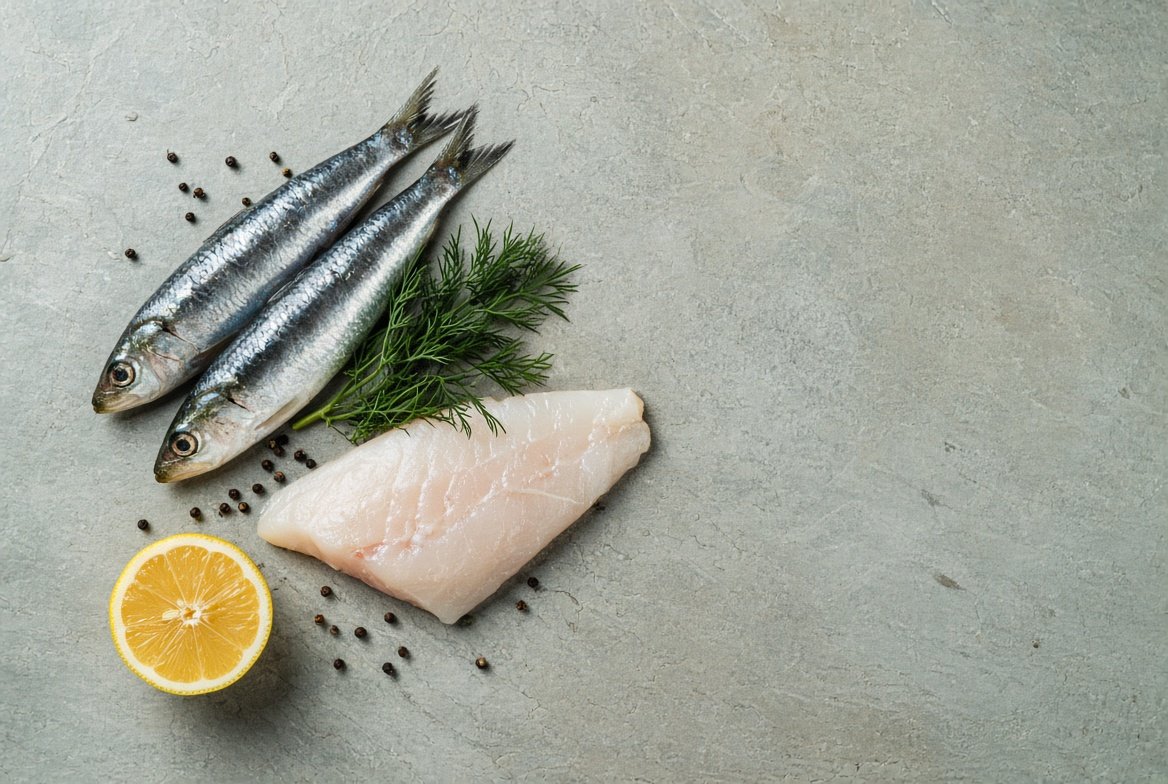
When we speak of fish, we are not referring to shellfish, crustaceans, or other sea products like shrimp. This discussion focuses specifically on fish with a vertebral column—true fish—ranging from the small sardine to the largest species. This distinction is critical because fish occupies a unique place in food science that is fundamentally different from the meat of terrestrial animals.
Fish is often called “meat,” and while it is technically an animal flesh, it differs entirely from the meat of warm-blooded animals. This distinction is not a matter of commercial marketing or trendy dietary labels; it is rooted in biochemistry and food science.
2. The True White Meat: A Scientific Distinction
2.1 The Problem with Commercial Labels
In the marketplace, terms like “white meat” and “red meat” are used loosely and often inaccurately. People have been led to believe that chicken, turkey, and other poultry are “white meat.” However, from a scientific standpoint, this is misleading. The commercialization of food has created confusion and misinformation for consumers.
2.2 What Makes Fish the Only True White Meat?
The classification of meat as “red” or “white” is determined by the presence of myoglobin and hemoglobin in the muscle tissue. Myoglobin is an iron-containing protein that gives meat its red color. Warm-blooded animals (warm-blood animals), including poultry and livestock, all possess myoglobin and hemoglobin in their muscles. Therefore, all meat from warm-blooded animals is, scientifically, red meat. There is no true white meat among terrestrial animals.
Fish, however, are fundamentally different. Fish are cold-blooded animals that adapt to the temperature of their surrounding environment. They can survive in waters below freezing or in waters above thirty degrees Celsius, depending on their habitat—whether freshwater or saltwater. Critically, fish muscle tissue contains virtually no myoglobin or hemoglobin. This is what makes fish the only true “white meat” in nature.
This is not a commercial opinion; it is a scientific fact. Understanding this distinction protects consumers from the confusion and misdirection that often accompanies dietary advice.
3. The Clean Protein: No Cholesterol, No Saturated Fat
3.1 Fish vs. Shellfish
An important distinction must be made between fish and shellfish. While fish contains virtually no cholesterol and no saturated fats, shellfish (such as shrimp, crab, and other crustaceans) do contain cholesterol, though they lack significant saturated fat. For this reason, fish is in a category of its own.
3.2 A Protein Source Comparable to Plants
Fish is so clean and beneficial that it is almost classified alongside plants in terms of safety for the consumer. There is virtually no risk associated with its consumption. This is a profound statement: fish is a meat that behaves, nutritionally, almost like a plant food.
3.3 High-Quality Protein
Fish boasts a remarkably high protein content, reaching above 21-22% protein. This protein is not contaminated by saturated fats or cholesterol. It is clean, pure, and easily digestible for the human body. Fish is, without question, the finest and most superior source of protein available in the natural world.
This extends to all sea products, including sea plants like seaweed. These marine sources are free from the risks associated with terrestrial animal products.
4. The Nutritional Profile of Fish: A Fixed and Powerful List
All fish share a common set of core nutritional components. While the concentration of certain nutrients may vary based on the size of the fish, the fundamental composition remains the same. This fixed list of nutrients is one that every consumer should know.
4.1 Tryptophan: The Essential Amino Acid
Fish is an exceptional source of tryptophan, an essential amino acid. Tryptophan is a precursor to serotonin and melatonin, playing a crucial role in mood regulation, sleep quality, and overall mental well-being. The tryptophan content in fish rivals that found in legumes (pulses), making it a vital component of a balanced diet.
4.2 Selenium: The Signature Mineral of Fish
Every food group has its signature mineral. Just as chromium is associated with starches and molybdenum with legumes, selenium is the defining mineral of fish. Selenium is a powerful antioxidant mineral that plays a critical role in:
- Activating the enzyme glutathione peroxidase, which removes toxins from the body.
- Protecting cells from oxidative damage.
- Supporting thyroid function.
- Acting as a preventive agent against cancer.
Selenium is one of the most potent anti-cancer minerals known to science.
It is also one of the minerals most often bought in a bottle by people who did not need it. Selenium status is testable, the therapeutic window is narrower than most supplements admit, and food delivers it with the cofactors that make it work — we set out the case in the war on supplements: magnesium, selenium and zinc.
4.3 Vitamin B12: Essential for Nerve and Blood Health
Vitamin B12, also known as cyanocobalamin, is found in extremely high concentrations in fish, particularly in larger species. Vitamin B12 is essential for:
- Red blood cell formation.
- Neurological function.
- DNA synthesis.
A deficiency in vitamin B12 can lead to anemia, fatigue, and neurological problems. Fish is one of the most reliable natural sources of this critical vitamin.
4.4 Iodine: Fuel for the Endocrine System
Iodine is a mineral of immense importance, particularly for the health of the thyroid gland and, more broadly, the entire endocrine system. The thyroid gland, and all endocrine glands, require iodine to function properly.
The primary and most powerful natural source of iodine is all sea products. This includes:
- Sea animals (fish)
- Sea plants (seaweed)
- Sea salt
The iodine content in fish is exceptionally high, making it a cornerstone of endocrine health.
4.5 Vitamin D: The Sunshine Vitamin Found in Fish
Vitamin D is a nutrient that is nearly absent from most natural foods. However, it is found in abundance in fish. The most powerful and primary natural source of vitamin D is fish oil.
This is a critical point. Vitamin D is essential for:
- Bone health (calcium absorption).
- Immune system function.
- Mood regulation.
- Cellular health and cancer prevention.
Which is why vitamin D deficiency is worth measuring rather than assuming. The thresholds are defined, the correction is straightforward, and the benefit in trials is concentrated in the people who were genuinely short — we set that out in vitamin D and B12 deficiency.
4.6 The Synergistic Relationship: Vitamin D and Omega-3 Fatty Acids
A fundamental principle of food science is that nutrients do not work in isolation. They work synergistically. Vitamin D must be accompanied by omega-3 fatty acids to function optimally in the body.
This is why God (or Nature) created fish with both vitamin D and omega-3 fatty acids together. When a person takes a vitamin D supplement in isolation, it may not benefit the body fully. The vitamin D must be consumed as part of a whole food matrix that includes omega-3 fatty acids.
This is the difference between nutrition (the study of single nutrients) and food science (the study of the complete matrix of nutrients in a whole food). A single food contains thousands of components, not just one.
5. Omega-3 Fatty Acids: The Master Regulator
5.1 What Are Omega-3 Fatty Acids?
Omega-3 fatty acids are a family of essential polyunsaturated fats that are critical for human health. The two most important forms are EPA (eicosapentaenoic acid) and DHA (docosahexaenoic acid). All fish contain omega-3 fatty acids, but the concentration is highest in larger fish species.
5.2 The Functions of Omega-3 Fatty Acids
Omega-3 fatty acids are not just beneficial; they are essential. They act as a master regulator within the body, overseeing numerous physiological processes:
- Cellular Protection: Omega-3 fatty acids help clean the body of dangerous cells that could become cancerous. They play a role in preventing the formation of cancer cells.
- Facilitating Physiological Reactions: They facilitate the chemical and physiological reactions inside the body that provide everything the body needs, including energy.
- Arterial Health: They clean the arteries by preventing the accumulation of homocysteine, an amino acid that, at high levels, is a risk factor for cardiovascular disease.
- Metabolic Integration: They participate in the composition and metabolism of other components, including those related to the COX (cyclooxygenase) pathways.
- Anti-Inflammatory Effects: Omega-3 fatty acids are powerful anti-inflammatory agents, reducing chronic inflammation that underlies many diseases.
5.3 Omega-3, Folic Acid, and the Synergistic Matrix
Omega-3 fatty acids work in concert with other nutrients, such as folic acid (vitamin B9). This synergy is crucial. The combination of omega-3 fatty acids, folic acid, vitamin B6, and vitamin B12 is essential for proper metabolic function. This is why consuming fish alongside folate-rich foods (like leafy greens and legumes) is optimal.
This is the same principle at work throughout nutrition: a nutrient delivered without its cofactors does not behave the way it does in food. We follow that argument through iron, copper and the food groups modern eating has quietly dropped in why you are deficient: the food groups we forgot.
6. The Complete Mineral and Vitamin Profile of Fish
6.1 Minerals
Beyond selenium, fish is a rich source of several essential minerals:
- Phosphorus: Works with calcium for bone health.
- Calcium: Essential for bones, teeth, and nerve function.
- Zinc: Vital for immune function, wound healing, and cell division.
- Iron: Important for oxygen transport in the blood.
- Manganese: Involved in bone formation and metabolism.
- Copper: Found in higher concentrations in shellfish like shrimp, but also present in fish.
The mineral profile of fish is comprehensive, providing a wide array of essential nutrients.
6.2 Vitamins
Fish provides a remarkable spectrum of vitamins:
- Vitamin D: As discussed, fish is the primary natural source.
- Vitamin B12: Extremely high, especially in larger fish.
- Pantothenic Acid (Vitamin B5): Important for energy metabolism.
- Pyridoxine (Vitamin B6): Works with folic acid and B12 for many functions.
- Thiamine (Vitamin B1) and Niacin (Vitamin B3): Typically associated with starches, but also present in significant amounts in larger fish species.
While fish may not contain significant amounts of folic acid (B9), the other B vitamins are well represented. This is why combining fish with folate-rich plant foods creates a complete nutritional profile.
7. Selenium and Glutathione: The Detoxification Connection
7.1 The Enzyme Glutathione Peroxidase
Selenium is essential for the activation of an enzyme called glutathione peroxidase. This enzyme is a powerful antioxidant that removes toxins from the body.
7.2 The Role of Glutathione
Glutathione is often called the body’s “master antioxidant.” It is found in every cell and is critical for:
- Neutralizing free radicals.
- Detoxifying harmful substances.
- Supporting the immune system.
- Protecting cells from damage.
Glutathione is now sold commercially as a supplement, but its most natural source is fresh, raw plant foods. When a person consumes any fresh, raw plant, glutathione is present. However, when food is cooked on a fire, the glutathione is destroyed.
This is why a healthy diet must include fresh, raw, uncooked plant foods. The enzymes and compounds that are destroyed by heat are essential for optimal health. A diet should include a portion of raw vegetables to preserve these valuable components.
And glutathione status is not an abstraction. It falls measurably in diabetes, in liver disease, in heavy-metal exposure and in ageing — and it responds to the sulfur-rich foods that supply its precursors. We set out where low glutathione turns up, and what actually raises it, in why low glutathione shows up in chronic disease. The molecule itself, and why the body makes it rather than absorbing it, is covered in glutathione: the master antioxidant your body makes itself.
8. The Pescatarian Diet: The Optimal Dietary Pattern
8.1 A Plant-Based Diet with Fish
Based on all the evidence presented, the optimal dietary pattern for human health is a plant-based diet supplemented with fish. This is often referred to as a pescatarian diet.
This system replaces the meat of terrestrial animals with fish. The benefits are profound:
- Clean Protein: Fish provides clean protein without cholesterol and saturated fat.
- Cancer Prevention Trio: Fish provides three powerful cancer-preventive agents: vitamin D, selenium, and omega-3 fatty acids.
- Comprehensive Nutrition: Fish fills the nutritional gaps that may exist in a purely plant-based diet (such as vitamin B12 and vitamin D).
8.2 The Three Cancer-Preventive Agents in Fish
Fish contains three powerful components that work together to prevent cancer:
- Vitamin D: Raises immunity and enters into apoptosis (programmed cell death), a process that eliminates damaged or cancerous cells.
- Selenium: A powerful antioxidant mineral known for its cancer-preventive properties.
- Omega-3 Fatty Acids: Not just a cancer preventer, but a preventer of all diseases. Omega-3 fatty acids are like a mercy within the body, accelerating all positive reactions and blocking all harmful ones.
8.3 An Unassailable Dietary Pattern
The plant-based diet supplemented with fish is the finest dietary pattern, and no one can argue against it or criticize it. It is the optimal choice for health, longevity, and disease prevention.
It is also, arguably, the pattern humans ate for most of their history — plants, gathered and seasonal, with fish rather than herded animals as the protein. We make that case at length in the original human diet.
9. Practical Guidance for Fish Consumption
9.1 Frequency of Consumption
Fish is the only meat that can be consumed without reservation. In normal circumstances, a person can eat fish daily, even twice a day, without any problem. This is true for:
- Adults
- Children
- Even infants as young as one or two years old
With one qualification that depends on species rather than on fish as a category. Methylmercury accumulates up the food chain, so the largest, longest-lived predators — shark, swordfish, king mackerel, marlin, bigeye tuna — carry far more of it than the small oily fish this article is really about. Sardines, anchovies, mackerel, herring, salmon and trout are low in mercury and the richest in omega-3, which is a fortunate alignment. Young children, and women who are pregnant or breastfeeding, should keep to the small species and avoid the large predators. On the balance of benefit against contaminant, the research is reassuring: the net effect of maternal fish consumption on children’s development is positive despite the methylmercury present [see references].
9.2 The Critical Importance of Preparation Method
The only concern with fish consumption is the method of preparation. Fish should not be fried in oil. Frying destroys the beneficial nutrients and adds unhealthy fats. Healthy preparation methods include:
- Grilling
- Baking
- Steaming
- Poaching
- Eating raw (as in sushi or ceviche, when properly prepared)
When prepared healthily, fish can be a daily staple without any concern.
9.3 Considerations for Specific Conditions
There are a few minor conditions to consider, such as children with specific metabolic issues like phenylketonuria (PKU), which affects the metabolism of the amino acid phenylalanine. These will be discussed in detail when we address specific diseases. For the general population, fish is universally beneficial.
10. Conclusion: Fish as a Gift of Nature
Fish stands alone in the animal kingdom as a truly unique food. It is the only true white meat, free from the cholesterol and saturated fats that burden terrestrial animal products. It is a powerhouse of essential nutrients—tryptophan, selenium, iodine, vitamin B12, vitamin D, and omega-3 fatty acids—that work synergistically to support every system in the body.
The combination of these nutrients makes fish a powerful preventive food against chronic diseases, including cancer, cardiovascular disease, and endocrine disorders. When integrated into a plant-based diet, fish creates an optimal dietary pattern that is unassailable in its health benefits.
The message is clear: fish is not just food; it is a gift of nature, designed to nourish and protect the human body.
This article is part of our complete guide to Chronic Disease Prevention — the dietary patterns and daily habits that lower long-term risk.
Frequently Asked Questions
Is fish really a “white meat”?
Yes, scientifically speaking. The classification of meat as “red” or “white” is based on the presence of myoglobin in muscle tissue. Warm-blooded animals (cows, chickens, etc.) all have myoglobin, making their meat “red.” Fish are cold-blooded and have virtually no myoglobin in their muscles, making them the only true “white meat” in nature.
Does fish contain cholesterol?
Fish contains virtually no cholesterol. This is a key difference from shellfish (like shrimp and crab), which do contain cholesterol. Fish is an extremely clean source of protein.
Can I eat fish every day?
Yes. Fish is the only meat that can be consumed daily without reservation. The only concern is the preparation method. Avoid frying; instead, grill, bake, steam, or poach your fish. If you eat fish daily, favour the small oily species — sardines, anchovies, mackerel, herring — which are highest in omega-3 and lowest in mercury.
Is fish safe for young children?
Yes. Even infants as young as one or two years old can safely consume fish. It is one of the most easily digestible and nutritious foods available. Choose small fish rather than large predators such as shark, swordfish or king mackerel, which carry substantially more methylmercury.
Why is selenium important?
Selenium is a powerful antioxidant mineral that activates the enzyme glutathione peroxidase, which removes toxins from the body. It is also known for its cancer-preventive properties and supports thyroid function.
Can omega-3 fatty acids cure cancer?
No. This is a critical distinction. Omega-3 fatty acids are a powerful preventive component, not a treatment or cure. They help prevent the formation of cancer cells and support overall health. They are part of a preventive dietary system, not a medical treatment.
Why is vitamin D from fish better than supplements?
Vitamin D works synergistically with omega-3 fatty acids. When you consume fish, you get both together, as nature intended. A supplement provides only one component in isolation, which may not be as effective.
What is the best diet according to this article?
A plant-based diet supplemented with fish (a pescatarian diet) is presented as the optimal dietary pattern. It combines the benefits of plant foods with the unique nutritional power of fish.
References: Scientific Sources Supporting This Article
This section provides a list of reputable, peer-reviewed scientific sources that validate the core nutritional claims presented in this article.
Meat Classification and Muscle Chemistry
- Suman, S. P., & Joseph, P. (2013). “Myoglobin chemistry and meat color.” Annual Review of Food Science and Technology, 4, 79–99. doi:10.1146/annurev-food-030212-182623
Fish as a Source of High-Quality Protein
- Tacon, A. G. J., & Metian, M. (2013). “Fish Matters: Importance of Aquatic Foods in Human Nutrition and Global Food Supply.” Reviews in Fisheries Science, 21(1), 22–38. doi:10.1080/10641262.2012.753405
- Desai, A. S., Brennan, M. A., Guo, X., et al. (2019). “Fish Protein and Lipid Interactions on the Digestibility and Bioavailability of Starch and Protein from Ready-to-Eat Snacks.” Molecules, 24(5), 839. doi:10.3390/molecules24050839
Omega-3 Fatty Acids and Cardiovascular Health
- Mozaffarian, D., & Wu, J. H. Y. (2011). “Omega-3 Fatty Acids and Cardiovascular Disease: Effects on Risk Factors, Molecular Pathways, and Clinical Events.” Journal of the American College of Cardiology, 58(20), 2047–2067. doi:10.1016/j.jacc.2011.06.063
- Kris-Etherton, P. M., Harris, W. S., & Appel, L. J. (2002). “Fish Consumption, Fish Oil, Omega-3 Fatty Acids, and Cardiovascular Disease.” Circulation, 106(21), 2747–2757. doi:10.1161/01.cir.0000038493.65177.94
Omega-3 Fatty Acids and Homocysteine
- Sohouli, M. H., Fatahi, S., Sayyari, A., et al. (2022). “Impact of Omega-3 supplementation on homocysteine levels in humans: A systematic review and meta-analysis of randomized controlled trials.” Nutrition, Metabolism and Cardiovascular Diseases, 32(9), 2013–2025. doi:10.1016/j.numecd.2022.05.008
- Rizzo, G., Baroni, L., & Lombardo, M. (2020). “The Link between Homocysteine and Omega-3 Polyunsaturated Fatty Acid: Critical Appraisal and Future Directions.” Biomolecules, 10(2), 219. doi:10.3390/biom10020219
Omega-3 Fatty Acids and Cancer Prevention
- Larsson, S. C., Kumlin, M., Ingelman-Sundberg, M., & Wolk, A. (2004). “Dietary long-chain n-3 fatty acids for the prevention of cancer: a review of potential mechanisms.” The American Journal of Clinical Nutrition, 79(6), 935–945. doi:10.1093/ajcn/79.6.935
- Calviello, G., Serini, S., & Piccioni, E. (2007). “n-3 Polyunsaturated Fatty Acids and the Prevention of Colorectal Cancer: Molecular Mechanisms Involved.” Current Medicinal Chemistry, 14(29), 3059–3069. doi:10.2174/092986707782793934
Selenium and Cancer Prevention
- Rayman, M. P. (2005). “Selenium in cancer prevention: a review of the evidence and mechanism of action.” Proceedings of the Nutrition Society, 64(4), 527–542. doi:10.1079/pns2005467
- Clark, L. C., Combs, G. F., Turnbull, B. W., et al. (1996). “Effects of selenium supplementation for cancer prevention in patients with carcinoma of the skin. A randomized controlled trial.” JAMA, 276(24), 1957–1963. PubMed 8971064
Vitamin D and Health
- Holick, M. F. (2007). “Vitamin D Deficiency.” The New England Journal of Medicine, 357(3), 266–281. doi:10.1056/NEJMra070553
- Lu, Z., Chen, T. C., Zhang, A., et al. (2007). “An evaluation of the vitamin D3 content in fish: Is the vitamin D content adequate to satisfy the dietary requirement for vitamin D?” The Journal of Steroid Biochemistry and Molecular Biology, 103(3–5), 642–644. doi:10.1016/j.jsbmb.2006.12.010
The Synergy of Vitamin D and Omega-3 Fatty Acids
- Patrick, R. P., & Ames, B. N. (2015). “Vitamin D and the omega-3 fatty acids control serotonin synthesis and action, part 2: relevance for ADHD, bipolar disorder, schizophrenia, and impulsive behavior.” The FASEB Journal, 29(6), 2207–2222. doi:10.1096/fj.14-268342
- Bischoff-Ferrari, H. A., Vellas, B., Rizzoli, R., et al. (2020). “Effect of Vitamin D Supplementation, Omega-3 Fatty Acid Supplementation, or a Strength-Training Exercise Program on Clinical Outcomes in Older Adults: The DO-HEALTH Randomized Clinical Trial.” JAMA, 324(18), 1855–1868. doi:10.1001/jama.2020.16909
Vitamin B12 and Fish
- Watanabe, F. (2007). “Vitamin B12 Sources and Bioavailability.” Experimental Biology and Medicine, 232(10), 1266–1274. doi:10.3181/0703-MR-67
- Bourre, J. M., & Paquotte, P. (2008). “Contributions (in 2005) of marine and fresh water products (finfish and shellfish, seafood, wild and farmed) to the American and French dietary intakes of vitamins D and B12, selenium, iodine and cobalt.” International Journal of Food Sciences and Nutrition, 59(6), 491–501. doi:10.1080/09637480701553741
Iodine and Thyroid Health
- Zimmermann, M. B. (2009). “Iodine Deficiency.” Endocrine Reviews, 30(4), 376–408. doi:10.1210/er.2009-0011
- Bath, S. C., Steer, C. D., Golding, J., Emmett, P., & Rayman, M. P. (2013). “Effect of inadequate iodine status in UK pregnant women on cognitive outcomes in their children: results from the Avon Longitudinal Study of Parents and Children (ALSPAC).” The Lancet, 382(9889), 331–337. doi:10.1016/S0140-6736(13)60436-5
Tryptophan and Mood Regulation
- Richard, D. M., Dawes, M. A., Mathias, C. W., Acheson, A., Hill-Kapturczak, N., & Dougherty, D. M. (2009). “L-Tryptophan: Basic Metabolic Functions, Behavioral Research and Therapeutic Indications.” International Journal of Tryptophan Research, 2, 45–60. doi:10.4137/ijtr.s2129
- Jenkins, T. A., Nguyen, J. C. D., Polglaze, K. E., & Bertrand, P. P. (2016). “Influence of Tryptophan and Serotonin on Mood and Cognition with a Possible Role in the Gut-Brain Axis.” Nutrients, 8(1), 56. doi:10.3390/nu8010056
Selenium and Glutathione Peroxidase
- Rotruck, J. T., Pope, A. L., Ganther, H. E., Swanson, A. B., Hafeman, D. G., & Hoekstra, W. G. (1973). “Selenium: Biochemical Role as a Component of Glutathione Peroxidase.” Science, 179(4073), 588–590. doi:10.1126/science.179.4073.588
- Brigelius-Flohé, R., & Maiorino, M. (2013). “Glutathione peroxidases.” Biochimica et Biophysica Acta (BBA) – General Subjects, 1830(5), 3289–3303. doi:10.1016/j.bbagen.2012.11.020
The Importance of Raw Plant Foods and Glutathione
- Jones, D. P., Coates, R. J., Flagg, E. W., et al. (1992). “Glutathione in foods listed in the National Cancer Institute’s Health Habits and History Food Frequency Questionnaire.” Nutrition and Cancer, 17(1), 57–75. doi:10.1080/01635589209514173
- Wierzbicka, G. T., Hagen, T. M., & Jones, D. P. (1989). “Glutathione in food.” Journal of Food Composition and Analysis, 2(4), 327–337. doi:10.1016/0889-1575(89)90004-5
Replacing Terrestrial Meat with Fish: Measured Outcomes
- Würtz, A. M. L., Jakobsen, M. U., Bertoia, M. L., et al. (2016). “Substitutions of red meat, poultry and fish and risk of myocardial infarction.” British Journal of Nutrition, 115(9), 1571–1578. doi:10.1017/S0007114516000507
- Venø, S. K., Bork, C. S., Jakobsen, M. U., et al. (2018). “Substitution of Fish for Red Meat or Poultry and Risk of Ischemic Stroke.” Nutrients, 10(11), 1648. doi:10.3390/nu10111648
- Ibsen, D. B., Warberg, C. K., Würtz, A. M. L., Overvad, K., & Dahm, C. C. (2019). “Substitution of red meat with poultry or fish and risk of type 2 diabetes: a Danish cohort study.” European Journal of Nutrition, 58(7), 2705–2712. doi:10.1007/s00394-018-1820-0
The Pescatarian Diet and Health Outcomes
- Key, T. J., Appleby, P. N., Spencer, E. A., Travis, R. C., Roddam, A. W., & Allen, N. E. (2009). “Mortality in British vegetarians: results from the European Prospective Investigation into Cancer and Nutrition (EPIC-Oxford).” The American Journal of Clinical Nutrition, 89(5), 1613S–1619S. doi:10.3945/ajcn.2009.26736l
- Orlich, M. J., Singh, P. N., Sabaté, J., et al. (2013). “Vegetarian Dietary Patterns and Mortality in Adventist Health Study 2.” JAMA Internal Medicine, 173(13), 1230–1238. doi:10.1001/jamainternmed.2013.6473
Fish Consumption and Overall Mortality
- Zheng, J., Huang, T., Yu, Y., Hu, X., Yang, B., & Li, D. (2012). “Fish consumption and CHD mortality: an updated meta-analysis of seventeen cohort studies.” Public Health Nutrition, 15(4), 725–737. doi:10.1017/S1368980011002254
- Jayedi, A., Shab-Bidar, S., Eimeri, S., & Djafarian, K. (2018). “Fish consumption and risk of all-cause and cardiovascular mortality: a dose-response meta-analysis of prospective observational studies.” Public Health Nutrition, 21(7), 1297–1306. doi:10.1017/S1368980017003834
Fish Consumption in Childhood, and Methylmercury
- Spiller, P., van Wijngaarden, E., Adams, H. R., et al. (2023). “Net effects explains the benefits to children from maternal fish consumption despite methylmercury in fish.” NeuroToxicology, 99, 195–205. doi:10.1016/j.neuro.2023.10.010
- Myers, G. J., Davidson, P. W., & Strain, J. J. (2007). “Maternal fish consumption benefits children’s development.” The Lancet, 369(9561), 537–538. doi:10.1016/S0140-6736(07)60248-7
- Mozaffarian, D., & Rimm, E. B. (2006). “Fish intake, contaminants, and human health: evaluating the risks and the benefits.” JAMA, 296(15), 1885–1899. doi:10.1001/jama.296.15.1885