Abstract
This article presents a critical examination of modern dietary trends, particularly intermittent fasting, from the perspective of traditional Islamic health wisdom and food science. It argues that Muslims possess a profound, time-honored understanding of fasting that predates and surpasses contemporary Western adaptations. The discussion explores the physiological necessity of hunger and movement for optimal metabolic function, the critical distinction between fish and terrestrial animal meat, and the foundational principles of a truly health-promoting dietary pattern. The article advocates for a return to a plant-based diet supplemented with fish as the optimal human diet, challenging the modern overemphasis on meat consumption and the commercialization of dietary fads.
Key Takeaways
- Muslims have a deep, inherent understanding of fasting that predates modern trends like “intermittent fasting” by centuries.
- True fasting, as practiced in Islamic tradition, involves complete abstinence from food and water from dawn to sunset, not the modified versions popularized in the West.
- Hunger and movement are essential physiological signals that allow the body’s organs to function properly and prevent metabolic dysfunction.
- The modern practice of eating heavily at night after fasting is scientifically and cosmologically incorrect.
- Fish is the most superior source of protein on Earth, unmatched by any terrestrial animal meat.
- All meat from warm-blooded animals (cows, sheep, poultry) is scientifically “red meat” and should not be a primary dietary component.
- The optimal human diet is plant-based, supplemented with fish, olive oil, and natural whole foods.
- Meat should be consumed sparingly—weekly or monthly—and only if it comes from free-range, naturally raised animals.
- A plant-based diet with fish is suitable for all patients, including those with cardiovascular disease, prostate enlargement, and hormonal imbalances.
- Modern dietary labels like “ketogenic,” “low-carb,” and “intermittent fasting” are misleading and unnecessary for people who already possess traditional dietary wisdom.
1. Introduction: Reclaiming Our Dietary Heritage
We are witnessing an explosion of modern dietary trends, the most prominent being “intermittent fasting.” These approaches arrive from Western, non-Muslim countries, often backed by emerging research and anecdotal success. While some of these practices may have merit, it is essential to recognize a fundamental truth: as Muslims, we already possess a profound and complete system of fasting. We do not need to be taught how to fast by anyone.
We observe the obligatory fast of Ramadan. We practice voluntary fasts—Mondays and Thursdays, the white days (the 13th, 14th, and 15th of each lunar month). We have the fast of Prophet David (peace be upon him), which is to fast every other day. These are our traditions. They are complete. They are divinely guided.
The modern “intermittent fasting” trend—with its 16/8 method, one-meal-a-day protocols, and various time-restricted eating windows—is an imitation of what we already know. It would be a shame for us to abandon our own system to follow theirs.
2. The Correct Method of Fasting: A Cosmic Principle
2.1 The Error of Modern Fasting Practices
Fasting must be correct not only from a spiritual or religious perspective but also from a cosmic and physiological one. This is where many people err. The current popular practice of fasting—abstaining during the day and then eating heavily at night—is a cosmic and physiological error.
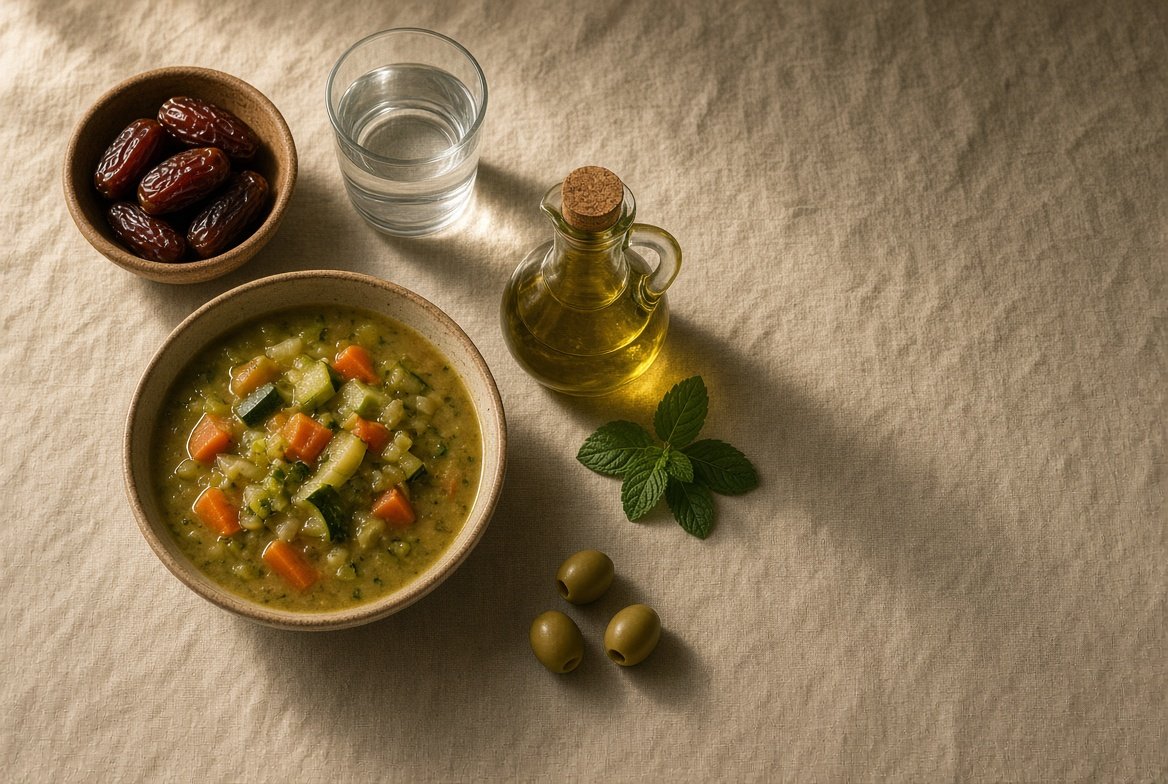
This is not the fast of the Prophet Muhammad (peace be upon him). His fast was characterized by extreme moderation upon breaking the fast: a few dates, water, a light soup, some vegetables. Then he would stop eating until the next day.
2.2 The Importance of Nighttime Abstinence
The true, correct fast is to abstain from food during the day and to refrain from heavy eating at night. The body must experience genuine hunger. The digestive system must come to a complete stop. This cessation is not deprivation; it is an essential physiological signal.
When food is consumed continuously, the body’s organs do not know what to do. They become confused. This confusion manifests in:
- Fat storage and weight gain.
- Dangerous internal chemical reactions.
- Elevated inflammatory markers visible in blood tests.
2.3 The Consequences of Constant Eating
When the body is in a state of constant digestion, several harmful indicators begin to rise:
- Creatinine: A marker of kidney stress.
- Urea: A waste product indicating protein metabolism imbalance.
- C-Reactive Protein (CRP): A key marker of systemic inflammation.
- Gamma Globulin: Proteins involved in immune response, elevated in chronic inflammation.
- Ferritin: An iron storage protein that rises with inflammation.
- Liver Transaminases (ALT, AST): Liver enzymes that can be elevated even without viral hepatitis, a condition known as “atypical” elevation.
The body simply does not know what to do with the constant influx of food. Elevated blood sugar, elevated blood pressure, elevated everything—this is the result of a body overwhelmed by continuous eating.
2.4 The Cosmic Correctness of True Fasting
When fasting is performed correctly—with daytime abstinence and nighttime moderation—it becomes the best fasting practice on Earth. It is the fast that benefits us most, and as Muslims, we are the most deserving of its benefits. We should not be chasing after Western adaptations when we possess the original, complete, and divinely ordained system.
3. The Essential Role of Hunger and Movement
3.1 Hunger as a Physiological Necessity
Hunger is not an enemy to be avoided; it is a vital physiological signal that the body requires for optimal function. Without hunger, the body does not know what to do. The digestive system must pause for the other organs to perform their functions.
3.2 Movement as a Non-Negotiable Requirement
Alongside hunger, movement is essential. Without movement, the body is sick. We insist on movement with people because it is fundamental to health. A sedentary body is a diseased body.
3.3 The Triad of Health: Hunger, Movement, and Moderation
The foundation of health is simple:
- Hunger: Allow the body to experience genuine hunger. Do not eat continuously.
- Movement: Engage in regular physical activity. The body is designed to move.
- Moderation: Avoid excessive eating. Eat only what is necessary.
If a person cannot fast completely, they should at minimum:
- Avoid eating at night.
- Limit themselves to two meals during the day.
- Move their body.
- Allow themselves to feel hunger.
This is the good system. This is the natural human way.
4. The Illusion of Modern Dietary Labels
4.1 The Problem with Modern Terminology
We are bombarded with modern dietary labels: ketogenic diet, intermittent fasting, low-carb diet. These terms are misleading. They are products of marketing, not of true nutritional science.
There is no ketogenic diet. There is no intermittent fasting. There is no low-carb diet. There is only the human diet—the diet that humans have always known, practiced, and thrived upon.
The label is marketing. The underlying therapy, where one exists, is real but narrow — the ketogenic diet remains an established treatment for drug-resistant epilepsy, and what it does to the gut microbiome deserves far more attention than the branding ever gets.
4.2 The Danger of Abandoning Tradition
When people abandon their traditional dietary wisdom for these modern labels, they lose something precious. They lose the accumulated knowledge of generations. They lose the connection to their cultural and spiritual heritage.
We must bring people back to the origin. Back to the original human diet.
5. The Foundations of the Optimal Human Diet
5.1 Home Cooking and Natural Ingredients
The optimal diet is built upon:
- Home cooking: Food prepared at home, not processed or industrially manufactured.
- Natural ingredients: Whole foods as they exist in nature, not refined or altered.
5.2 The Role of Meat: Secondary, Not Primary
A critical principle: Meat should not be a primary dietary component. I repeat this three times for emphasis. Meat should not be primary, secondary, or tertiary. It is not an essential food.
The optimal diet is:
- Plant-based: Vegetables, legumes, fruits, nuts, seeds, whole grains.
- Supplemented with fish: The superior source of animal protein.
- Including olive oil: A foundational healthy fat.
- Inclusive of all that God has permitted: We do not forbid what God has made lawful.
The biochemistry beneath each of those groups — what the fibres, minerals, polyphenols and fatty acids actually do inside the body — is set out in detail separately.
5.3 When Meat Is Acceptable
If meat is consumed, it should be:
- From free-range, naturally raised animals.
- From wild poultry.
- Consumed infrequently—once a week, once a month.
- Not harmful when consumed in this manner.
Why is occasional meat acceptable? Because the body will take what it needs from it. It will extract certain nutrients, such as vitamin B12.
5.4 The Truth About Vitamin B12
People criticize plant-based diets for lacking vitamin B12. But where does B12 come from originally? The first source of vitamin B12 is fish—specifically large fish.
Large fish contain:
- High-quality protein.
- Vitamin B12.
- Vitamin B5 and B6.
- Selenium.
- Omega-3 fatty acids.
Fish is the primary and most powerful food substance on Earth. No other food matches it.
6. Fish: The Ultimate Food
6.1 The Superiority of Fish Protein
Fish is the most superior source of protein on Earth. It is unmatched and unparalleled by any other food. Fish protein is:
- Free of collagen: Unlike terrestrial animal meat, fish protein is not bound in tough collagen fibers.
- Moist and tender: Easy to chew and swallow.
- Easily digestible: The body can break it down effortlessly.
- Extremely potent: Rich in all essential amino acids.
- Complete: A fully balanced amino acid profile.
This is not the case with terrestrial animal meat. The proteins of land animals are inferior to the proteins of fish.
We set out the full nutritional case elsewhere — the selenium, iodine, B12, vitamin D and omega-3 profile that separates fish from every other protein source.
6.2 Fish vs. Meat: A Fundamental Distinction
Fish is not meat. This is a critical classification. When we advise people to reduce or eliminate meat, we mean:
- All terrestrial animals (cows, sheep, goats, etc.).
- All poultry (chicken, turkey, etc.).
We do not mean fish. Fish is in a category of its own.
6.3 The Danger of Misunderstanding “Meat”
A dangerous error has occurred. When we advised people to avoid meat, some understood this to mean only red meat from cows and sheep. They then began consuming turkey and chicken freely. The result? Their cholesterol did not decrease—it increased dramatically and dangerously.
When we say “meat,” we mean all meat. Poultry and terrestrial animals are all red meat scientifically. They all possess the same harmful characteristics. When we advise against meat, we advise against all of it.
Fish is the exception. Fish is not classified as meat. Fish remains.
7. The Optimal Diet for All Patients
7.1 A Universal Dietary Prescription
This plant-based diet supplemented with fish is the diet that is suitable for:
- All patients.
- All conditions.
- All individuals.
One important qualification: established liver disease is the exception that proves the rule. In cirrhosis, protein requirements rise rather than fall, and restricting protein does measurable harm. Limiting the iron-dense red meats while keeping fish, legumes and eggs is the version of this advice that applies there.
7.2 Specific Applications
- Cardiovascular Disease: Patients with coronary artery disease should eliminate meat and consume fish instead.
- Prostate Enlargement: Meat consumption is linked to prostate issues; fish is the safe alternative.
- Hormonal Imbalances in Women: A plant-based diet with fish supports hormonal health.
- Chronic Inflammation: The anti-inflammatory properties of fish and plant foods are essential.
7.3 The Hypocrisy of Dietary Restrictions
We readily restrict sugar for diabetics. But we do not restrict meat for heart disease patients. Why? This is a critical question.
If a person has diabetes, we say: “Stop eating sugar.” If a person has kidney disease and elevated protein levels (proteinuria), we restrict protein.
The ketogenic diet was originally developed for epilepsy patients with elevated protein levels. But for heart disease, we hesitate to restrict meat. This is a failure of modern medicine.
7.4 The Principle of Restriction
When a substance causes harm, it must be restricted. This is logical and consistent. Sugar harms diabetics, so we restrict sugar. Meat harms heart disease patients, so we must restrict meat. The same principle applies.
8. The Challenge of Cultural Resistance
8.1 The Western Medical Paradigm
We recognize the difficulty of this message, especially for our communities living in Western countries. In the United States, Canada, Scandinavian countries, Western and Eastern Europe, and even in Gulf Arab countries, physicians often refuse to accept that a person can live without meat.
This is a serious problem. Some of our community members have even had conflicts with doctors over this issue. These countries have deeply ingrained the belief that meat is essential for human survival.
This is false.
8.2 The Truth About Protein Sources
Protein does not only exist in meat. Protein exists in:
- Legumes and pulses.
- Whole grains and starches.
- Nuts and dried fruits.
- Many other plant sources.
The most noble, powerful, and rich proteins are the proteins of fish. Not the proteins of terrestrial animals.
8.3 The Difficulty of Change
It is difficult for a doctor to tell a patient to stop eating meat. It is difficult to overcome cultural conditioning. But it is necessary. It is the truth.
9. Conclusion: Returning to the Origin
The optimal human diet is not a modern invention. It is the diet that humans have always known. It is:
- A diet of moderation, not excess.
- A diet of hunger, not constant eating.
- A diet of movement, not sedentary living.
- A diet of plants, not meat.
- A diet of fish, the superior protein.
- A diet of olive oil, natural fats.
- A diet of home cooking, natural ingredients.
We do not need modern dietary labels. We do not need Western trends. We have our own tradition, our own wisdom, our own divine guidance.
The human diet is simple: Eat plants. Eat fish. Eat moderately. Move your body. Feel hunger. Fast.
This is the original human diet. This is the way back to health.
This article is part of our complete guide to Diet, Fasting & Detox — what the metabolic research supports on fasting, eating patterns, and the body’s own renewal.
Frequently Asked Questions
Is intermittent fasting bad?
The practice of time-restricted eating itself is not inherently bad. However, as Muslims, we already have a complete, divinely guided system of fasting that predates and surpasses modern trends. We do not need to adopt Western labels for practices we already know. The correct form of fasting is the Islamic fast: complete abstinence from food and water from dawn to sunset, with moderation at night.
Can I drink water during a fast?
In the Islamic tradition, a true fast involves abstaining from both food and water from dawn to sunset. Drinking water during a “fast” is not fasting; it is a form of modified fasting or “starvation” protocol. While these may have some benefits, they are not the same as a complete fast.
Is meat really harmful?
All meat from warm-blooded animals (cows, sheep, poultry) is scientifically classified as red meat. It contains cholesterol and saturated fats that can contribute to cardiovascular disease, inflammation, and other chronic conditions. Meat should not be a primary dietary component. It should be consumed sparingly—weekly or monthly—and only from free-range, naturally raised sources.
What about vitamin B12 on a plant-based diet?
The primary natural source of vitamin B12 is fish, particularly large fish. A plant-based diet supplemented with fish provides adequate vitamin B12. Fish also contains vitamins B5 and B6, selenium, and omega-3 fatty acids, making it a complete and superior source of essential nutrients.
Why is fish protein better than meat protein?
Fish protein is superior because it is free of collagen, moist, easily digestible, and complete in its amino acid profile. It is the most powerful and rich protein source on Earth, unmatched by terrestrial animal meat.
What should I eat if I have heart disease?
A plant-based diet supplemented with fish is the optimal diet for heart disease patients. Meat should be eliminated or drastically reduced. Fish provides the necessary protein and omega-3 fatty acids without the harmful cholesterol and saturated fats of terrestrial meat.
Why do doctors refuse to restrict meat for heart patients?
This is a failure of modern medical education and cultural conditioning. Western medicine has deeply ingrained the belief that meat is essential. However, the science is clear: protein exists in abundance in plant foods and fish. Meat is not necessary for human health.
What is the best diet for overall health?
The optimal human diet is plant-based (vegetables, legumes, whole grains, nuts, fruits), supplemented with fish, including olive oil, based on home cooking and natural ingredients, characterized by moderation and regular hunger, and accompanied by regular physical movement.
References: Scientific Sources Supporting the Core Principles
This section provides a list of reputable, peer-reviewed scientific sources that validate the core nutritional and health principles presented in this article.
Ramadan Fasting: The Evidence
- Jahrami, H., Ammar, A., Glenn, J. M., et al. (2025). “An umbrella review and meta-analysis of meta-analyses of the impact of Ramadan diurnal intermittent fasting on health outcomes.” Nutrition Reviews, 83(2), e711–e721. doi:10.1093/nutrit/nuae001
- Jahrami, H., Trabelsi, K., Alhaj, O. A., et al. (2022). “The impact of Ramadan fasting on the metabolic syndrome severity in relation to ethnicity and sex: Results of a systematic review and meta-analysis.” Nutrition, Metabolism and Cardiovascular Diseases, 32(12), 2714–2729. doi:10.1016/j.numecd.2022.09.001
- Madkour, M. I., Islam, M. T., Tippetts, T. S., et al. (2023). “Ramadan intermittent fasting is associated with ameliorated inflammatory markers and improved plasma sphingolipids/ceramides in subjects with obesity.” Scientific Reports, 13(1), 17322. doi:10.1038/s41598-023-43862-9
- Mushtaq, R., Akram, A., Mushtaq, R., Khwaja, S., & Ahmed, S. (2019). “The role of inflammatory markers following Ramadan Fasting.” Pakistan Journal of Medical Sciences, 35(1), 77–81. doi:10.12669/pjms.35.1.95
Intermittent Fasting and Metabolic Health
- Patterson, R. E., & Sears, D. D. (2017). “Metabolic Effects of Intermittent Fasting.” Annual Review of Nutrition, 37, 371–393. doi:10.1146/annurev-nutr-071816-064634
- Mattson, M. P., Longo, V. D., & Harvie, M. (2017). “Impact of intermittent fasting on health and disease processes.” Ageing Research Reviews, 39, 46–58. doi:10.1016/j.arr.2016.10.005
- de Cabo, R., & Mattson, M. P. (2019). “Effects of Intermittent Fasting on Health, Aging, and Disease.” The New England Journal of Medicine, 381(26), 2541–2551. doi:10.1056/NEJMra1905136
The Health Benefits of Fasting
- Longo, V. D., & Mattson, M. P. (2014). “Fasting: molecular mechanisms and clinical applications.” Cell Metabolism, 19(2), 181–192. doi:10.1016/j.cmet.2013.12.008
- Harvie, M. N., & Howell, A. (2016). “Could intermittent energy restriction and intermittent fasting reduce rates of cancer in obese, overweight, and normal-weight subjects? A summary of evidence.” Advances in Nutrition, 7(4), 690–705. doi:10.3945/an.115.011767
Inflammatory Markers and Dietary Patterns
- Ridker, P. M. (2003). “Clinical application of C-reactive protein for cardiovascular disease detection and prevention.” Circulation, 107(3), 363–369. doi:10.1161/01.cir.0000053730.47739.3c
- Pearson, T. A., Mensah, G. A., Alexander, R. W., et al. (2003). “Markers of inflammation and cardiovascular disease: application to clinical and public health practice.” Circulation, 107(3), 499–511. doi:10.1161/01.cir.0000052939.59093.45
Plant-Based Diets and Cardiovascular Health
- Satija, A., Bhupathiraju, S. N., Spiegelman, D., et al. (2017). “Healthful and Unhealthful Plant-Based Diets and the Risk of Coronary Heart Disease in U.S. Adults.” Journal of the American College of Cardiology, 70(4), 411–422. doi:10.1016/j.jacc.2017.05.047
- Kim, H., Caulfield, L. E., Garcia-Larsen, V., et al. (2019). “Plant-Based Diets Are Associated With a Lower Risk of Incident Cardiovascular Disease, Cardiovascular Disease Mortality, and All-Cause Mortality in a General Population of Middle-Aged Adults.” Journal of the American Heart Association, 8(16), e012865. doi:10.1161/JAHA.119.012865
Red Meat Consumption and Health Risks
- Pan, A., Sun, Q., Bernstein, A. M., et al. (2012). “Red meat consumption and mortality: results from 2 prospective cohort studies.” Archives of Internal Medicine, 172(7), 555–563. doi:10.1001/archinternmed.2011.2287
- Micha, R., Wallace, S. K., & Mozaffarian, D. (2010). “Red and processed meat consumption and risk of incident coronary heart disease, stroke, and diabetes mellitus: a systematic review and meta-analysis.” Circulation, 121(21), 2271–2283. doi:10.1161/CIRCULATIONAHA.109.924977
- Bouvard, V., Loomis, D., Guyton, K. Z., et al. (2015). “Carcinogenicity of consumption of red and processed meat.” The Lancet Oncology, 16(16), 1599–1600. (World Health Organization IARC classification). doi:10.1016/S1470-2045(15)00444-1
Fish Consumption and Cardiovascular Health
- Mozaffarian, D., & Rimm, E. B. (2006). “Fish intake, contaminants, and human health: evaluating the risks and the benefits.” JAMA, 296(15), 1885–1899. doi:10.1001/jama.296.15.1885
- Kris-Etherton, P. M., Harris, W. S., & Appel, L. J. (2002). “Fish Consumption, Fish Oil, Omega-3 Fatty Acids, and Cardiovascular Disease.” Circulation, 106(21), 2747–2757. doi:10.1161/01.cir.0000038493.65177.94
Fish Protein Quality
- Tacon, A. G. J., & Metian, M. (2013). “Fish Matters: Importance of Aquatic Foods in Human Nutrition and Global Food Supply.” Reviews in Fisheries Science, 21(1), 22–38. doi:10.1080/10641262.2012.753405
- Friedman, M. (1996). “Nutritional Value of Proteins from Different Food Sources. A Review.” Journal of Agricultural and Food Chemistry, 44(1), 6–29. doi:10.1021/jf9400167
Fish as a Source of Vitamin B12
- Watanabe, F. (2007). “Vitamin B12 Sources and Bioavailability.” Experimental Biology and Medicine, 232(10), 1266–1274. doi:10.3181/0703-MR-67
- Bourre, J. M., & Paquotte, P. (2008). “Contributions (in 2005) of marine and fresh water products (finfish and shellfish, seafood, wild and farmed) to the American and French dietary intakes of vitamins D and B12, selenium, iodine and cobalt.” International Journal of Food Sciences and Nutrition, 59(6), 491–501. doi:10.1080/09637480701553741
Omega-3 Fatty Acids and Health
- Calder, P. C. (2015). “Marine omega-3 fatty acids and inflammatory processes: Effects, mechanisms and clinical relevance.” Biochimica et Biophysica Acta (BBA) – Molecular and Cell Biology of Lipids, 1851(4), 469–484. doi:10.1016/j.bbalip.2014.08.010
- Larsson, S. C., Kumlin, M., Ingelman-Sundberg, M., & Wolk, A. (2004). “Dietary long-chain n-3 fatty acids for the prevention of cancer: a review of potential mechanisms.” The American Journal of Clinical Nutrition, 79(6), 935–945. doi:10.1093/ajcn/79.6.935
Selenium and Health
- Rayman, M. P. (2012). “Selenium and human health.” The Lancet, 379(9822), 1256–1268. doi:10.1016/S0140-6736(11)61452-9
- Rayman, M. P. (2005). “Selenium in cancer prevention: a review of the evidence and mechanism of action.” Proceedings of the Nutrition Society, 64(4), 527–542. doi:10.1079/pns2005467
Physical Activity and Health
- Warburton, D. E. R., Nicol, C. W., & Bredin, S. S. D. (2006). “Health benefits of physical activity: the evidence.” Canadian Medical Association Journal, 174(6), 801–809. doi:10.1503/cmaj.051351
- Lee, I. M., Shiroma, E. J., Lobelo, F., et al. (2012). “Effect of physical inactivity on major non-communicable diseases worldwide: an analysis of burden of disease and life expectancy.” The Lancet, 380(9838), 219–229. doi:10.1016/S0140-6736(12)61031-9
Protein Sources and Human Health
- Richter, C. K., Skulas-Ray, A. C., Champagne, C. M., & Kris-Etherton, P. M. (2015). “Plant protein and animal proteins: do they differentially affect cardiovascular disease risk?” Advances in Nutrition, 6(6), 712–728. doi:10.3945/an.115.009654
- Song, M., Fung, T. T., Hu, F. B., et al. (2016). “Association of Animal and Plant Protein Intake With All-Cause and Cause-Specific Mortality.” JAMA Internal Medicine, 176(10), 1453–1463. doi:10.1001/jamainternmed.2016.4182
Diet and Prostate Health
- Ranjan, P., Dalela, D., & Sankhwar, S. N. (2006). “Diet and benign prostatic hyperplasia: implications for prevention.” Urology, 68(3), 470–476. doi:10.1016/j.urology.2006.04.023
- Lagiou, P., Wuu, J., Trichopoulou, A., et al. (1999). “Diet and benign prostatic hyperplasia: a study in Greece.” Urology, 54(2), 284–290. doi:10.1016/s0090-4295(99)00096-5
The Ketogenic Diet and Its Original Medical Use
- Wheless, J. W. (2008). “History of the ketogenic diet.” Epilepsia, 49(Suppl 8), 3–5. doi:10.1111/j.1528-1167.2008.01821.x
- Neal, E. G., Chaffe, H., Schwartz, R. H., et al. (2008). “The ketogenic diet for the treatment of childhood epilepsy: a randomised controlled trial.” The Lancet Neurology, 7(6), 500–506. doi:10.1016/S1474-4422(08)70092-9
The Importance of Home Cooking and Whole Foods
- Zong, G., Eisenberg, D. M., Hu, F. B., & Sun, Q. (2016). “Consumption of Meals Prepared at Home and Risk of Type 2 Diabetes: An Analysis of Two Prospective Cohort Studies.” PLOS Medicine, 13(7), e1002052. doi:10.1371/journal.pmed.1002052
- Mozaffarian, D., Hao, T., Rimm, E. B., Willett, W. C., & Hu, F. B. (2011). “Changes in Diet and Lifestyle and Long-Term Weight Gain in Women and Men.” The New England Journal of Medicine, 364(25), 2392–2404. doi:10.1056/NEJMoa1014296