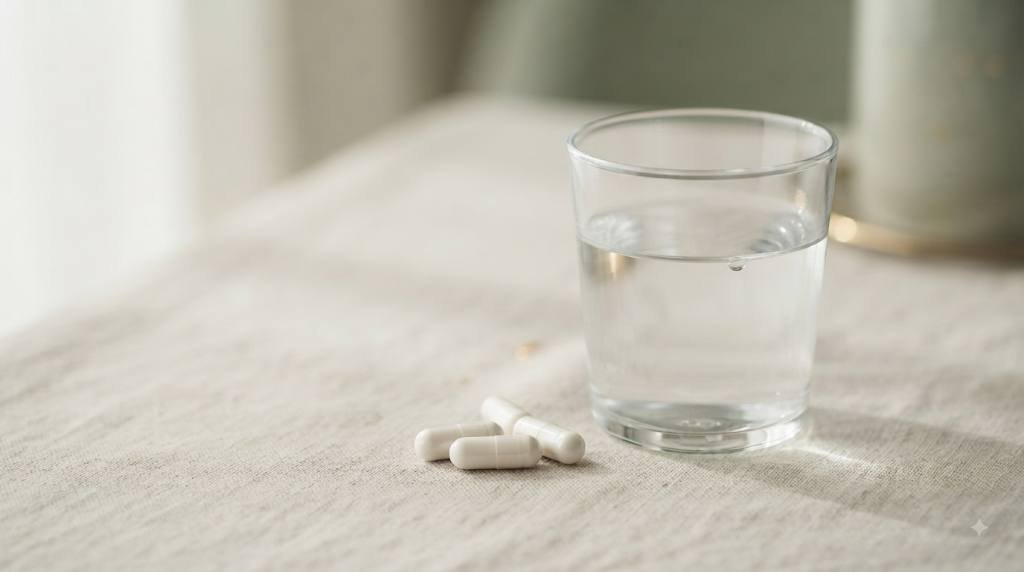
Every single day, millions of people perform the same careless ritual: they swallow their daily medications — whether a routine blood pressure pill, an over-the-counter painkiller, or a course of antibiotics — with nothing more than a desperate single sip of water. Or worse: they dry-swallow them entirely, forcing a concentrated chemical compound down an unlubricated esophagus with nothing but saliva and momentum.
If you are doing this, you are walking directly into a dangerous physiological blind spot that your pharmacist almost certainly never warned you about.
This is not a lecture about general wellness. This is a raw biochemistry breakdown of what actually happens inside your body when pharmaceutical compounds meet inadequate hydration — from the filtration units of your kidneys to the delicate lining of your esophagus. The mechanism is precise, the damage is documented, and the fix is entirely within your control.
1. The Core Biochemistry: What Water Actually Does to a Drug Inside Your Body
When a pharmaceutical compound enters your digestive system, it requires a biological solvent to dissolve its active molecules, distribute them across your plasma, transport them to target receptor sites, and ultimately clear their metabolic by-products through renal filtration. In human biology, that solvent is exclusively water. There is no biological substitute.
When your body is operating in a state of even sub-clinical dehydration — a mild fluid deficit that produces no obvious thirst signal — two critical pharmacological parameters shift in ways that can transform a standard therapeutic dose into a systemic threat [1][2]:
A. Decreased Volume of Distribution (Vd)
Volume of Distribution is the pharmacological parameter that describes how widely a drug disperses across body fluids and tissues after absorption. In a fully hydrated individual, a standard dose of medication dilutes across the full plasma volume, achieving a safe therapeutic concentration at receptor sites.
In a dehydrated individual, contracted plasma volume means the same dose now disperses into a smaller fluid compartment. The resulting drug concentration in the bloodstream — and at target organs — becomes disproportionately elevated. A dose that is pharmacologically calibrated as safe for a normally hydrated patient can silently cross the threshold into systemic toxicity simply because there is not enough fluid to adequately dilute it.
B. Renal Blood Flow (RBF) Reduction
Your kidneys are your body’s primary drug clearance organ. They filter approximately 180 liters of plasma per day through 2 million microscopic filtration units called nephrons — extracting drug metabolites and excreting them into urine. Renal clearance capacity is routinely estimated from serum creatinine using the classic Cockcroft–Gault equation [13], which underpins how drug doses are adjusted for impaired kidneys.
Dehydration forces the body to activate sympathetic vasoconstriction — constricting peripheral blood vessels to maintain core blood pressure. The renal vasculature is one of the first systems affected. As renal blood flow drops, the rate at which drug metabolites are filtered and cleared from circulation decreases proportionally — extending the drug’s effective half-life and increasing systemic exposure beyond the intended therapeutic window [1][2].
2. Acute Nephrotoxicity: How Dehydration Turns Medications Into Kidney Toxins
Your kidneys contain millions of delicate nephrons — microscopic filtration structures composed of a glomerulus (a pressurized capillary bed) and a series of tubular channels where active reabsorption and secretion occur. When renal blood flow drops due to dehydration, the kidneys shift into a water-conservation protocol: urine output drops, and urine concentration escalates dramatically.
Introducing heavy pharmaceutical compounds into this low-volume, hyper-concentrated urinary environment is where specific and well-documented organ damage mechanisms begin [1][2].
A. NSAIDs and Dehydration: A Double-Strike on Kidney Perfusion
Non-Steroidal Anti-Inflammatory Drugs — including Ibuprofen (Advil, Nurofen), Naproxen, and Diclofenac — exert their therapeutic effect by inhibiting cyclo-oxygenase (COX) enzymes, blocking the synthesis of prostaglandins. This is the mechanism behind their anti-inflammatory and analgesic effects. Their broader vascular and gastrointestinal safety profile has been quantified across pooled randomised trial data [4].
What is less understood by the general public is that renal prostaglandins serve a critical protective function: they act as vasodilators, keeping the afferent arterioles supplying the glomerulus open and maintaining adequate filtration pressure under conditions of physiological stress — including dehydration [3].
When you take an NSAID while dehydrated, you trigger a double physiological strike:
- Dehydration independently reduces renal blood flow through sympathetic vasoconstriction
- The NSAID simultaneously eliminates the kidney’s prostaglandin-mediated compensatory vasodilation — its last line of defense against ischemic injury [3]
This specific intersection — dehydration combined with NSAID use — is one of the most well-documented triggers of drug-induced Acute Kidney Injury (AKI) in emergency nephrology [1][2][3]. It is particularly dangerous in elderly patients, individuals with pre-existing reduced renal reserve, and athletes who take NSAIDs after intense exertion while already significantly dehydrated.
B. Crystalluria: The Formation of Microscopic Glass Inside Your Kidneys
Certain medications are chemically poorly soluble in concentrated, acidic urine. When fluid intake is insufficient to maintain adequate urinary dilution, these drugs reach a supersaturation point — and begin to physically precipitate out of solution, forming sharp, microscopic chemical crystals directly inside the renal tubules.
This condition — called crystalluria, or drug-induced crystal nephropathy — is not a theoretical risk. It is a documented clinical complication associated with several commonly prescribed drug classes [5]:
- Sulfonamide antibiotics (Sulfamethoxazole/Trimethoprim) — among the earliest and most studied crystalluria-causing agents
- Fluoroquinolone antibiotics (Ciprofloxacin) — form calcium chelate crystals in alkaline urine
- Antivirals (Acyclovir, Indinavir) — notorious for tubular crystal deposition at low fluid intake rates [6]
- Methotrexate (used in rheumatoid arthritis and cancer chemotherapy) — precipitates in acidic collecting duct urine
Crystal deposits cause internal micro-bleeding, structural obstruction of tubular flow, localized intense flank pain, and — in severe cases — irreversible tubular damage requiring dialysis support. The preventive measure is mechanically simple: adequate water intake maintains urine dilution below the supersaturation threshold for all of these compounds [5][6].
3. Pill Esophagitis: The Anatomical Hazard of the “Single Sip”
The pharmacological risks documented above occur deep in the renal system. But the damage from inadequate fluid intake during medication use can begin much earlier — inside the esophagus itself, before the drug even reaches the stomach.
Swallowing a capsule or tablet with a minimal sip of water frequently leaves the pill delayed or physically lodged in the lower third of the esophagus — particularly in individuals who take medication while seated or lying down, or who have any degree of esophageal dysmotility [7][8].
This matters enormously because of a critical anatomical difference:
- The stomach is protected by a 1–2 cm layer of alkaline mucus specifically engineered to withstand concentrated chemical compounds, hydrochloric acid (pH 1.5–3.5), and proteolytic enzymes
- The esophagus is lined with sensitive stratified squamous epithelium — tissue with essentially no chemical resistance to concentrated pharmaceutical compounds
The Chemical Leaching Mechanism
When a tablet or capsule lodges against unprotected esophageal mucosa, it begins to dissolve. The concentrated chemical compound — released directly onto unprotected tissue — causes a spectrum of injuries ranging from localized inflammation to deep ulceration. This is the clinical entity known as Pill-Induced Esophagitis (PIE) [7][8].
The medications most frequently implicated in PIE are among the most commonly prescribed in global medicine [7][8]:
- Doxycycline and Tetracycline antibiotics — highly caustic at the acidic pH generated when they dissolve on mucosal surfaces; responsible for the majority of PIE cases in young adults
- Bisphosphonates (Alendronate/Fosamax, Risedronate) — prescribed for osteoporosis, with documented esophageal ulceration and stricture formation as documented adverse effects [9]; manufacturers explicitly require 250 mL of water and 30 minutes upright positioning post-dose
- Iron supplements — ferrous sulfate and ferrous fumarate generate a highly corrosive acidic environment on contact with mucosal tissue
- Potassium chloride tablets — slow-release formulations can adhere to the esophageal wall and deliver a sustained chemical burn
- NSAIDs — direct mucosal injury in addition to systemic prostaglandin suppression, acting via dual topical and systemic mechanisms
Chronic or unresolved PIE leads to esophageal stricture formation — fibrous scarring that narrows the food pipe, creating permanent swallowing dysfunction that may require endoscopic dilation or surgical intervention [8][9].
Iron deserves a note of its own here, because it is the item on that list most people are taking without a prescription. If your ferritin is not rising despite months of supplementation, the answer is rarely a larger dose — absorption and conversion are usually the bottleneck, and we set out why in why you are deficient: the food groups we forgot.
4. The Critical Medication Checklist: Drug Classes That Demand Adequate Hydration
If you or a family member take any of the following medication classes on a regular basis, water is no longer an optional beverage — it is an absolute biological shield without which the drug’s risk profile increases measurably.
| Medication Class | Common Examples | Specific Risk Without Water | Minimum Fluid Per Dose |
|---|---|---|---|
| NSAID Painkillers | Ibuprofen, Naproxen, Diclofenac, Aspirin | Dual-mechanism Acute Kidney Injury (AKI); gastric mucosal erosion [3][4] | 300 mL minimum |
| Antibiotics | Doxycycline, Ciprofloxacin, Amoxicillin, Sulfamethoxazole | Crystalluria [5]; esophageal ulceration (Doxycycline) [7]; reduced clearance half-life | 250–350 mL minimum |
| Diuretics / Antihypertensives | Furosemide, Hydrochlorothiazide, Spironolactone | Dangerous electrolyte depletion; pre-renal azotemia; hyponatremia | Per physician guidance — fluid restriction may apply |
| Lithium (Psychiatric) | Lithium carbonate, Lithium citrate | Rapidly life-threatening neurotoxicity; lithium toxicity threshold is narrow — dehydration dramatically raises serum levels [10][11] | 2.5 L total daily fluid — strictly maintained |
| Bisphosphonates | Alendronate (Fosamax), Risedronate, Ibandronate | Severe esophageal ulceration; stricture formation if taken without adequate fluid or while recumbent [9] | 250 mL + remain upright 30 min post-dose |
| Iron Supplements | Ferrous sulfate, Ferrous fumarate, Ferric maltol | Esophageal and gastric mucosal ulceration; reduced absorption efficiency | 200–250 mL minimum |
| Antivirals | Acyclovir, Valacyclovir, Indinavir | Tubular crystallization causing mechanical obstruction and renal failure [6] | 1.5–2.0 L total daily intake during therapy |
| Methotrexate | Methotrexate (MTX) — rheumatoid arthritis, psoriasis, oncology | Renal tubular precipitation [5]; hepatotoxicity amplified by dehydration; mucositis | High-dose protocols require IV hydration — consult physician |
Water is only one of the ways diet and medication collide. Foods that alter absorption, compete with a drug, or amplify its effect are a far larger category than most patients are ever warned about — we set out the interactions that matter in when diet fights medication.
5. The Correct Protocol: How to Take Any Oral Medication
The solution to everything documented above is mechanically simple, costs nothing, and is entirely within your control to implement from the next pill you take.
The Evidence-Based Medication Hydration Protocol
- ✅ Always use a full glass of water: A minimum of 250–350 mL (one full standard glass) for every oral medication dose — unless your physician has explicitly prescribed fluid restriction due to cardiac or renal failure
- ✅ Remain upright for 15–30 minutes post-dose: Gravity assists esophageal clearance and ensures the drug reaches your stomach before beginning to dissolve [7][8]
- ✅ Never take medication immediately before lying down to sleep — this is the scenario most associated with pill esophagitis and aspiration risk [8]
- ✅ Maintain baseline daily hydration: Consistent daily fluid intake — your 35 mL/kg body weight baseline — maintains the plasma volume and renal blood flow that keeps all drug pharmacokinetics within safe therapeutic parameters
- ✅ Never crush extended-release tablets to “make them easier to swallow” without explicit pharmacist guidance — crushing destroys the controlled-release mechanism and delivers the full dose simultaneously, creating acute toxicity risk
One Simple Morning Rule
Before taking any morning medication: drink one full glass of water first. Not after. Not during. Before — to pre-hydrate the esophagus, prime the gastric fluid environment, and ensure your first pharmacological interaction of the day occurs in a properly diluted biological system.
That rule is one instance of a broader principle: the timing of fluid matters as much as the quantity. On waking, under stress, during concentration, after exertion — the same volume of water does different work depending on when it arrives, and temperature matters more than most people expect. We set that out in when to drink water, and at what temperature.
The Verdict: Water Is Not Optional When You Are on Medication
The biochemistry is unambiguous. Dehydration does not merely make your medication experience mildly uncomfortable — it actively rewrites the pharmacological parameters your dose was calculated around. It contracts the fluid compartment your drug was designed to disperse across. It compromises the renal blood flow your kidneys need to safely clear the compound [1][3]. It removes the esophageal lubrication that protects your tissue from concentrated chemical burns [7].
Protect your tissues. Protect your kidneys. Protect the therapeutic integrity of every medication you take. Dilute the chemistry before it dilutes your health.
Have you ever dry-swallowed a pill or used just a tiny sip of water? Now that you understand exactly what that does to your kidney filters and esophageal lining — will you change this habit today? Let us know your medication routine in the comments below.
Frequently Asked Questions
How much water should you drink when taking medication?
For the vast majority of oral medications, a minimum of 250–350 mL (one full standard glass) of plain water per dose is the clinically recommended standard. Certain medications — particularly lithium, antivirals, and antibiotics with crystalluria risk — require maintenance of elevated total daily fluid intake (1.5–2.5 liters) throughout the entire treatment course, not just at the moment of dosing [5][6][10].
Can you take medication with juice, milk, or coffee instead of water?
This varies critically by drug class. Grapefruit juice inhibits cytochrome P450 3A4 enzymes and is contraindicated with dozens of medications — including certain statins, calcium channel blockers, and immunosuppressants — causing dangerously elevated drug plasma levels [14]. Milk interferes with the absorption of tetracycline antibiotics and fluoroquinolones. Coffee and tea can alter absorption rates of iron supplements and thyroid medications. Plain water remains the universal, interaction-free solvent for oral medications. The full list of food–drug collisions worth knowing is in when diet fights medication.
What happens if you take ibuprofen every day without drinking enough water?
Chronic NSAID use combined with inadequate hydration creates a progressive pattern of renal stress: repeated episodes of reduced renal blood flow and prostaglandin-mediated vasoprotection suppression accumulate over time [3]. This pattern is directly linked to the development of Chronic Kidney Disease (CKD) — a progressive, irreversible reduction in renal filtration capacity — in long-term NSAID users. Population data identifies regular analgesic use as a significant independent risk factor for CKD progression, particularly in individuals who are also frequently dehydrated [12].
Is crystalluria (drug crystals in the kidney) reversible?
In most cases, mild to moderate crystalluria is reversible with aggressive hydration — increasing fluid intake forces the supersaturated compounds back into solution and flushes the crystals through normal urinary flow. Severe cases involving structural tubular blockage, significant hematuria (blood in urine), or measurable renal function decline may require medical intervention including intravenous fluids and, rarely, urological procedures [5][6]. Early detection via urinalysis and immediate corrective hydration is the standard management approach.
Should elderly patients be specifically warned about drug dehydration risks?
Yes — elderly patients represent the highest-risk demographic for medication-related dehydration complications, for three compounding reasons: blunted thirst perception reduces voluntary fluid intake; polypharmacy (taking multiple medications simultaneously) amplifies the cumulative nephrotoxic burden [1][2]; and age-related reduction in baseline renal filtration capacity (GFR) leaves a narrower safety margin before drug concentrations reach toxic thresholds [13]. Caregivers and prescribing physicians should explicitly address hydration protocols as part of medication management for patients over 65.
For the wider picture on how fluid intake affects the body, see our complete guide to Hydration Benefits.
Scientific Sources & References
- Perazella M.A. — Drug-Induced Nephropathy: An Update. Expert Opinion on Drug Safety, 2005; 4(4):689–706.
- Naughton C.A. — Drug-Induced Nephrotoxicity. American Family Physician, 2008; 78(6):743–750.
- Schlöndorff D. — Renal Complications of Nonsteroidal Anti-Inflammatory Drugs. Kidney International, 1993; 44(3):643–653.
- Coxib and traditional NSAID Trialists’ (CNT) Collaboration (Bhala N., Emberson J., Merhi A. et al.) — Vascular and Upper Gastrointestinal Effects of Non-Steroidal Anti-Inflammatory Drugs: Meta-Analyses of Individual Participant Data from Randomised Trials. The Lancet, 2013; 382(9894):769–779.
- Yarlagadda S.G., Perazella M.A. — Drug-Induced Crystal Nephropathy: An Update. Expert Opinion on Drug Safety, 2008; 7(2):147–158.
- Izzedine H., Launay-Vacher V., Deray G. — Antiviral Drug-Induced Nephrotoxicity. American Journal of Kidney Diseases, 2005; 45(5):804–817.
- Zografos G.N., Georgiadou D., Thomas D. et al. — Drug-Induced Esophagitis. Diseases of the Esophagus, 2009; 22(8):633–637.
- Jaspersen D. — Drug-Induced Oesophageal Disorders: Pathogenesis, Incidence, Prevention and Management. Drug Safety, 2000; 22(3):237–249.
- Fan Z., Khizar H., Lu J. et al. — From Pill to Pain: Alendronate-Induced Esophageal Injury — A Case Report and Review. JGH Open, 2024; 8(6):e13080.
- Grandjean E.M., Aubry J.M. — Lithium: Updated Human Knowledge Using an Evidence-Based Approach. Part II: Clinical Pharmacology and Therapeutic Monitoring. CNS Drugs, 2009; 23(4):331–349.
- Davis J., Desmond M., Berk M. — Lithium and Nephrotoxicity: A Literature Review of Approaches to Clinical Management and Risk Stratification. BMC Nephrology, 2018; 19:305.
- Kuo H.W., Tsai S.S., Tiao M.M. et al. — Analgesic Use and the Risk for Progression of Chronic Kidney Disease. Pharmacoepidemiology and Drug Safety, 2010; 19(7):745–751.
- Cockcroft D.W., Gault M.H. — Prediction of Creatinine Clearance from Serum Creatinine. Nephron, 1976; 16(1):31–41.
- Bailey D.G., Malcolm J., Arnold O., Spence J.D. — Grapefruit Juice–Drug Interactions. British Journal of Clinical Pharmacology, 1998; 46(2):101–110.
- Aronson J.K. (ed.) — Meyler’s Side Effects of Drugs: The International Encyclopedia of Adverse Drug Reactions and Interactions. 16th Edition. Elsevier, 2016.
- National Kidney Foundation — Analgesics and the Kidneys: What You Need to Know. NKF Consumer Education Series.
Last reviewed: August 2026. Vivid Remedy publishes independently researched, evidence-based health content cross-referenced against current peer-reviewed scientific literature. This content does not constitute medical advice. Always consult your prescribing physician or licensed pharmacist regarding your specific medication protocols.